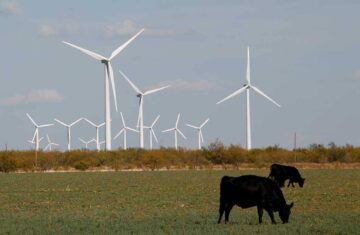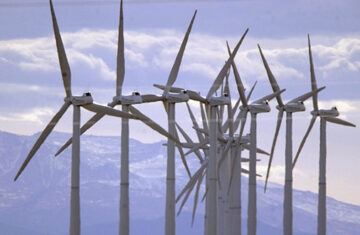
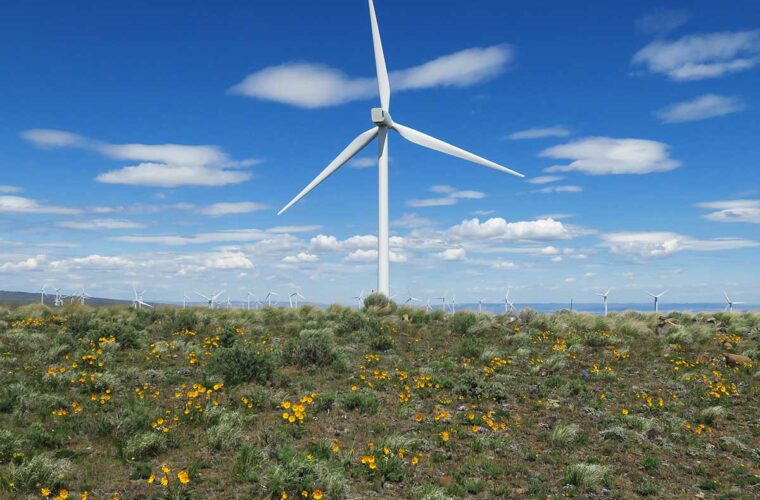
Perched on the ridgelines of Kittitas County, the Wild Horse Wind Farm harnesses the powerful winds funneling through the Columbia River Basin to become a landmark renewable energy facility for Washington state. This project not only provides substantial clean power but also serves as a public showcase for wind technology, demonstrating a commitment to environmental stewardship and community education.
Significance & Context
The Wild Horse Wind Farm is a 229-megawatt (MW) facility owned and operated by Puget Sound Energy (PSE), the state’s largest utility. As a key component of PSE’s diverse energy portfolio, the project directly supports Washington’s mandate for utilities to phase out coal-fired generation and integrate more renewable resources. The facility generates enough electricity to power approximately 70,000 homes and is a highly visible symbol of the state’s clean energy transition, located along a major interstate highway.
Development Timeline
The project was developed in two distinct phases to capitalize on improving technology and growing energy demand. Wild Horse I, a 127 MW phase, was completed and began operations in 2006. Just three years later, Wild Horse II, a 102 MW expansion, was completed in 2009. This rapid expansion underscored the strong wind resource and the utility’s confidence in the site’s viability. The project required approval from the Washington Utilities and Transportation Commission (WUTC)
Technology & Innovation
The wind farm features a fleet of Siemens and Vestas turbines, with the second phase utilizing more powerful models than the first. A defining innovative feature is the project’s Renewable Energy Center, which includes a public viewpoint and educational facility. This center, unique for a utility-owned project, offers tours that educate thousands of visitors annually about wind energy, showcasing the inner workings of a turbine nacelle and highlighting the project’s environmental mitigation efforts.
Challenges & Controversies
A significant challenge during development was mitigating the project’s impact on the sensitive shrub-steppe ecosystem and species like the sage grouse. The site also held cultural significance for the Yakama Nation. PSE addressed these issues through extensive collaboration, working with the state’s Department of Fish and Wildlife and tribal representatives. The resolution included careful micro-siting of turbines and access roads to preserve habitat, funding for offsite conservation efforts, and establishing a permanent conservation easement on over 1,000 acres of the project site.
Community & Economic Impact
The project provides a substantial economic benefit to Kittitas County. During its two construction phases, Wild Horse Wind Farm typically employed hundreds of workers. It continues to support a permanent team of technicians and staff for the Renewable Energy Center. Over its operational life, the project likely contributes millions of dollars in tax revenue, supporting local services. For participating landowners, the long-term lease payments provide a stable source of income. The project also makes annual contributions to a local community fund for projects in fire protection, education, and conservation.
Future Outlook
As a foundational asset in PSE’s generation fleet, Wild Horse is expected to operate for decades. Its success has paved the way for further wind development in the region. The project’s established infrastructure makes it a prime candidate for future repowering, where original turbines could be replaced with newer, more efficient models to boost capacity. As analyzed by the U.S. Energy Information Administration (EIA), such modernization will be key to meeting the state’s ambitious clean energy goals, ensuring Wild Horse continues to be a vital and productive resource.
Find also at Washington: Hopkins Ridge Wind Farm