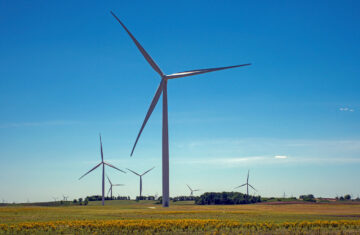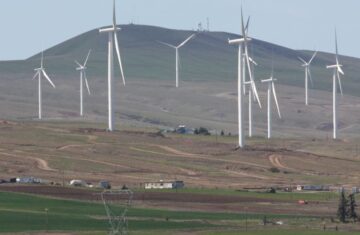
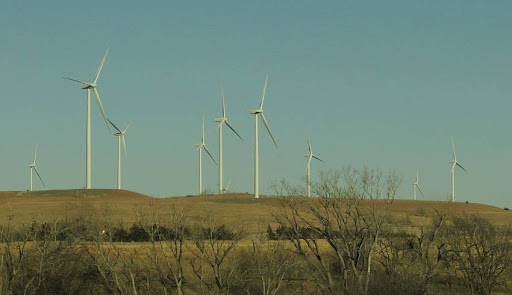
Smoky Hills Wind Project stands as a landmark achievement in the state’s renewable energy history. As one of the first utility-scale wind farms to be developed in Kansas, it played a pivotal role in proving the technical and economic viability of harnessing the state’s abundant wind resources. This pioneering project helped catalyze Kansas’s wind industry, demonstrating that the relentless prairie winds could be transformed into a powerful driver of economic development and a cornerstone of the state’s energy independence.
Significance & Context
The Smoky Hills Wind Projectwas a trailblazer for Kansas’s now-thriving wind sector. With a capacity of 100 megawatts (MW), the project provided a foundational block of clean energy, generating enough electricity to power approximately 40,000 Kansas homes. At its inception, its output represented a significant portion of the state’s renewable generation, helping to establish wind power as a credible and substantial energy source. By displacing fossil fuel-based power, the project avoids tens of thousands of tons of carbon dioxide emissions annually, contributing to cleaner air and a more diversified energy mix for the region.
Development Timeline
The development of Smoky Hills Wind Project was a multi-year endeavor that faced the unique challenges of being an early adopter. Developed by TradeWind Energy, the project navigated the nascent regulatory and permitting landscape for large-scale wind in Kansas throughout the early 2000s. Construction commenced in 2006, and after overcoming logistical hurdles associated with building one of the state’s first major wind farms, it achieved commercial operation in 2008. Its successful completion paved a smoother path for the numerous wind projects that would follow in its wake.
Technology & Innovation
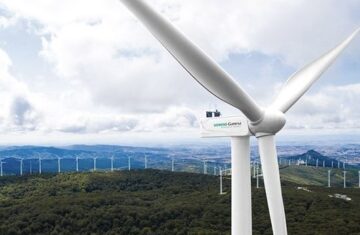
For its time, Smoky Hills Phaseutilized robust and proven turbine technology suited to the strong Kansas winds. The project is equipped with Siemens wind turbines, each with a capacity of 2.3 MW. These turbines were selected for their durability and ability to perform reliably in the demanding plains environment. As one of the earlier deployments of this model in the region, the project provided valuable operational data that informed subsequent wind developments across the Great Plains.
Challenges & Controversies
A significant challenge for this pioneering project was overcoming the initial skepticism and unfamiliarity with utility-scale wind energy among some local residents and officials. Concerns regarding visual impact, noise, and potential effects on property values were pronounced, as there were few local precedents. The developer addressed these through an extensive and transparent public education campaign, holding numerous community meetings and working closely with Lincoln and Ellsworth county leaders to establish zoning regulations that balanced development with community interests, thereby building a foundation of trust.
Community & Economic Impact
The Smoky Hills Wind Project Phase delivered a transformative economic impact to its host counties. During its construction, the project typically employed over 150 workers, providing a major boost to local businesses. In its operational phase, it typically employs a team of local technicians for maintenance, creating valuable, skilled long-term jobs. Most importantly, the project likely contributes millions of dollars in property tax revenue over its lifetime, which has been instrumental in funding local schools, roads, and emergency services in these rural counties. Additionally, the wind farm provides steady lease payments to participating landowners, creating a reliable source of supplemental income that bolsters the agricultural economy.
Future Outlook
As one of Kansas’s foundational wind assets, Smoky Hills Phase I has a proven track record of reliable operation. While its turbines are from an earlier generation of technology, the project remains a valuable contributor to the grid. Its long-term outlook will likely involve an evaluation for repowering. As detailed by the National Renewable Energy Laboratory (NREL), replacing the original turbines with modern, more powerful models could significantly increase the site’s energy output and extend its operational life, ensuring this pioneering project continues to benefit Kansas for decades to come.
Find also at USA: White Creek Wind Farm