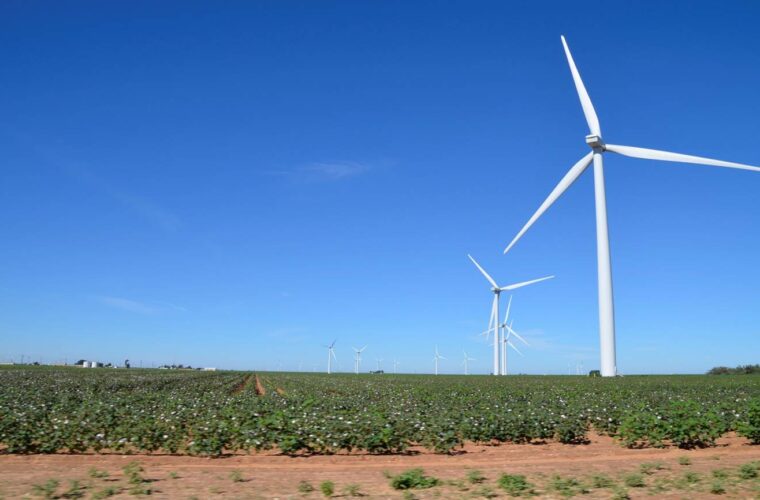
Mesquite Wind Power project represents a monumental shift in the state’s energy landscape. As one of the largest single-phase wind farms ever constructed in the United States, its scale underscores Texas’s dominant and growing role in renewable energy, a trend documented by the U.S. Energy Information Administration. Developed by EDF Renewables, this massive infrastructure undertaking demonstrates how wind power has evolved from a niche alternative into a central pillar of the modern grid, capable of generating power on a par with traditional fossil fuel plants while providing substantial economic benefits to rural communities.
Significance & Context
The Mesquite Wind Power project is a behemoth in the U.S. wind sector. Located in Live Oak and San Patricio counties, its immense 300-megawatt (MW) capacity, as detailed on the EDF Renewables project page, provides enough electricity to power approximately 110,000 typical homes. This output is a significant injection of clean energy into the Electric Reliability Council of Texas (ERCOT) grid, directly displacing power that would otherwise come from natural gas or coal. The project’s scale allows it to avoid an estimated 600,000 metric tons of carbon dioxide emissions annually, making it a key asset in regional efforts to reduce the electricity sector’s environmental footprint.
Development Timeline
The development of Mesquite Wind Power was a multi-year endeavor that moved with remarkable speed given its size. Project planning and securing of land leases began in the late 2000s, with major construction commencing in 2011. The project leveraged a surge in wind investment and advanced rapidly, achieving commercial operation by the end of 2012, a timeline confirmed in industry reports from the American Wind Energy Association. This rapid timeline from groundbreaking to completion was a feat of large-scale project management, involving the coordination of hundreds of workers and the timely delivery of massive components to a relatively remote site.
Technology & Innovation
For its time, Mesquite Wind Power utilized some of the most powerful and efficient turbine technology available. The project is equipped with 125 Siemens SWT-2.3-108 turbines, each with a capacity of 2.3 MW. These turbines feature a 108-meter rotor diameter, a substantial size that allows them to efficiently capture the South Texas winds. The deployment of these turbines in such a large, concentrated array demonstrated the industry’s move towards standardizing larger, more productive machines to maximize energy output and improve the economic viability of wind power.
Challenges & Controversies
A project of this magnitude inevitably faced hurdles. One significant challenge was the sheer logistical complexity of transporting hundreds of massive turbine components—including towers, nacelles, and blades over 50 meters long—across rural Texas roadways. This required meticulous planning, coordination with local and state transportation authorities, and sometimes road upgrades to handle the exceptional loads, a common issue outlined by the U.S. Department of Transportation. Furthermore, as with many wind projects, developers had to actively engage with the local community to address concerns from some residents about visual and potential noise impacts, working to negotiate lease agreements and mitigate issues through siting decisions.
Community & Economic Impact
The Mesquite Wind Power project has had a profound and lasting economic impact on Live Oak and San Patricio counties. During its peak construction phase, it typically employed over 300 workers, providing a major boost to local businesses. In its operational phase, a wind farm of this scale typically employs 15-20 full-time technicians for ongoing maintenance, creating skilled, long-term jobs in a rural area. Most significantly, the project likely contributes millions of dollars in annual property tax revenue, which is vital for funding local schools, emergency services, and infrastructure, a benefit highlighted in studies by the Lawrence Berkeley National Laboratory. Additionally, the landowners who host the turbines receive steady lease payments, creating a reliable new revenue stream that supports the agricultural community.
Future Outlook
With over a decade of successful operation, Mesquite Wind Power has proven to be a durable and reliable asset. Its long-term power purchase agreement (PPA) has provided stable, predictable revenue. As the first generation of major wind projects in Texas ages, the future outlook for Mesquite may include potential life-extension upgrades or a eventual repowering, where older turbines are replaced with newer, even more efficient models, a process explored by the National Renewable Energy Laboratory (NREL). Its established grid connection and infrastructure make it a prime candidate for such future investment, ensuring it remains a cornerstone of South Texas’s clean energy economy for years to come.
Also at Texas: Post Oak Wind