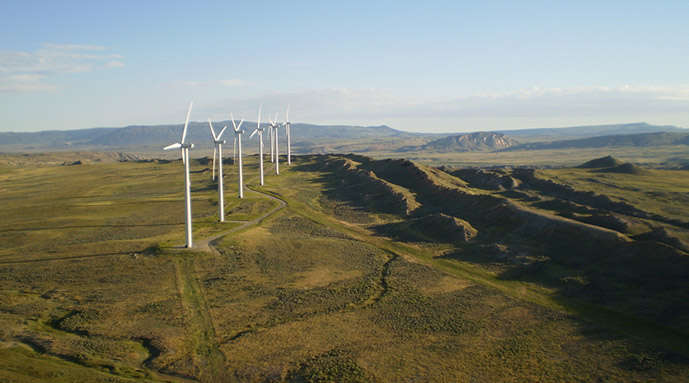
On the high plains of Carbon County, Wyoming, the Seven Mile Hill Wind Farm exemplifies the strategic deployment of wind energy within a state traditionally dominated by fossil fuels. Developed by Duke Energy Renewables, this project represents a critical piece of the evolving energy mosaic, demonstrating how renewable infrastructure integrates with existing grids and communities to provide clean power and economic diversification.
Significance & Context
The Seven Mile Hill Wind Farm is a utility-scale project that contributes to diversifying Wyoming’s energy portfolio. With a capacity of 41 megawatts (MW), it generates enough electricity to power approximately 15,000 homes annually, as estimated using standard U.S. Energy Information Administration (EIA) conversion metrics. This output supplies the broader Western grid, displacing fossil fuel generation and supporting regional climate goals, a key facet of the developer’s portfolio as noted on the Duke Energy Sustainable Solutions project page.
Development Timeline
The project’s progression followed a careful planning and regulatory review process. Key permitting and approvals were secured in the early 2010s, with the Wyoming Industrial Siting Council (WISC) granting its permit in 2013, a decision documented in the WISC permit database. Construction commenced thereafter, and the wind farm was officially commissioned and began commercial operations in 2014, a timeline confirmed in industry project tracking databases like American Clean Power.
Technology & Innovation
The Seven Mile Hill Wind Farm utilizes robust, commercially proven wind turbine technology suited for the site’s specific wind characteristics. The project features 19 Siemens wind turbines, each with a capacity of 2.1 MW, a model widely deployed in the mid-2010s. The project’s design incorporates standard industry practices for the era, focusing on reliability and efficient integration into the local transmission network managed by utility PacificCorp, as outlined in interconnection records.
Challenges & Controversies
A significant hurdle was navigating the state-level permitting process and addressing concerns from neighboring landowners. As documented in the official Wyoming Industrial Siting Council final order for the project, residents expressed apprehensions regarding visual impact and potential effects on property values. The resolution involved a formal public process where the developer presented detailed visual simulations and mitigation plans. The council’s approval included specific conditions related to site restoration, balancing development with local land-use concerns.
Community & Economic Impact
For Carbon County, the wind farm delivers tangible local benefits. During construction, a project of this scale typically employed 100-200 workers, according to job creation models from the U.S. Department of Energy’s Wind Vision Report. Operationally, it provides a steady source of property tax revenue for county services under Wyoming’s tax structure, detailed by the Wyoming Department of Revenue. Furthermore, it supplies long-term lease payments to participating landowners, creating a stable income source that supports the agricultural economy, a benefit recognized by the University of Wyoming Extension.
Future Outlook
As a fully operational asset since 2014, the Seven Mile Hill Wind Farm has entered its stable, long-term generation phase. Its continued operation supports Wyoming’s “all-of-the-above” energy strategy, as framed by the Wyoming Energy Authority. The project serves as an enduring example of wind development in the region, contributing to grid reliability and demonstrating the long-term role of mature renewable assets in the national energy mix.
At Converse County you can find also: Rolling Hills wind farm