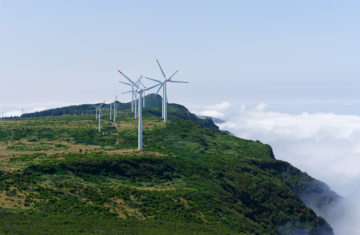
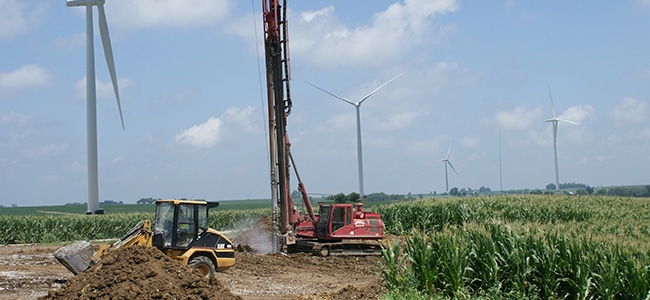
In the evolving landscape of American energy infrastructure, the Rolling Hills Wind Farm in Converse County, Wyoming, stands as a testament to the strategic harnessing of vast wind resources to power urban centers far from the Great Plains. Developed by Invenergy, this major project represents a critical link in the nation’s energy transition, channeling the wind-swept prairies into the electrical grids of the western United States, notably serving customers of PacificCorp and underscoring Wyoming’s role as a key energy exporter.
Significance & Context
The Rolling Hills Wind Farm is a substantial power generation facility strategically located to capitalize on Wyoming’s exceptional wind resources, which are documented by the U.S. Department of Energy’s WINDExchange as among the nation’s best. Developed by Invenergy, the project’s primary significance lies in its role as a large-scale supplier of renewable power to diverse markets. Its output is contracted under long-term agreements, notably with PacificCorp, as confirmed in a company press release, to serve customers across multiple western states. By displacing fossil fuel-generated electricity, the wind farm is a key component in regional decarbonization efforts.
Development Timeline
The project’s development followed a multi-year trajectory. Initial site assessment and permitting proceeded through the late 2010s, with Invenergy navigating federal, state, and county regulatory frameworks. Major construction commenced in the early 2020s, as reported by local news outlets like the Casper Star-Tribune in a construction update article. The wind farm achieved commercial operation in 2023, a milestone publicly announced by the developer and marked in utility filings with the Wyoming Public Service Commission, culminating years of planning and investment.
Technology & Innovation
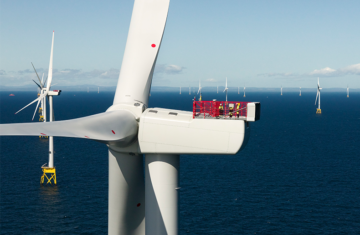
The Rolling Hills Wind Farm employs modern wind turbine technology to maximize efficiency. While exact specifications are proprietary, projects of this scale typically utilize turbines with nameplate capacities of 3 to 4 megawatts (MW) each. Public project descriptions and energy industry reports, such as those from the American Clean Power Association, indicate that such turbines feature rotor diameters exceeding 140 meters. The project integrates advanced monitoring and grid management systems to ensure stable power delivery into the Western Interconnection grid.
Challenges & Controversies
A primary challenge for the Rolling Hills Wind Farm involved navigating the permitting and regulatory landscape and addressing concerns from some local stakeholders. Potential opposition centered on visual impacts and effects on local wildlife habitats, particularly for avian species, as is common with projects in this region and documented by the U.S. Fish & Wildlife Service Land-Based Wind Energy Guidelines. These hurdles were resolved through environmental impact studies, community engagement, and mitigation strategies, with the project’s final permitting recorded in Converse County Commission meeting minutes and ordinances, demonstrating a pathway to balancing development with local and ecological considerations.
Community & Economic Impact
The wind farm delivers tangible economic benefits to Converse County. During peak construction, the project typically employed several hundred workers, as is standard for projects of this scale per U.S. Energy & Employment Report (USEER) data. In its operational phase, it likely contributes a stable source of property tax revenue for county services, following Wyoming’s tax structure for wind generation as detailed by the Wyoming Department of Revenue. Critically, it provides long-term lease payments to participating landowners, offering a drought-resistant income stream, a benefit widely recognized by agricultural extension groups like the University of Wyoming Extension.
Future Outlook
As an operational asset, the Rolling Hills Wind Farm is positioned for decades of clean energy generation. Its future is tied to the reliability of its technology and the stability of its power purchase agreements. The project exists within a broader context of energy development in Converse County, and its success may inform future projects, contributing to Wyoming’s “all-of-the-above” energy strategy, as outlined by the Wyoming Energy Authority in its state energy plan, and its potential to be a net exporter of wind energy.
At Converse County you can find also: Glenrock wind farm