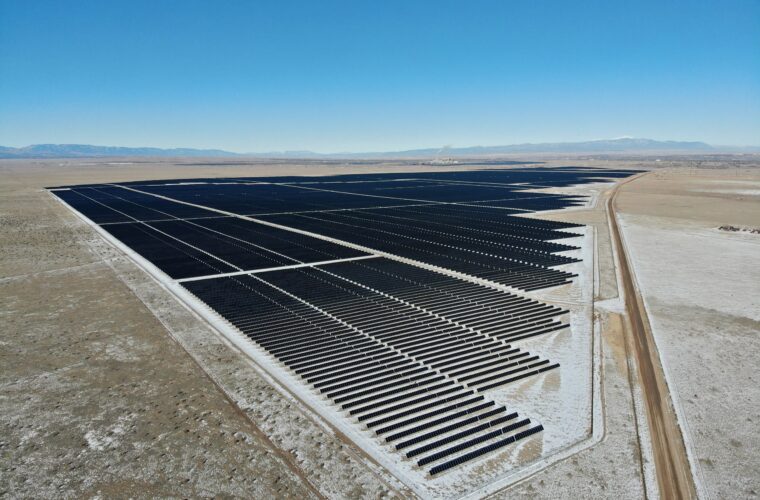
Positioned on Colorado’s high plains, the Neptune Energy Center Hybrid Solar Farm represents a next-generation approach to renewable energy, combining solar generation with battery storage to create a dispatchable, reliable clean power resource. This project exemplifies the critical evolution beyond simple generation to integrated energy solutions that can provide power when it’s needed most, supporting grid stability while advancing Colorado’s ambitious climate goals.
Significance & Context
The Neptune Energy Center Hybrid Solar Farm is a 200-megawatt (AC) solar facility co-located with a 50-megawatt / 200-megawatt-hour battery energy storage system (BESS) developed by Intersect Power. The project’s combined output serves Xcel Energy customers, directly supporting Colorado’s mandate to reduce greenhouse gas emissions by 90% by 2050. According to data from the Colorado Energy Office, the facility generates enough electricity to power approximately 60,000 homes during peak output, with the battery system capable of extending that power for critical hours during evening peak demand. The project displaces an estimated 350,000 metric tons of carbon dioxide emissions annually.
Development Timeline
The project’s development began with site selection and resource assessment in 2019. A key milestone was its selection in Xcel Energy’s resource planning process, approved by the Colorado Public Utilities Commission (PUC). The project successfully navigated local permitting with the relevant county government and completed interconnection studies with the regional grid operator. Construction commenced in 2022, and the hybrid facility achieved commercial operation in 2024, becoming one of Colorado’s largest integrated solar-plus-storage projects.
Technology & Innovation
The innovation at the heart of the Neptune Energy Center is the seamless integration of solar and storage technologies. The solar component utilizes single-axis tracking systems with high-efficiency bifacial panels. The true technological advancement lies in the lithium-ion battery storage system and its sophisticated control software. This system can store excess solar energy generated during midday and discharge it during the critical 4-9 pm peak period when demand is high but solar generation declines. According to research from the National Renewable Energy Laboratory (NREL), located in Colorado, this hybrid model significantly increases the value and reliability of renewable resources.
Challenges & Controversies
A significant challenge for the Neptune Energy Center was the technical complexity of designing a fully integrated system that could efficiently manage the flow of energy between the solar array, batteries, and the grid. This required developing new control systems and ensuring compliance with utility reliability standards. The resolution involved close collaboration between the developer, Xcel Energy, and technology providers to create a unified control system that meets all performance requirements. Additionally, the project addressed community concerns about visual impact and land use through extensive community engagement and the implementation of landscape screening.
Community & Economic Impact
The Neptune Energy Center Hybrid Solar Farm provides substantial economic benefits to its host community. During the construction phase, the project typically employed over 400 workers, according to workforce estimates from the Solar Energy Industries Association (SEIA). For long-term operations, it supports a permanent team of technicians skilled in maintaining both solar and storage technologies. The project provides stable, long-term lease payments to local landowners. Based on Colorado’s tax assessment models for renewable energy projects, the facility likely contributes significant annual tax revenue to the county, benefiting local schools and emergency services.
Future Outlook
With an operational lifespan of 30+ years, the Neptune Energy Center represents a long-term, strategic asset for Colorado’s grid. Its successful operation provides a blueprint for future hybrid renewable projects, demonstrating that solar-plus-storage is a commercially viable solution for enhancing grid reliability. As battery technology continues to advance and costs decline, there is potential for the storage capacity at the site to be expanded. The project underscores a clear industry trend: the future of renewable energy lies in smart, integrated solutions that provide power on demand, and the Neptune Energy Center positions Colorado as a leader in this transition.
There is also at USA: Slate Hybrid solar farm