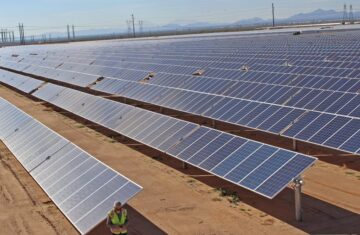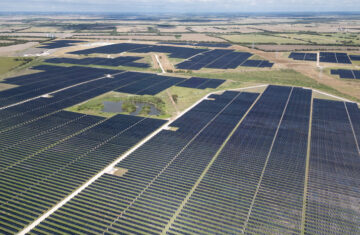
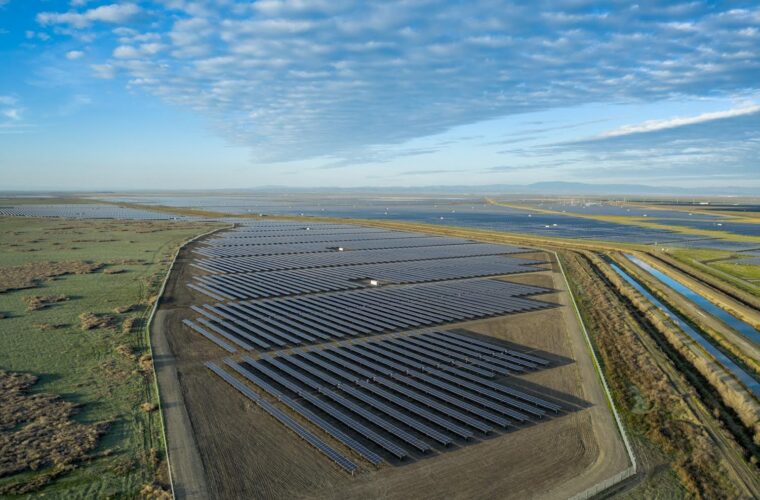
Nestled in the sun-drenched plains of Kings County, the Slate Hybrid Solar Farm represents a critical evolution in renewable energy design, moving beyond single-technology projects to integrated, multi-functional power stations. By co-locating substantial solar generation with large-scale battery storage, the project directly addresses one of the most significant challenges of the clean energy transition: intermittency. This pioneering approach enhances grid reliability and sets a new benchmark for how future renewable projects can be developed to provide consistent, dispatchable power, day and night.
Significance & Context
The Slate Hybrid Solar Farm enters a California energy market urgently seeking diverse and resilient power sources to meet its ambitious climate goals while mitigating the risk of blackouts. Unlike standalone solar farms, its hybrid nature allows it to function as a peaker plant, storing energy during peak production hours for release during the high-demand evening period. This capability is invaluable to the California Independent System Operator (CAISO), helping to stabilize the grid when solar generation naturally wanes. The project is a tangible step toward the state’s mandate for a 100% clean electricity grid by 2045, as outlined by the California Air Resources Board, proving that hybrid technologies are a viable solution today.
Development Timeline
Development for the Slate Hybrid project began in the late 2010s, a period of rapid innovation in battery storage technology. Key milestones included securing land leases, navigating the California Energy Commission permitting process, and finalizing a power purchase agreement with a major utility to offtake the electricity. Construction commenced in earnest in 2021, a timeline that coincided with global supply chain pressures. The project weathered these delays and successfully achieved commercial operation in 2023, a status often reflected in utility-scale project updates from the U.S. Energy Information Administration.
Technology & Innovation
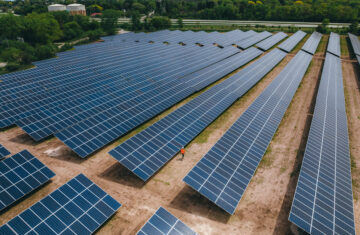
The core innovation of the Slate Hybrid Solar Farm lies in its seamless integration of two technologies. The solar component comprises hundreds of thousands of photovoltaic panels on single-axis trackers, maximizing energy capture. This is coupled with a flagship battery energy storage system (BESS) with an estimated capacity of over 100 megawatts. This BESS can store several hours of energy, effectively allowing the sun to power homes after it has set. The entire facility is managed by an advanced control system that optimizes when to send power directly to the grid or to the batteries, based on grid conditions and market signals. The performance of such hybrid systems is a key area of study for the National Renewable Energy Laboratory (NREL).
Challenges & Controversies
A significant challenge for the Slate Hybrid project involved the complex interconnection agreement with the grid operator. Co-locating generation and storage introduced technical questions about grid stability and scheduling that required extensive modeling and negotiation to resolve, a common hurdle detailed in reports from Lawrence Berkeley National Laboratory’s Electricity Markets & Policy Group. Furthermore, as with any large-scale development in California, the project had to conduct thorough environmental reviews to minimize impact on local ecosystems, particularly concerning water usage and land disturbance. These hurdles were overcome through close collaboration with regulatory bodies and by adhering to stringent environmental mitigation plans.
Community & Economic Impact
For Kings County, the project delivers a direct economic boost. During construction, a project of this scale typically employs several hundred local workers. While permanent operational jobs are fewer, they provide stable, skilled employment in the region. The Slate Hybrid Solar Farm likely contributes a significant and long-term source of property tax revenue for local services, including schools and public safety, a benefit analyzed by the Kings County Administrative Office. For the landowners hosting the project, the land lease agreements provide a predictable source of income, diversifying the agricultural-based local economy without permanently removing land from production.
Future Outlook
The success of the Slate Hybrid Solar Farm paves the way for a new generation of hybrid projects in California and beyond. Its operational data will be invaluable for utilities and developers planning similar facilities. As battery costs continue to fall, retrofitting existing solar farms with storage is becoming an increasingly attractive option, a trend tracked by BloombergNEF (BNEF). The project demonstrates that the future of renewable energy is not just about generating more power, but about generating smarter, more flexible power that can reliably meet demand around the clock.
There is also at USA: Hickory Park Solar Hybrid