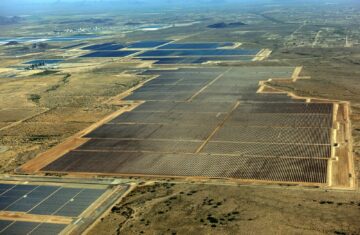
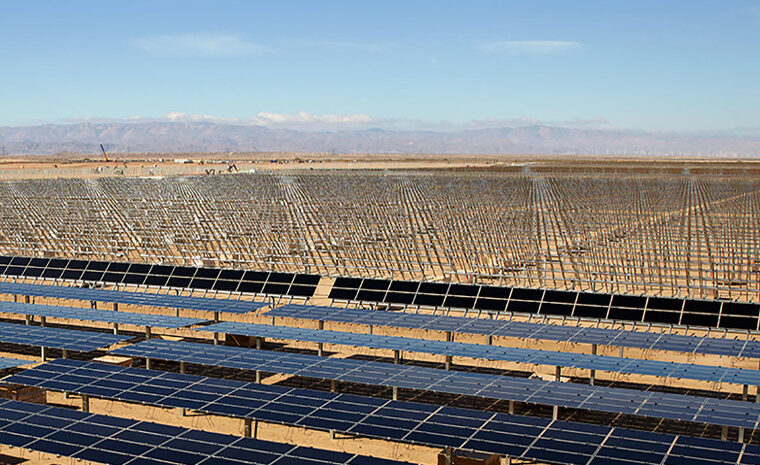
Rising from the sun-drenched desert of Southern California, the Imperial Solar Energy Center West represents a strategic advancement in the state’s renewable energy infrastructure, leveraging ideal solar conditions near the U.S.-Mexico border to help meet California’s ambitious clean energy goals. This project exemplifies how regions with extreme environmental conditions can be transformed into power generation assets while addressing the complex water-energy nexus in arid environments through innovative technology choices.
Significance & Context
Developed by NextEra Energy Resources, the 200-megawatt (MW) Imperial Solar Energy Center West is a key component of California’s strategy to localize energy generation and reduce reliance on imported power. According to generation estimates from the California Energy Commission, the facility produces enough electricity to power approximately 60,000 homes annually. Its location in Imperial County, which experiences some of the highest solar irradiance levels in North America, maximizes energy production efficiency while supporting grid reliability for Southern California’s population centers. The project contributes significantly to the state’s requirement that utilities source 60% of their electricity from renewable resources by 2030.
Development Timeline
The project’s development accelerated following California’s renewed clean energy mandates in the late 2010s. Development activities began in 2018, with construction commencing in 2020. The project achieved commercial operation in 2022, according to operational reports filed with the California Public Utilities Commission. This relatively rapid timeline was facilitated by Imperial County’s established permitting processes for utility-scale solar projects and the region’s experience with renewable energy development, though it still required thorough environmental review and community engagement processes.
Technology & Innovation
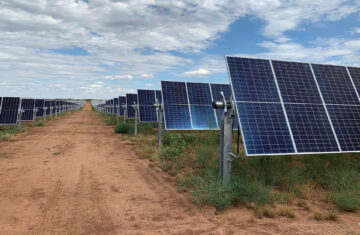
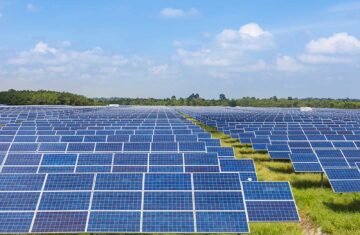
Imperial Solar Energy Center West utilizes single-axis tracking systems with monocrystalline silicon photovoltaic modules, optimized for high-temperature desert performance. The project’s most significant innovation is its dry-cooling technology for the power conversion systems, which reduces water consumption by approximately 90% compared to wet-cooled solar thermal plants. According to technical reports from the National Renewable Energy Laboratory (NREL), this water-saving technology is particularly valuable in the Colorado Desert region, where water resources are severely constrained. The project also features advanced dust mitigation systems to maintain panel efficiency in the desert environment.
Challenges & Controversies
The project faced significant environmental challenges, particularly regarding impacts on desert tortoise habitat and migratory bird pathways. Environmental groups, including the Center for Biological Diversity, raised concerns about habitat fragmentation and species impacts. The resolution involved implementing a comprehensive Habitat Conservation Plan developed in coordination with the U.S. Fish and Wildlife Service and the California Department of Fish and Wildlife. This included creating thousands of acres of protected habitat elsewhere, establishing wildlife corridors, and implementing a desert tortoise translocation and monitoring program. The project also addressed concerns about groundwater usage through its dry-cooling technology and strict water management protocols.
Community & Economic Impact
For Imperial County, which has consistently faced high unemployment rates, the Imperial Solar Energy Center West has provided substantial economic benefits. During construction, the project typically employed 300-400 workers, with local hiring preferences for county residents. For ongoing operations, it maintains 8-12 permanent positions. Based on Imperial County’s tax assessment models for utility-scale solar, the project likely contributes approximately $1.2-1.8 million annually in property tax revenue to local governments. Additionally, it provides stable lease payments to local landowners, creating a reliable income source in a region where agricultural water allocations have become increasingly uncertain due to drought conditions.
Future Outlook
With an expected operational lifespan of 30+ years, the Imperial Solar Energy Center West represents a long-term energy and economic asset for Imperial County. The project’s water-conserving technology sets an important precedent for future desert solar development, particularly as climate change intensifies drought conditions in the Southwest. As noted in the Imperial County Renewable Energy Development Policy, the project’s successful navigation of environmental challenges provides a model for balancing renewable energy goals with desert conservation. The site’s infrastructure and interconnection capacity also position it well for potential future expansion or integration with energy storage systems to enhance grid reliability and maximize the value of its solar generation.