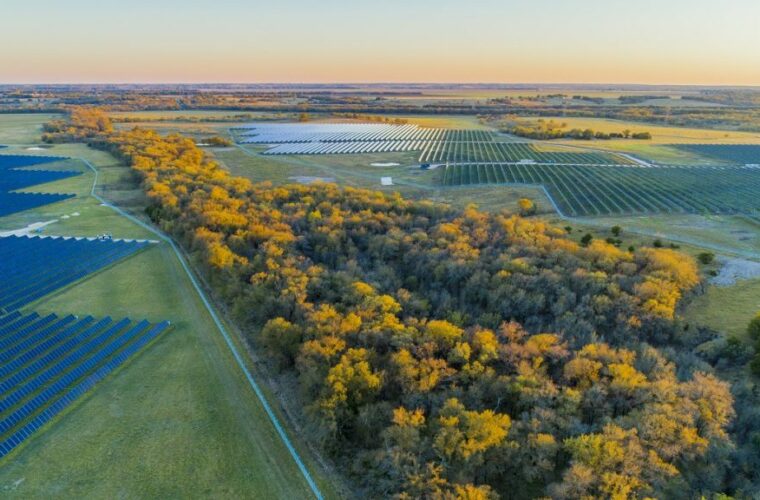
Central Texas, the Elm Branch Solar 1 project represents a significant private investment in the state’s diverse energy portfolio, demonstrating how solar development can create new economic streams for agricultural communities while contributing to grid reliability. This project exemplifies the strategic expansion of renewable energy into regions beyond West Texas, bringing clean power generation closer to major demand centers.
Significance & Context
The Elm Branch Solar 1 is a 150-megawatt (AC) facility developed by EDP Renewables on private land in Central Texas. The project sells its power through a long-term power purchase agreement to a major investment-grade corporate offtaker, reflecting the growing trend of commercial and industrial customers driving renewable energy development in Texas. According to data from the Electric Reliability Council of Texas (ERCOT), the facility generates enough electricity to power approximately 30,000 homes. This clean energy contribution displaces an estimated 240,000 metric tons of carbon dioxide emissions annually, supporting both corporate sustainability goals and Texas’s position as a national leader in renewable energy generation.
Development Timeline
The project’s development began with site selection and land acquisition in 2019. A key milestone was reached when the project secured its interconnection agreement with ERCOT, a process documented in public interconnection queue reports. The development team successfully navigated local permitting with the relevant county commissioners court and adhered to regulations overseen by the Texas Commission on Environmental Quality (TCEQ). Construction commenced in 2022, and the project achieved commercial operation in late 2023.
Technology & Innovation
The Elm Branch Solar 1 project utilizes advanced solar technology engineered for Central Texas conditions. The facility features single-axis tracking systems with monocrystalline silicon panels known for their high efficiency in variable weather conditions. The project employs string inverters that allow for granular monitoring and optimization of performance across the array. According to performance data from the National Renewable Energy Laboratory (NREL), this configuration provides reliable energy production while minimizing maintenance requirements. The project’s electrical design efficiently delivers power to the local grid infrastructure.
Challenges & Controversies
A significant challenge for the Elm Branch Solar 1 project involved addressing land use concerns in a region with strong agricultural traditions. Some local stakeholders expressed apprehension about the conversion of farmland and potential impacts on the rural character of the area. These concerns were addressed through a transparent community engagement process and by designing the project to accommodate agricultural co-location. The implementation of a sheep grazing program for vegetation management demonstrated that solar development and agricultural uses can coexist productively, preserving the land’s economic utility while generating clean energy.
Community & Economic Impact
The Elm Branch Solar 1 project provides substantial economic benefits to its host county. During peak construction, the project typically employed 250-350 workers, according to workforce estimates from the Solar Energy Industries Association (SEIA). For long-term operations, it supports a permanent team of technicians for maintenance and monitoring. The project provides stable, long-term lease payments to local landowners, creating a drought-resistant revenue stream that complements traditional agricultural income. Based on the Texas Comptroller’s guidelines on property tax abatements for renewable energy, the project likely contributes significant annual tax revenue to the county, benefiting local schools and public services.
Future Outlook
With an operational lifespan exceeding 30 years, the Elm Branch Solar 1 project represents a long-term commitment to Central Texas’s energy future. The project’s success demonstrates the viability of solar development in regions beyond West Texas, helping to balance grid loads across the ERCOT system. The site’s infrastructure is designed to potentially accommodate future battery energy storage systems (BESS), which would enhance the project’s value by allowing energy storage for peak demand periods. As corporate sustainability commitments continue to drive renewable energy demand, the Elm Branch Solar 1 project serves as an example of how well-sited solar developments can meet both economic and environmental objectives while supporting rural communities through long-term revenue generation.
Also at Texas: ANSON Solar Center