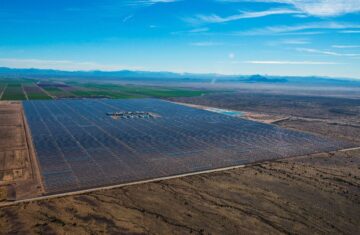
Hudson – High Desert Hybrid Solar Farm represents a strategic evolution in renewable energy infrastructure, combining solar generation with battery storage to address the state’s critical evening peak demand. This project exemplifies California’s commitment to building a reliable, decarbonized grid through integrated energy solutions that maximize both generation capacity and grid stability.
Significance & Context
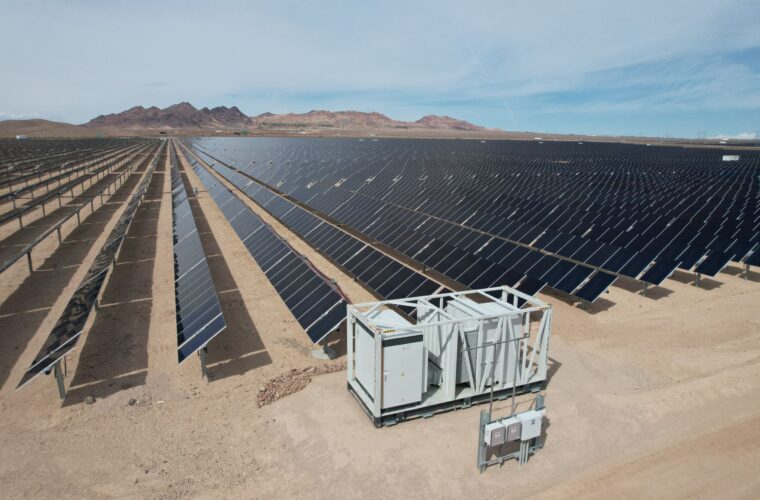
The Hudson – High Desert Hybrid Solar Farm is a 200-megawatt (AC) solar facility coupled with an 80-megawatt / 320-megawatt-hour battery energy storage system developed by Clearway Energy Group. The project’s combined output serves Southern California Edison (SCE) customers, directly supporting California’s mandate for 100% clean electricity by 2045. According to data from the California Energy Commission (CEC), the facility generates enough electricity to power approximately 75,000 homes during peak output, with the battery system capable of delivering four hours of discharge during critical evening hours. The project displaces an estimated 300,000 metric tons of carbon dioxide emissions annually.
Development Timeline
The project’s development began with site selection and resource assessment in 2018. A key milestone was reached when the project was selected in SCE’s 2019 resource solicitation process, approved by the California Public Utilities Commission (CPUC). The development team successfully navigated local permitting with the relevant county government and completed environmental reviews. Construction commenced in 2021, and the hybrid facility achieved commercial operation in 2023.
Technology & Innovation
The innovation at the heart of the Hudson – High Desert Hybrid is the seamless integration of solar and storage technologies. The solar component utilizes single-axis tracking systems with bifacial panels optimized for the high-desert environment. The technological advancement lies in the grid-forming battery inverters that allow the storage system to provide essential grid stability services traditionally supplied by fossil fuel plants. According to performance data from the National Renewable Energy Laboratory (NREL), this configuration can increase the capacity value of solar resources by up to 40% by ensuring deliverability during peak demand periods.
Challenges & Controversies
A significant challenge for the Hudson – High Desert Hybrid project involved mitigating environmental impacts on the fragile desert ecosystem while meeting the project’s ambitious timeline. The area supports sensitive species and habitats requiring careful assessment and protection measures. This challenge was resolved through early and continuous consultation with the California Department of Fish and Wildlife and implementation of a comprehensive Habitat Conservation Plan. The solution included seasonal construction restrictions, habitat restoration funding, and design modifications to minimize disturbance to wildlife corridors and protected species.
Community & Economic Impact
The Hudson – High Desert Hybrid Solar Farm provides substantial economic benefits to its host community. During the construction phase, the project typically employed 350-450 workers, according to workforce estimates from the Solar Energy Industries Association (SEIA). For long-term operations, it supports a permanent team of technicians skilled in maintaining both solar and storage technologies. The project provides stable, long-term lease payments to local landowners. Based on California’s tax policies for renewable energy, the facility likely contributes significant annual tax revenue to the county, benefiting local schools and emergency services.
Future Outlook
With an operational lifespan exceeding 30 years, the Hudson – High Desert Hybrid represents a long-term, strategic asset for California’s grid. Its successful operation provides a replicable model for future hybrid projects, demonstrating that solar-plus-storage is essential for achieving grid reliability while meeting climate goals. As battery technology advances, there is potential for expanding the storage duration to provide longer discharge capability. The project positions California as a leader in the clean energy transition, showcasing how integrated renewable solutions can replace fossil fuel generation while maintaining grid stability and supporting local economies.
Also at California: Rabbitbrush Solar farm