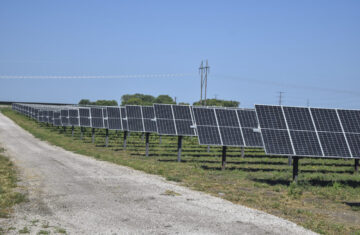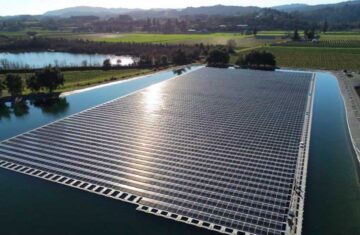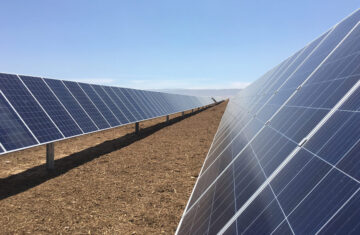
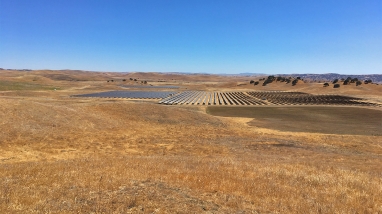
CA Flats Solar 150 project represents a innovative approach to renewable energy development that prioritizes agricultural compatibility and environmental stewardship, demonstrating how solar generation can coexist with working landscapes while contributing significantly to California’s clean energy goals. This project exemplifies the next generation of solar development that addresses land use concerns while maintaining agricultural productivity and ecological values.
Significance & Context
Developed by Recurrent Energy, the 150-megawatt (MW) CA Flats Solar 150 facility is part of a new wave of agrivoltaic projects in California that combine energy production with agricultural operations. According to generation data from the California Energy Commission, the facility produces enough electricity to power approximately 54,000 homes while implementing innovative dual-use practices that maintain agricultural productivity beneath and between solar arrays. Its location in San Luis Obispo County, at the intersection of California’s agricultural and renewable energy sectors, positions it as a model for how solar development can support rather than compete with agricultural communities while helping meet the state’s mandate for 100% clean electricity by 2045.
Development Timeline
The project’s development reflects growing interest in agricultural-compatible solar solutions. Development activities began in 2016, with the project receiving approval from the San Luis Obispo County Planning Commission in 2018 after extensive environmental review and community engagement. Construction commenced in 2019, achieving commercial operation in 2021, as documented in Pacific Gas & Electric interconnection records. This timeline included additional research and planning phases to develop effective agrivoltaic strategies, demonstrating the careful approach required for innovative dual-use projects.
Technology & Innovation
CA Flats Solar 150 utilizes elevated single-axis tracking systems with bifacial photovoltaic modules, specifically designed to allow sufficient light penetration and clearance for agricultural activities. According to research from the University of California Division of Agriculture and Natural Resources, this configuration can increase land use efficiency by up to 60% compared to separate solar and agricultural uses. The project incorporates specialized mounting systems that provide adequate height for farm equipment operation and optimized spacing for crop-specific light requirements. Advanced irrigation systems designed for the unique microclimate under solar panels represent another innovation, reducing water consumption while maintaining crop yields.
Challenges & Controversies
The project faced significant challenges in proving the economic viability of agrivoltaic systems and addressing concerns from agricultural preservation advocates. Local farming groups and conservation organizations raised questions about impacts on soil health, water resources, and agricultural productivity. The resolution involved partnering with researchers from California Polytechnic State University to establish pilot plots and monitoring systems that collected data on both energy production and agricultural yields. This research partnership, combined with flexible design that allowed different agricultural uses in various sections of the facility, provided the evidence needed to secure support from both agricultural and energy stakeholders.
Community & Economic Impact
For San Luis Obispo County, the project has delivered innovative economic benefits by preserving agricultural land while adding clean energy production. During construction, the project typically employed 200-250 workers, with priority given to local residents. For ongoing operations, it maintains 8-12 permanent positions while supporting additional agricultural jobs. Based on San Luis Obispo County’s tax assessment models, the project likely contributes approximately $700,000-$900,000 annually in property tax revenue to local governments and school districts. Additionally, it provides enhanced lease payments to local farmers who continue agricultural operations while receiving solar lease income, creating a more resilient economic model for farming operations.
Future Outlook
With an expected operational lifespan of 30+ years, the CA Flats Solar 150 serves as a living laboratory for agrivoltaic research and development. The project’s ongoing monitoring programs, conducted in partnership with academic institutions, continue to provide valuable data on crop performance, water usage, and energy production in dual-use settings. As noted in the California Department of Food and Agriculture reports, the project’s approach could inform both energy and agricultural policy statewide. The success of this model positions San Luis Obispo County as a potential leader in agrivoltaic innovation, demonstrating how California’s agricultural regions can contribute to climate solutions while maintaining their farming heritage and supporting rural communities through thoughtful planning and technological innovation.
There is also at San Luis Obispo: Topaz Solar Farm