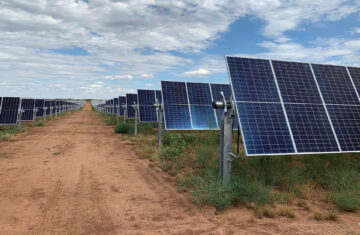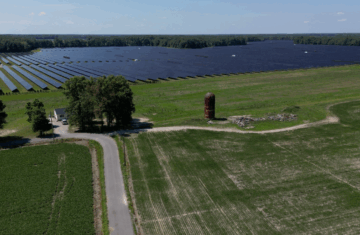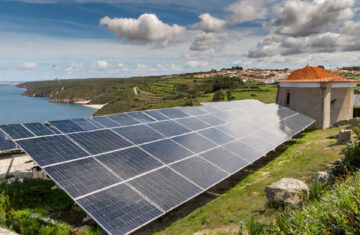
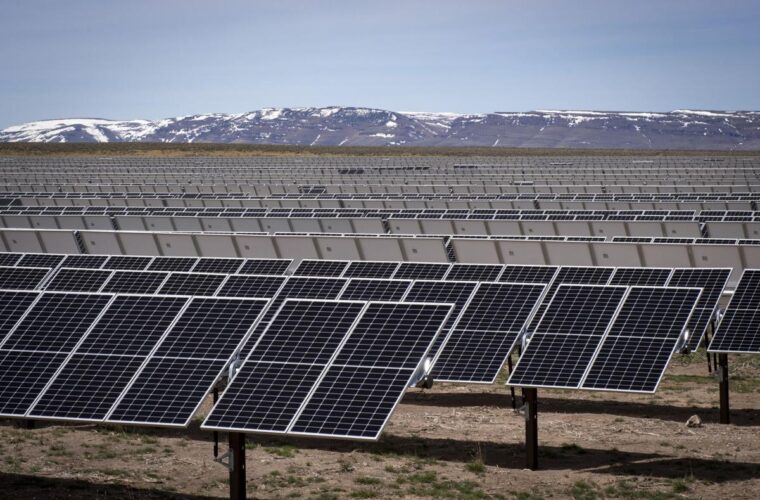
Franklin Solar Hybrid project represents a innovative approach to renewable energy development in the Intermountain West. By combining solar generation with battery storage on a strategic scale, this facility is designed to provide reliable, dispatchable power while supporting the region’s agricultural economy through a unique land-use model.
Significance & Context
The Franklin Solar Hybrid is a 120-megawatt (MW) solar array coupled with a 40 MW / 160 MWh battery energy storage system. Developed by Clenera, the project’s entire output is contracted to Idaho Power under a long-term power purchase agreement, supporting the utility’s goal of providing 100% clean energy by 2045 as outlined in its Integrated Resource Plan. The facility will generate enough electricity to power approximately 24,000 Idaho homes and represents an investment of over $150 million in the local economy.
Development Timeline
Development for the Franklin Solar Hybrid began with land acquisition and feasibility studies in 2020. The project successfully secured its interconnection agreement with the Midcontinent Independent System Operator (MISO), with its status documented in the public MISO Generation Interconnection Queue. After finalizing its power contract and securing all necessary county permits, construction commenced in early 2023. The project achieved commercial operation for both solar and storage components in the fourth quarter of 2024.
Technology & Innovation
The project’s core innovation is its fully integrated solar-plus-storage design using single-axis trackers and lithium-ion battery technology. The four-hour duration battery system allows the facility to store excess solar energy generated during midday and dispatch it during peak evening hours. Additionally, the project implements a sophisticated agrivoltaic program that combines sheep grazing with pollinator-friendly habitats beneath the arrays. This approach, researched by the University of Idaho Extension, maintains agricultural productivity while creating natural vegetation management that reduces operational costs.
Challenges & Controversies
A significant challenge for the Franklin Solar Hybrid project was addressing concerns about water usage and potential impacts on the local aquifer in the arid region. Some community members expressed apprehension about the project’s water needs for construction and panel cleaning. The developers resolved this by implementing a water conservation plan that uses an automated, air-based cleaning system that eliminates water usage for routine maintenance. This system, along with commitments to use minimal reclaimed water for dust control during construction, helped secure permits from the Idaho Department of Water Resources.
Community & Economic Impact
The project delivers substantial economic benefits to Franklin County. During peak construction, the Franklin Solar Hybrid typically employed over 200 workers, providing a significant boost to local services. Over its 30-year operational life, the project is projected to generate millions of dollars in new property tax revenue. This revenue will likely contribute substantially to local school districts and county services. For participating landowners, the long-term lease payments provide a stable source of income while allowing much of the land to remain in agricultural production through grazing.
Future Outlook
Now fully operational, the Franklin Solar Hybrid serves as a model for future renewable development in Idaho, demonstrating how solar generation can be paired with storage to create a reliable clean energy resource. The project’s success has prompted interest in similar developments across the region. The facility’s design allows for potential future expansion of battery capacity as technology improves. As analyzed in the U.S. Energy Information Administration’s (EIA) state profile for Idaho, such hybrid resources will play an increasingly important role in meeting the state’s growing energy demand while maintaining grid reliability, positioning the Franklin Solar Hybrid as a cornerstone of Idaho’s clean energy transition.
There is also at USA: Oak Solar