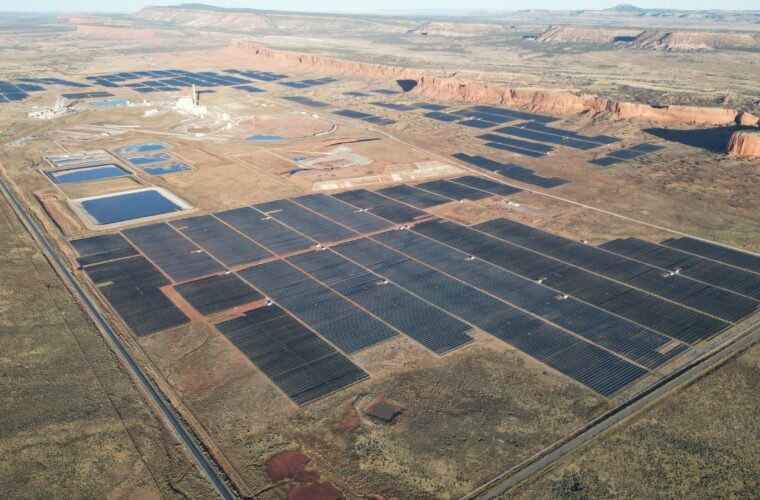
Rising from the high desert of southwestern Utah, the Escalante Solar farm complex represents a transformative repurposing of energy infrastructure, demonstrating how communities can transition from fossil fuel dependence to renewable energy while maintaining economic stability and grid reliability. This project stands as a national model for how solar development can directly replace retired coal generation, providing a just transition for affected workers and communities while advancing climate goals.
Significance & Context
Developed by rPlus Energies, the Escalante Solar farm complex comprises three phases with a combined capacity of 300 megawatts (MW) coupled with 150 MW of battery storage. According to data from the Utah Office of Energy Development, the facility generates enough electricity to power approximately 90,000 homes while enabling the retirement of the nearby Escalante Station coal plant. Its location in Beaver County represents a strategic energy transition, replacing baseload coal power with dispatchable solar-plus-storage that provides both clean energy and grid reliability services to the Rocky Mountain Power system.
Development Timeline
The project’s development emerged from a coordinated energy transition initiative. Planning began in 2018 following PacifiCorp‘s announcement of the Escalante coal plant’s retirement. Construction commenced in 2021 after securing power purchase agreements and necessary permits from the Beaver County Commission. The project reached commercial operation in phases between 2023 and 2024, as documented in Rocky Mountain Power integrated resource planning filings. This timeline allowed for careful workforce transition planning and infrastructure repurposing, ensuring continuous energy delivery throughout the transition.
Technology & Innovation
The Escalante Solar complex utilizes single-axis tracking systems with bifacial photovoltaic modules, optimized for high-desert conditions. The project’s most significant innovation is its integrated lithium-ion battery energy storage system, which provides four hours of storage capacity. According to technical reports from the National Renewable Energy Laboratory (NREL), this solar-plus-storage configuration allows the facility to dispatch power during evening peak demand periods, effectively replacing the coal plant’s capacity value while providing superior flexibility. The project also incorporates advanced grid-forming inverters that enhance regional grid stability.
Challenges & Controversies
The project faced significant challenges related to workforce transition and community economic impacts. Local residents and officials expressed concerns about job losses at the coal plant and the solar facility’s smaller operational workforce requirements. The resolution involved creating a comprehensive Workforce Transition Program developed in coordination with the Utah Department of Workforce Services and PacifiCorp, including retraining opportunities, preferential hiring for affected workers, and severance packages for those nearing retirement. Additionally, the project addressed land reclamation concerns by incorporating the solar development into the coal plant’s existing disturbance area, minimizing additional environmental impact.
Community & Economic Impact
For Beaver County, the project has managed the economic transition while creating new opportunities. During construction, the complex typically employed 300-400 workers, with priority given to local residents and displaced coal workers. For ongoing operations, it maintains 15-20 permanent positions. Based on Beaver County’s tax assessment models, the project likely contributes approximately $1.2-1.5 million annually in property tax revenue to local governments, helping to offset lost revenue from the coal plant’s closure. Additionally, it provides lease payments to local landowners and has stimulated new economic development through infrastructure investments and workforce training programs.
Future Outlook
With an expected operational lifespan of 30+ years, the Escalante Solar complex represents a long-term commitment to Beaver County’s energy future. The project’s success as a coal-to-solar transition model is being studied by other communities facing similar transitions, as noted in reports from the Utah Governor’s Office of Energy Development. The site’s existing transmission infrastructure and interconnection capacity position it well for potential future expansion or additional storage capacity. The project’s innovative approach to workforce transition and community engagement provides a valuable template for other regions navigating the shift from fossil fuels to renewable energy, demonstrating that energy transitions can maintain grid reliability while supporting affected workers and communities.