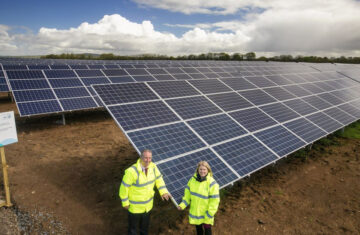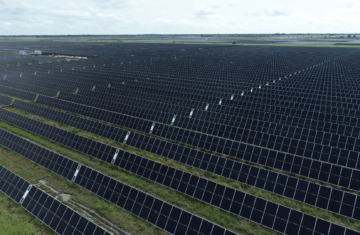
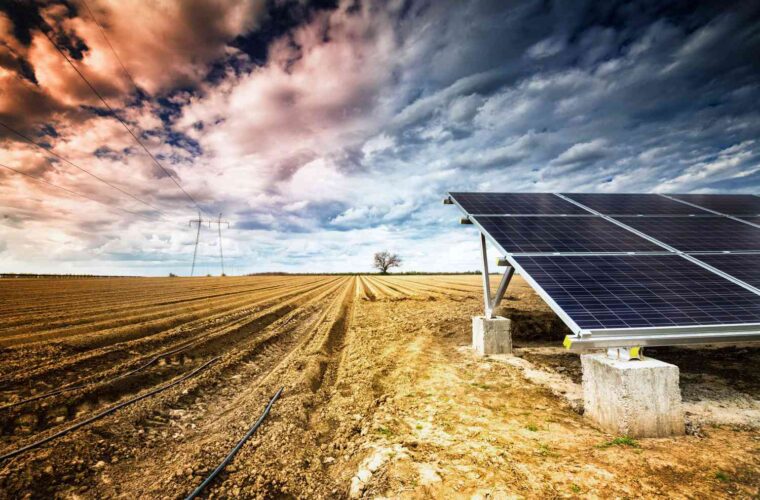
High desert sunlight defines Uintah County, Utah, and it is here that the Bonanza Solar Farm quietly contributes 12.5 megawatts (MW) of clean electricity to the grid. Though smaller than utility-scale giants, its role is deliberate—meeting local demand, strengthening the grid, and aligning with Utah’s Renewable Portfolio Standards, which encourage a diversified and resilient energy mix.
Developed by the Deseret Power Electric Cooperative, the project came online in 2023 after roughly two years of planning and permitting. Its array of monocrystalline panels, mounted on single-axis trackers, was strategically placed near existing transmission infrastructure to avoid costly upgrades. This siting decision ensured cost efficiency while delivering enough power for an estimated 3,300 households based on Utah’s average consumption rates.
With a capital investment in the $15–20 million range, Bonanza supported approximately 50 construction jobs, from heavy equipment operators to electricians, before transitioning to a smaller operations staff. Landowners who lease acreage for the solar array benefit from stable, long-term income—an increasingly important supplement to agriculture in the arid West. These lease payments, coupled with increased tax revenues, strengthen the local fiscal base in a county that has historically relied heavily on extractive industries.
The environmental gains are quantifiable. By generating zero-emission electricity, Bonanza offsets nearly 10,000 metric tons of CO₂ annually, according to conversion factors from the U.S. Environmental Protection Agency. That’s equivalent to taking around 2,000 gasoline-powered cars off the road each year. These savings directly support Utah’s commitment to reducing reliance on fossil fuels while improving regional air quality.
Yet the project’s development wasn’t without challenges. Environmental assessments reviewed impacts on local wetlands and sensitive species, leading to protective buffer zones. Developers also widened a county access road to handle equipment deliveries—an adjustment that became a temporary talking point in community meetings. Such details reflect the grounded, negotiated nature of renewable deployment: it is rarely about technology alone but about trust, transparency, and adaptation.
Looking forward, Bonanza’s modest size makes it a strong candidate for future repowering or integration with battery storage, allowing excess daytime solar energy to serve evening peaks. For now, it remains a cornerstone in the region’s growing portfolio of distributed clean power, a practical complement to Utah’s larger-scale renewable investments.
The key specifications for the Bonanza Solar Farm are detailed in the table below.