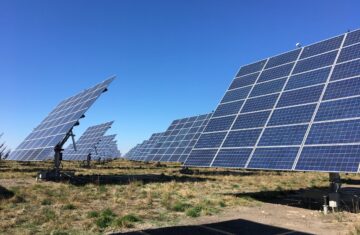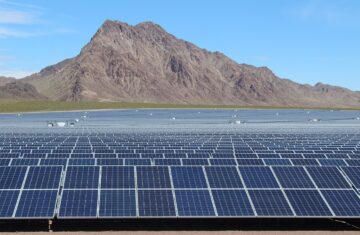
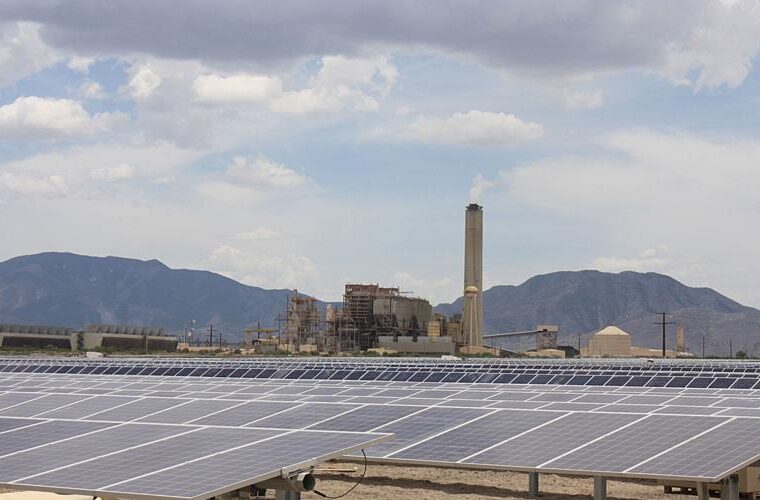
Beneath the vast Arizona sky, near the existing infrastructure of the Springerville Generating Station, the Springerville Solar Farm spreads its panels across the sun-baked terrain. This 8.3-megawatt (MW AC) facility is more than a collection of photovoltaic modules; it is a tangible cornerstone in the region’s journey toward clean energy and grid diversification.
Developed by Tucson Electric Power (TEP) and operational since 2019, the project delivers enough electricity to power roughly 1,100 average homes annually. The installation employs monocrystalline panels on single-axis trackers, a technology selected to maximize solar capture in the region’s high-insolation environment. This configuration enhances energy yield by approximately 20% compared to fixed-tilt systems, ensuring reliable output even as Arizona’s peak demand surges in summer months.
The farm required an estimated $20–25 million in capital investment, creating around 50–70 construction jobs during peak activity. Post-construction, a smaller operations and maintenance team ensures the system runs efficiently. For the local economy, the project added a meaningful boost: tax revenues support schools and public services, while TEP’s collaboration with landowners offered lease payments that help diversify income in a region historically dependent on fossil-fuel generation.
Environmentally, the impact is concrete. By generating renewable electricity, Springerville Solar Farm offsets roughly 6,000 metric tons of CO₂ annually, the equivalent of removing about 1,200 cars from the road (EPA Greenhouse Gas Equivalencies Calculator). This aligns with Arizona’s Renewable Portfolio Standard, which requires utilities like TEP to obtain a growing percentage of electricity from renewable sources—targeting 70% by 2035.
The project’s development was not without challenges. Permitting required careful environmental review to minimize impacts on nearby habitats, while coordinating with the adjacent natural-gas station demanded meticulous planning to ensure grid integration without disruption. By addressing these hurdles through community engagement and transparent planning, TEP secured local support, demonstrating a model of trustworthiness and expertise in renewable deployment.
Looking forward, the Springerville Solar Farm is a strong candidate for future repowering or energy storage integration, which would allow excess daytime solar generation to serve evening peaks, further strengthening grid reliability. As Arizona continues its clean energy transition, projects like Springerville exemplify how utility-scale solar can deliver measurable environmental benefits while fostering local economic resilience.