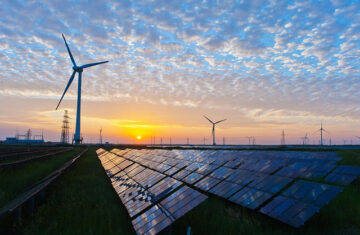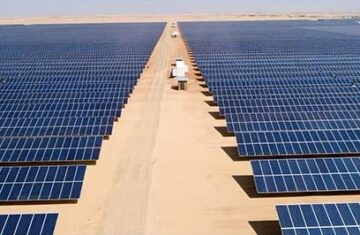
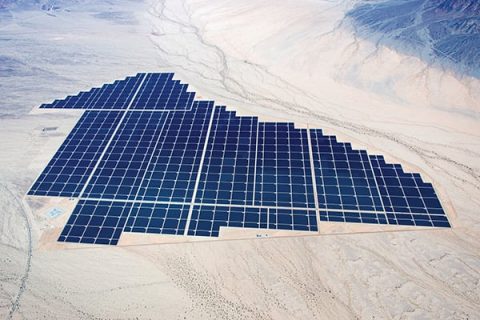
The American landscape is undergoing a profound transformation. Across sun-drenched deserts, sprawling farmlands, and even repurposed industrial sites, a new kind of power plant is rising—one that harnesses the boundless energy of the sun. The United States is in the midst of a solar energy boom, driven by falling technology costs, supportive federal policies, and a collective push toward a cleaner, more sustainable grid.
These monumental projects, often covering thousands of acres, are not just symbols of this green revolution; they are workhorses, generating staggering amounts of clean electricity capable of powering hundreds of thousands of homes. They represent the cutting edge of engineering, logistics, and environmental stewardship.
This comprehensive guide explores the titans of this industry: the Top 10 Solar Farms in the USA. We delve into their specifications, their impact, and the stories behind these modern marvels of renewable energy.
Understanding Solar Farm Capacity
Before we begin our countdown, it’s crucial to understand the metrics:
-
Megawatt (MW): A unit of power. One MW is 1,000 kilowatts (kW).
-
Megawatt-hour (MWh): A unit of energy. It represents one megawatt of power used for one hour.
-
Homes Powered: A common but simplified metric. It is typically calculated based on the average annual electricity consumption of a U.S. household.
Many of these projects are so vast they are measured in Gigawatts (GW), where 1 GW = 1,000 MW.
The Top 10 Solar Farms in the United States
1. Solar Star Projects (Rosamond, California)
Capacity: 579 Megawatts (MW)
Annual Output: Power for approximately 255,000 homes
Key Fact: Held the title of the world’s largest solar farm for several years after its completion in 2015.
Located in Kern and Los Angeles counties, the Solar Star projects are a landmark achievement in solar energy. Comprising over 1.7 million solar panels installed across 3,200 acres, this project was a monumental feat of construction. It utilizes high-efficiency photovoltaic (PV) technology mounted on single-axis trackers, which follow the sun across the sky to maximize energy capture throughout the day. Its impact on California’s renewable energy goals has been immense, offsetting over 570,000 metric tons of carbon dioxide annually.
2. Copper Mountain Solar Facility (Boulder City, Nevada)
Capacity: 802 MW
Annual Output: Power for approximately 300,000+ homes
Key Fact: One of the first utility-scale projects to be built in phases, demonstrating the scalable nature of solar development.
Situated just outside of Boulder City, this facility has grown through multiple phases since 2010. The latest phase added 250 MW of capacity using advanced bifacial panels that capture sunlight on both sides, increasing overall efficiency. Its location was chosen for its high solar irradiance and proximity to existing transmission infrastructure, making it a model of efficient project siting.
3. Mount Signal Solar (Calexico, California)
Capacity: 600 MW
Annual Output: Power for approximately 240,000 homes
Key Fact: One of the largest single-axis tracker solar farms in the world upon completion.
Located in the Imperial Valley, one of the sunniest regions in the United States, this project is a testament to the potential of tracking technology. The entire facility uses single-axis trackers, which can increase energy production by up to 25% compared to fixed-tilt systems. This project was developed on previously underutilized agricultural land, providing a stable new revenue stream for the local economy.
4. Desert Sunlight Solar Farm (Desert Center, California)
Capacity: 550 MW
Annual Output: Power for approximately 160,000 homes
Key Fact: A landmark project that helped secure a major loan guarantee from the U.S. Department of Energy, paving the way for future large-scale developments.
This farm was a pioneer in the utility-scale solar sector. It was one of the first projects to successfully navigate the federal loan guarantee program, proving the bankability of giant solar installations. The farm utilizes thin-film cadmium telluride (CdTe) photovoltaic modules, which perform well in high-temperature environments like the Mojave Desert.
5. Topaz Solar Farm (San Luis Obispo County, California)
Capacity: 550 MW
Annual Output: Power for approximately 180,000 homes
Key Fact: One of the first projects of its scale to be approved on farmland, setting important precedents for environmental review and permitting.
Located in California’s Carrizo Plain, this project’s development involved extensive environmental mitigation efforts to protect local species, demonstrating that large-scale renewable energy and ecological conservation can coexist. The power generated here is sold under a long-term power purchase agreement (PPA), a critical financial mechanism for these multi-billion-dollar projects.
6. Gemini Solar Project (Near Las Vegas, Nevada)
Capacity: 690 MW (with 380 MW / 1,416 MWh of battery storage)
Annual Output: Power for approximately 260,000 homes
Key Fact: Not just a solar farm; it’s one of the largest solar-plus-storage projects in the world, defining the future of renewable energy.
This project represents the next evolution of solar farms. It combines massive solar generation with one of the largest battery energy storage systems on the planet. This allows the project to capture excess solar energy during the day and dispatch it during the evening peak demand hours, effectively acting like a traditional power plant that can provide reliable, on-demand power.
7. Edwards & Sanborn Solar and Energy Storage (Kern County, California)
Capacity: 875 MW solar + 3,320 MWh battery storage
Annual Output: Power for approximately 238,000 homes
Key Fact: The current titleholder for the largest single solar-plus-storage project in the United States by battery capacity.
This project is an absolute engineering marvel, seamlessly integrating massive solar generation with an unprecedented amount of energy storage. The battery storage capacity is the largest of its kind, storing enough energy to power the equivalent of a small city for several hours. It sells power to multiple utilities and even provides power to a major air force base, enhancing its energy resilience.
8. Mammoth Solar Project (Indiana)
Capacity: 1.65 GW (Planned, phases underway)
Annual Output: (Upon completion) Power for approximately 275,000 homes
Key Fact: Upon completion, it is poised to be one of the largest solar farms in the United States, signaling a major shift of large-scale solar to the Midwest.
This project is a testament to the national expansion of utility-scale solar. Its development is a model for how states with less intense sun but vast available land can become major renewable energy producers. It represents a massive investment in the Midwest’s energy infrastructure and provides a new cash crop for local landowners through lease agreements.
9. Permian Energy Center (West Texas)
Capacity: 460 MW solar + 40 MW battery storage
Annual Output: Power for approximately 100,000+ homes
Key Fact: Strategically located in the heart of the nation’s oil capital, providing clean power to fossil fuel operations and demonstrating the energy transition in action.
This project is symbolic of the changing energy landscape. It provides low-cost, reliable clean energy to power oil and gas field operations. This reduces the carbon footprint of fossil fuel extraction—a key step toward reducing emissions for energy companies. Its success has paved the way for a wave of similar hybrid projects in Texas.
10. Roadrunner Solar Project (Texas)
Capacity: 497 MW
Annual Output: Power for approximately 100,000 homes
Key Fact: A prime example of the massive scale and speed of solar development in the competitive Texas energy market.
This project is a giant in the nation’s most competitive energy market. Its power is sold on the merchant market, meaning it competes directly with fossil fuel plants on price, a true test of solar’s economic viability. The project’s development was fast-tracked, highlighting the streamlined permitting process that has made Texas a hotspot for renewable investment.
The Future is Bright and Powered by the Sun
The projects on this list are more than just feats of engineering; they are the foundation of a new American energy economy. They create thousands of jobs, inject revenue into local communities, provide resilience to the grid, and are a powerful tool in the fight against climate change. As technology continues to improve, the solar farms of tomorrow will be even larger, more efficient, and more integrated with storage, continuing to push the boundaries of what’s possible.