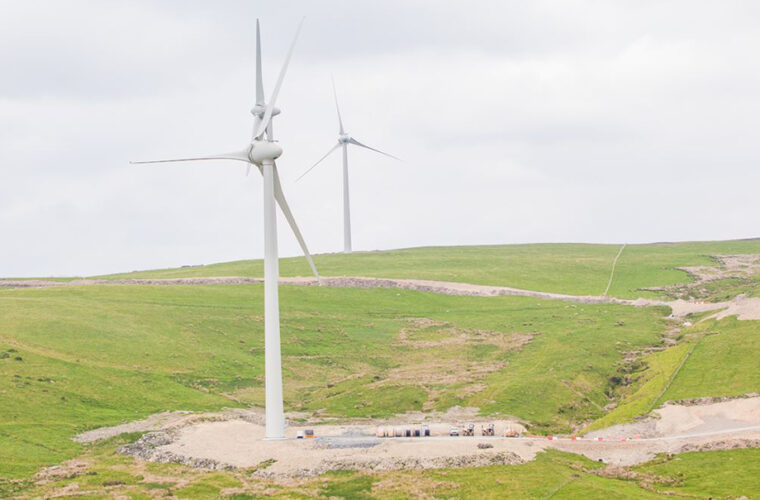
Rising from the farmlands of Benzie County, the Sleeping Bear Wind Farm at Harper represents a significant investment in Michigan’s clean energy future and a focal point in the state’s energy transition. This project is a key part of the strategy to diversify its energy mix and leverage its natural resources, moving away from reliance on imported fossil fuels. By harnessing the winds that sweep across the Lower Peninsula, the wind farm contributes to grid stability, energy independence, and the reduction of the state’s carbon footprint, powering the equivalent of thousands of homes with clean electricity.
Significance & Context
The Sleeping Bear Wind Farm is a tangible step toward Michigan’s legislated goal of achieving 100% clean electricity by 2040. Located in a region with a strong agricultural identity, the project symbolizes a new chapter for rural economies, allowing farmland to simultaneously produce both food and power. Its development is aligned with the findings of the Michigan Public Service Commission, which has emphasized the need for increased in-state generation of renewable energy. The project’s output is a critical component of utility Consumers Energy‘s integrated resource plan, which aims to add gigawatts of new renewable capacity to its portfolio while retiring aging coal plants.
Development Timeline
The project’s development began in earnest in 2019, led by developer Heron Wind, a subsidiary of Pattern Energy, following extensive wind resource assessment and landowner agreements. After a rigorous permitting process with Benzie County and the Michigan Department of Environment, Great Lakes, and Energy (EGLE), major construction commenced in 2022. The project navigated the complexities of sourcing materials and equipment during global supply chain disruptions, finally achieving commercial operation and delivering power to the grid in the fourth quarter of 2023. This multi-year timeline reflects the careful planning and execution required for modern energy infrastructure.
Technology & Innovation
The Sleeping Bear Wind Farm features 45 modern Siemens Gamesa SG 4.2-145 turbines, each with a nameplate capacity of 4.2 Megawatts (MW), summing to a total project capacity of 189 MW. These turbines, with rotor diameters of 145 meters, capture wind energy at higher altitudes where it is stronger and more consistent. A state-of-the-art supervisory control and data acquisition (SCADA) system allows for remote monitoring and optimization of each turbine’s performance, maximizing energy output and providing valuable data for future wind projects in the region. The project also includes a new substation and interconnection infrastructure to deliver power to the grid managed by Midcontinent Independent System Operator (MISO).
Challenges & Controversies
The development process was not without significant challenges. The project faced organized opposition from local groups, notably Benzie County Citizens for Responsible Wind Energy, who expressed concerns about visual impact, potential effects on property values, shadow flicker, and sound emissions. The developer addressed these concerns through a prolonged period of community engagement, public hearings hosted by the Benzie County Planning Commission, and adjustments to the project layout and turbine setbacks. Furthermore, stringent state and local permitting requirements, including studies on avian and bat activity conducted in coordination with the U.S. Fish and Wildlife Service, were meticulously completed to ensure the project met all regulatory standards and mitigated its effects on the local ecosystem.
Community & Economic Impact
The Sleeping Bear Wind Farm provides a substantial economic boost to Benzie County and the surrounding region. During peak construction, the project employed over 250 workers, and its ongoing operations require a team of 12-15 full-time local technicians for maintenance. Over its 30-year lifespan, it is projected to generate an estimated $30 million in new tax revenue for local governments, helping to fund public services like schools, road maintenance, and emergency services. Additionally, the roughly 50 private landowners who host turbines and infrastructure receive annual lease payments, providing a reliable source of income that supplements agricultural revenue and supports farming families. The project also established a community benefits fund to support local initiatives.
Future Outlook
With an expected operational lifespan of 30 years, the Sleeping Bear Wind Farm is a long-term asset for Michigan’s energy grid. The project is well-positioned for future technological upgrades; as turbines age, they could be repowered with newer, more efficient models to increase capacity. Its success also paves the way for further renewable energy investment in the region, potentially including complementary technologies like the battery energy storage systems advocated for by Michigan Energy Innovations to store excess power and enhance grid reliability. The project serves as a case study for future developments in Michigan’s ongoing clean energy transition.