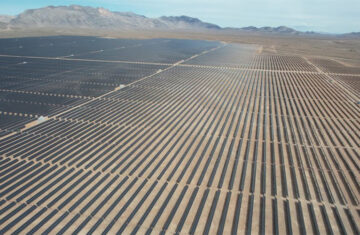
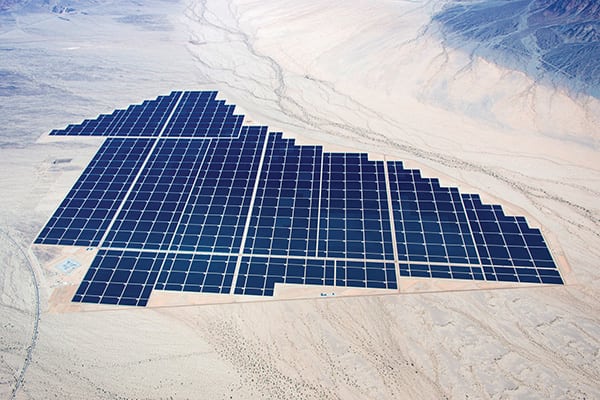
Spanning over 3,000 acres of the Sonoran Desert, the Desert Sunlight Solar Farm in Riverside County stands as a monument to scale and ambition in American renewable energy. When it commenced operations, it was one of the largest photovoltaic plants in the world, a flagship project that demonstrated the viability of utility-scale solar power to significantly dent national carbon emissions and fuel the transition toward a clean energy economy.
Significance & Context
Developed by First Solar, the 550-megawatt (MW) Desert Sunlight facility was a cornerstone of the U.S. Department of Energy’s loan program, designed to catalyze the commercial deployment of large-scale solar. Its immense output, enough to power approximately 160,000 average homes, was crucial for helping California meet its aggressive Renewable Portfolio Standard targets. The project’s development, on public lands managed by the U.S. Bureau of Land Management (BLM), also set a precedent for the multi-use of federal property for energy generation and environmental conservation.
Development Timeline
The project’s journey from conception to completion was a rapid acceleration of scale. Initiated in the late 2000s, it secured critical financial backing through a $1.46 billion loan guarantee from the DOE’s Loan Programs Office in 2011. Construction began shortly after and proceeded at a remarkable pace. The project was built in two phases, with the first 300 MW achieving commercial operation in 2013 and the full 550 MW capacity coming online by early 2015, as recorded in First Solar’s operational updates.
Technology & Innovation
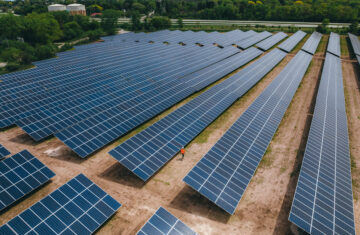
Desert Sunlight utilizes thin-film cadmium telluride (CdTe) photovoltaic modules, a technology pioneered by First Solar. At the time of its construction, this represented a significant alternative to conventional crystalline silicon panels. The project’s innovation was not just in the modules themselves but in the sheer scale of their deployment—featuring over 8 million panels mounted on a single-axis tracking system. This tracking technology, which allows the panels to follow the sun’s path across the sky, increases energy production by approximately 20% compared to fixed-tilt systems, according to performance data from the National Renewable Energy Laboratory (NREL).
Challenges & Controversies
A significant challenge for the project was mitigating its impact on the fragile desert ecosystem. Environmental groups, including the Sierra Club, raised concerns about potential harm to endangered species, particularly the desert tortoise. The resolution was a comprehensive mitigation plan developed in coordination with the BLM and the U.S. Fish and Wildlife Service (USFWS). This plan, one of the largest of its kind, involved extensive pre-construction surveys, the translocation of hundreds of tortoises to protected habitats, and the establishment of thousands of acres of permanent conservation land to offset the project’s footprint.
Community & Economic Impact
The Desert Sunlight project delivered substantial economic benefits to Riverside County. During its three-year construction peak, it typically employed over 440 workers, providing a significant boost to the local economy. For ongoing operations, it maintains a team of approximately 15 full-time staff. According to economic impact analyses standard for projects of this scale, it likely contributes millions of dollars in annual property tax and fee payments to the county. Additionally, it provides steady lease payments to the federal government for the use of public lands and to any private landowners involved.
Future Outlook
With an operational lifespan expected to exceed 30 years, Desert Sunlight is a long-term asset for California’s grid. Its success proved the business case for gigawatt-scale solar and paved the way for subsequent projects. As technology advances, the site is a prime candidate for future “repowering,” where original panels could be replaced with newer, more efficient models to increase output. Its co-location with other large-scale solar facilities in the region has also created a critical mass of renewable generation that will be essential for integrating energy storage solutions, as highlighted in grid planning documents from the California Independent System Operator (CAISO).