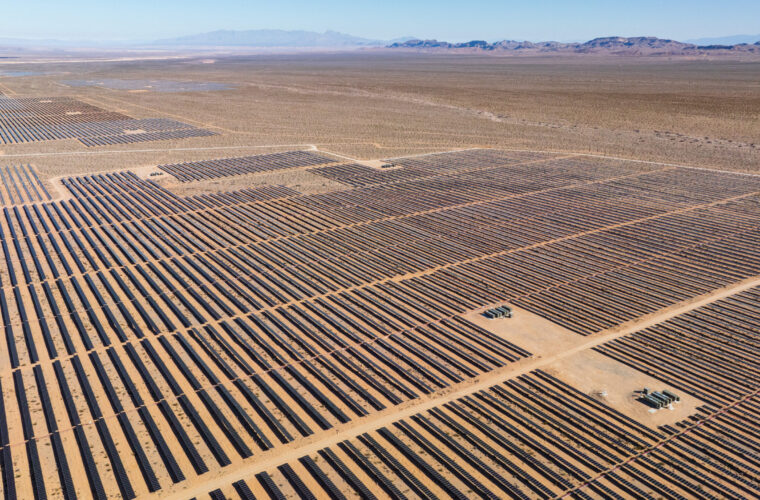
Gemini Solar Hybrid project represents a landmark achievement in renewable energy development, standing as one of the largest solar-plus-storage facilities in the United States. This massive project demonstrates the scalability of hybrid technology to deliver reliable, clean power at a magnitude capable of significantly impacting regional electricity markets and advancing national decarbonization goals.
Significance & Context
The Gemini Solar Hybrid is a monumental 690-megawatt (AC) solar facility coupled with a 380-megawatt / 1,400-megawatt-hour battery energy storage system developed by Primergy Solar. The project’s entire output is contracted with NV Energy under a power purchase agreement approved by the Public Utilities Commission of Nevada (PUCN). According to data from the U.S. Energy Information Administration (EIA), the facility generates enough electricity to power approximately 260,000 homes during peak output, with the massive battery storage system capable of extending that power well into the evening hours. The project displaces an estimated 1.5 million metric tons of carbon dioxide emissions annually, making it one of the most significant carbon reduction projects in the American West.
Development Timeline
The project’s development began with site selection on public lands managed by the U.S. Bureau of Land Management (BLM) in 2017. A critical milestone was reached in 2020 when the BLM issued its Record of Decision after completing an extensive environmental review process. The project secured its power purchase agreement with NV Energy in 2021. Construction commenced in 2022, with the project achieving commercial operation in phases throughout 2023-2024.
Technology & Innovation
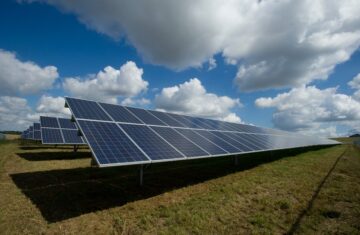
The Gemini Solar Hybrid utilizes cutting-edge technology at an unprecedented scale. The solar component features single-axis tracking systems with bifacial solar panels that capture reflected light from the desert floor. The true innovation lies in the massive lithium-ion battery storage system, one of the largest of its kind in the world. According to technical analysis from the National Renewable Energy Laboratory (NREL), this configuration allows the project to store abundant daytime solar energy for use during peak evening demand, effectively acting as a dispatchable power plant. The project’s advanced control systems manage the complex interaction between generation, storage, and grid delivery.
Challenges & Controversies
A significant challenge for the Gemini Solar project involved navigating the extensive federal permitting process for a project of this scale on BLM land. The development required meticulous environmental review, particularly regarding impacts on desert tortoise habitat and other sensitive species. This challenge was resolved through the development of a comprehensive Habitat Conservation Plan that included funding for land acquisition and conservation measures, approved by the U.S. Fish and Wildlife Service. The project also implemented a waterless cleaning system for the solar panels to minimize water usage in the arid environment.
Community & Economic Impact
The Gemini Solar Hybrid project provides substantial economic benefits to Nevada. During peak construction, the project typically employed over 1,000 workers, according to workforce estimates from the Solar Energy Industries Association (SEIA). For long-term operations, it supports a significant permanent team for maintenance and monitoring. While located on federal land, the project generates economic activity through payments to the U.S. Treasury and payments in lieu of taxes (PILT) that likely contribute to local services. The project also represents a major private investment in Nevada’s clean energy infrastructure.
Future Outlook
With an operational lifespan exceeding 30 years, the Gemini Solar Hybrid establishes a new benchmark for utility-scale renewable energy projects. Its success demonstrates the technical and economic viability of large-scale solar-plus-storage as a replacement for conventional power plants. The project’s size and storage capacity make it a crucial asset for grid reliability in Nevada and California. As technology advances, there may be opportunities to enhance the storage capacity or efficiency of the system. The Gemini Solar Hybrid positions Nevada as a national leader in clean energy innovation and provides a replicable model for future large-scale renewable developments aimed at achieving deep decarbonization of the electricity sector.
There is also at USA: Neptune Energy Center Hybrid solar farm