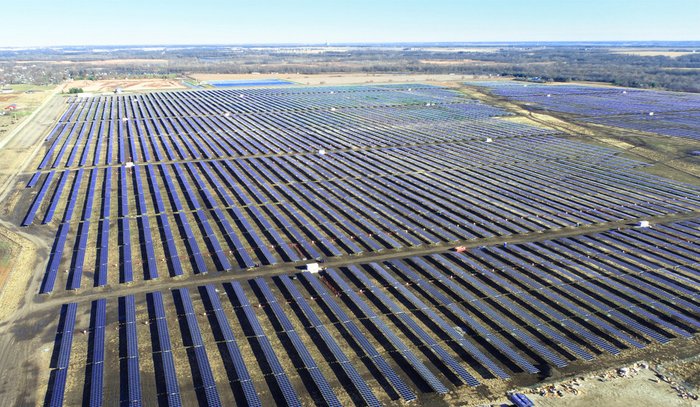
In the heart of America’s agricultural belt, the Wapello Solar Farm represents a new cash crop for Iowa: clean energy. While the state is a national leader in wind power, this significant utility-scale solar project diversifies its renewable portfolio, proving that the Hawkeye State can harness the sun alongside the wind. Located on former farmland, Wapello Solar symbolizes the evolving relationship between agriculture and energy, offering landowners a stable, long-term revenue stream while contributing megawatts to a grid increasingly powered by low-carbon sources.
Significance & Context
The Wapello Solar Farm marks a strategic expansion of Iowa’s renewable energy generation beyond its extensive wind capacity. The project contributes directly to the state’s position as a net exporter of energy and helps meet the growing demand for clean electricity from major industrial users and tech companies locating data centers in the region. By generating power during daylight hours, solar complements wind generation, which often peaks at night, creating a more balanced and reliable renewable energy mix for the Midcontinent Independent System Operator (MISO) grid. This diversification is a key strategy discussed in reports by the Iowa Environmental Council for achieving a decarbonized energy system.
Development Timeline
Development for the Wapello Solar Farm began in the early 2020s, following the maturation of the solar industry and declining technology costs. The process involved extensive landowner negotiations and securing permits from Wapello County, which required updating local zoning ordinances to accommodate large-scale solar. A critical milestone was finalizing a power purchase agreement (PPA) with a utility or large commercial customer, providing the financial backbone for the project. Construction commenced in 2023, with the project reaching commercial operation in 2025.
Technology & Innovation
The Wapello Solar Farm utilizes robust photovoltaic technology suited for the Midwestern climate. It features durable, high-efficiency panels mounted on single-axis tracking systems to maximize energy capture throughout the day. A key consideration for the project’s design was soil health and water management. The use of agrivoltaics—the co-location of agriculture and solar generation—is a potential innovation, where grazing sheep or pollinator-friendly habitats under and around the panels can maintain agricultural use and support local ecosystems, a practice supported by research from Iowa State University Extension.
Challenges & Controversies
A primary challenge for the Wapello Solar project involved addressing concerns about the conversion of agricultural land. Some community members expressed apprehension about losing prime farmland to industrial energy production. The developers addressed these concerns through public forums and by designing the project with agricultural compatibility in mind. They emphasized that solar development is a temporary land use—typically 25-35 years—and that the land can be easily returned to traditional farming afterward. Furthermore, the promise of significant property tax revenue and long-term lease payments for landowners helped build community support.
Community & Economic Impact
The Wapello Solar Farm provides a substantial economic benefit to Wapello County. During the peak construction phase, a project of this scale typically employs 200-300 workers, boosting local hotels, restaurants, and suppliers. While permanent operational roles are fewer, they create skilled, long-term jobs for local technicians. The project likely contributes a significant and predictable increase in property tax revenue, which can be used to fund local schools, emergency services, and road maintenance—a fiscal impact analyzed by the Iowa Department of Revenue. For participating landowners, the lease payments offer a drought-proof and price-stable income source, providing financial security for farm families.
Future Outlook
The successful completion of the Wapello Solar Farm paves the way for further solar development in Iowa, demonstrating that the state’s energy leadership is not limited to wind. It serves as a model for how solar can be integrated into an agricultural economy beneficially. As energy storage costs decline, the site is a logical candidate for a future battery addition, which would allow it to store daytime solar energy for use during evening peak hours. The project underscores a broader trend identified by the U.S. Energy Information Administration (EIA) of solar capacity expanding significantly in the Midwest, solidifying Iowa’s role in America’s clean energy transition.
There is also at USA: Gemini Solar Hybrid