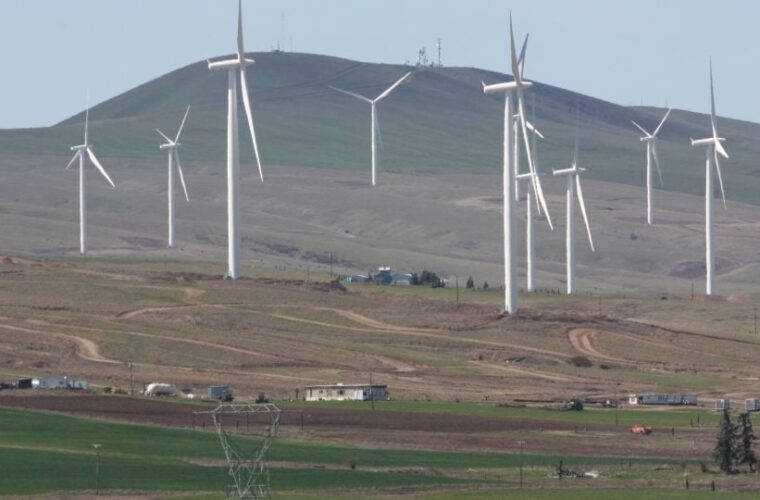
Perched on the windswept ridges above the Columbia River Gorge, the Tuolumne Wind Project represents a strategic development that capitalizes on Washington’s premier wind resources while navigating complex environmental considerations. This project demonstrates how careful siting and technology selection can enable renewable energy generation in a region known for both its strong winds and sensitive ecosystems.
Significance & Context
The Tuolumne Wind Project is a 126-megawatt (MW) facility developed by NextEra Energy Resources in Klickitat County. The project sells its power to Puget Sound Energy under a long-term power purchase agreement, contributing to the utility’s compliance with Washington’s renewable energy standards. Located in a county that has become a renewable energy hub, the facility generates enough electricity to power approximately 38,000 Washington homes and represents a capital investment of approximately $200 million.
Development Timeline
Development for the Tuolumne Wind Project began with land acquisition and wind resource assessment in 2011. The project successfully navigated Washington’s Energy Facility Site Evaluation Council (EFSEC) process, receiving its permit in 2014. Construction commenced in 2015 and proceeded through challenging winter conditions before achieving commercial operation in late 2016. The project’s timeline reflected the careful planning required for development in topographically complex terrain.
Technology & Innovation
The project utilizes 42 Siemens Gamesa 3.0-MW turbines, selected for their performance in the region’s variable wind conditions. A key feature is the project’s terrain-specific foundation design, which was engineered to accommodate the steep slopes and complex geology of the site. The turbine placement was optimized using advanced wind flow modeling to maximize energy production while minimizing visual impacts from nearby scenic areas, including the Columbia River Gorge National Scenic Area.
Challenges & Controversies
A significant challenge was addressing concerns about the project’s potential impact on the threatened ferruginous hawk and other raptors that frequent the area. The project underwent extensive environmental review, with the developer implementing a comprehensive Avian Protection Plan developed in consultation with the Washington Department of Fish and Wildlife. This included pre- and post-construction monitoring, seasonal operational adjustments during key migration periods, and habitat enhancement measures to mitigate potential impacts.
Community & Economic Impact
The project provides substantial economic benefits to Klickitat County. During peak construction, Tuolumne Wind Project typically employed over 200 workers, providing a significant boost to local services. The project continues to support permanent operations and maintenance positions. As one of the county’s larger taxpayers, the project likely contributes millions of dollars in property tax revenue over its operational life, supporting local schools, emergency services, and infrastructure. Participating landowners receive stable lease payments that complement agricultural and timber revenues.
Future Outlook
As a relatively modern addition to Washington’s energy portfolio, the Tuolumne Wind Project is positioned for decades of continued operation. The project’s successful integration into Klickitat County’s landscape demonstrates the potential for additional carefully sited renewable development in the region. As analyzed by the U.S. Energy Information Administration (EIA), such projects will play a crucial role in meeting Washington’s clean energy goals. The site’s established infrastructure and strong wind resource make it a potential candidate for future repowering, ensuring its long-term contribution to the state’s renewable energy mix.
At Benton County you can find also: Benton County Wind Farm