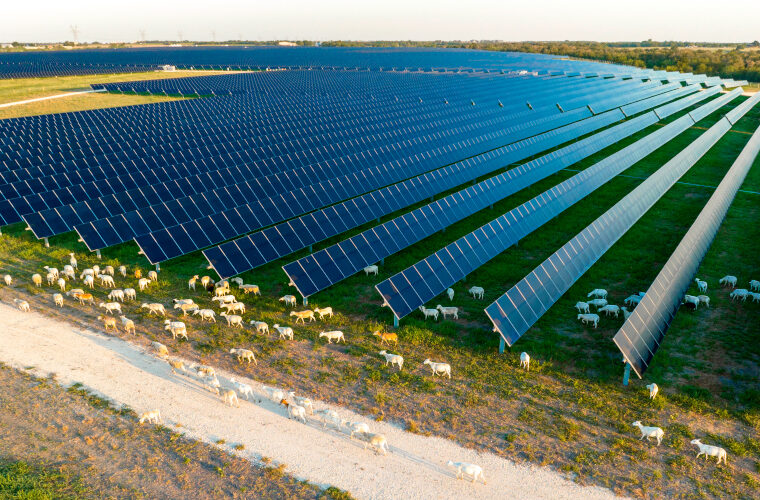
Second Division Solar project represents a strategic deployment of utility-scale renewable generation designed for both economic and operational efficiency. This facility distinguishes itself by focusing on optimal grid interconnection and streamlined development, delivering cost-competitive power without the scale of the state’s largest installations. Second Division Solar exemplifies how a well-executed, mid-sized project can play a vital role in enhancing grid diversity and reliability, proving that strategic positioning can be as valuable as sheer size in the evolving ERCOT market.
Significance & Context
The Second Division Solar project is a significant contributor to the Electric Reliability Council of Texas (ERCOT) grid, adding reliable capacity during peak daylight hours. Its strategic value is amplified by its interconnection point, chosen to avoid the most congested transmission corridors in West Texas, thereby increasing the deliverability of its power to load centers. This development supports the state’s overall resource adequacy, a persistent concern highlighted in ERCOT’s Seasonal Assessments of Resource Adequacy, and provides a hedge against volatile wholesale electricity prices.
Development Timeline
Development for Second Division Solar accelerated in the early 2020s, leveraging lessons learned from earlier project cycles to create a more efficient timeline. Key milestones included securing a strategically located land parcel, navigating a streamlined county permitting process, and capitalizing on an available interconnection position. Construction commenced in 2023, and the project was successfully built and reached commercial operation in 2025, demonstrating a faster development pathway than many of its larger counterparts.
Technology & Innovation
The Second Division Solar facility utilizes high-efficiency, monocrystalline solar panels mounted on single-axis tracking systems, a proven technology combination for maximizing output in the Texas climate. The project’s innovation lies in its balance-of-plant optimization and electrical design, which minimizes energy losses and reduces operational complexity. Its advanced inverters are configured to provide essential grid services like voltage support, enhancing the stability of the local distribution network.
Challenges & Controversies
A primary challenge for the Second Division Solar project was securing financing in a crowded market. With numerous large-scale projects competing for capital, demonstrating a strong, bankable power purchase agreement (PPA) was critical. This hurdle was resolved by securing a mid-term PPA with a credit-worthy offtaker, coupled with a conservative project design that minimized construction and operational risk, thereby attracting debt and equity investors seeking a lower-risk profile in the renewable energy sector.
Community & Economic Impact
For its host county, the Second Division Solar project provides a meaningful and sustained economic benefit. During the construction phase, the project typically employed over 150 workers, providing a noticeable boost to local services. The permanent operations and maintenance team creates a stable of long-term, skilled jobs. The project likely contributes a significant increase in property tax revenue over its operational life, providing crucial funding for local schools, public safety, and infrastructure—a fiscal benefit detailed in analyses by the Texas Comptroller of Public Accounts. Landowners benefit from a predictable source of lease income.
Future Outlook
The successful operation of Second Division Solar validates the business case for strategically sited, efficiently developed mid-sized solar projects in Texas. Its operational data will provide a valuable benchmark for similar developments. The site’s electrical infrastructure is designed to accommodate a future battery energy storage system, which would significantly increase its value by allowing it to participate in more energy markets and provide power during evening peaks. Second Division Solar demonstrates that a diversified portfolio of renewable assets, including agile mid-sized projects, is key to a resilient and cost-effective energy future for Texas.
Find also at Texas: True North Solar