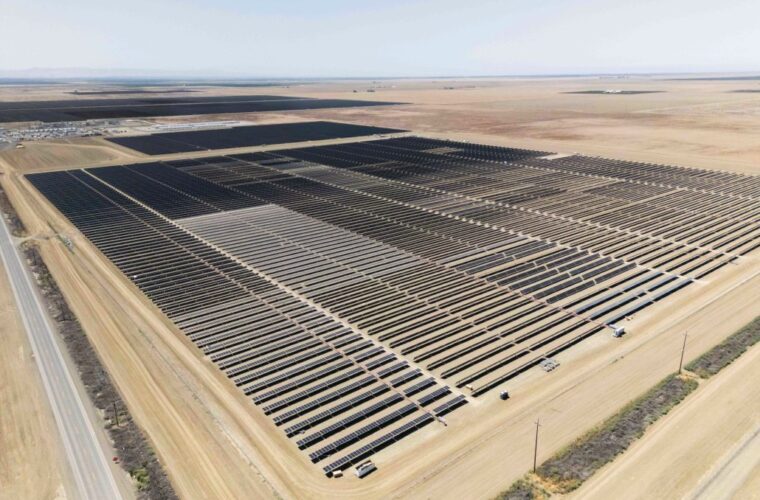
In California’s Imperial Valley, a region defined by its intense sun and critical role in the state’s agricultural and energy output, the Scarlet Solar Farm represents a major step forward in integrating large-scale renewable power with environmental stewardship. This project is not merely an addition to the state’s grid but a model for developing solar infrastructure in a sensitive desert ecosystem. By prioritizing habitat conservation and water efficiency, Scarlet Solar demonstrates a pathway for meeting California’s ambitious climate goals while addressing the complex ecological and community needs of the region.
Significance & Context
The Scarlet Solar Farm is a critical component of California’s mandate to achieve a 100% carbon-free electricity grid by 2045. Its location within the California Independent System Operator (CAISO) territory is strategically important for delivering power to Southern California load centers. Furthermore, the project is situated in a region where water conservation is paramount. By generating electricity with minimal water use, it provides a sustainable alternative to the region’s traditional geothermal power plants, which require significant water for cooling, a concern highlighted in the California Natural Resources Agency’s
Development Timeline
Development for the Scarlet Solar project began in the early 2020s, a period of heightened focus on sustainable siting for renewable energy in California. The timeline involved extensive environmental review and consultation with state and local agencies, including the California Energy Commission. After securing its power purchase agreement and final permits, construction commenced in 2023. The project successfully navigated the challenges of building in a high-temperature desert environment and achieved commercial operation in 2025.
Technology & Innovation
The Scarlet Solar Farm utilizes high-temperature-tolerant, monocrystalline solar panels mounted on single-axis tracking systems to maximize energy capture. A key innovation is its commitment to water conservation; the project employs a fully robotic, water-free cleaning system to maintain panel efficiency. In a significant move for habitat protection, the project design incorporates dedicated wildlife corridors and has implemented a pollinator-friendly habitat plan across the site, supporting the local ecosystem—a practice encouraged by the University of California Division of Agriculture and Natural Resources.
Challenges & Controversies
A primary challenge for the Scarlet Solar project was navigating the complex environmental permitting process required for building in the sensitive Colorado Desert ecosystem. The project faced scrutiny from conservation groups concerned about impacts on native species and habitat fragmentation. This hurdle was resolved through a collaborative and adaptive management approach. The developers worked closely with the California Department of Fish and Wildlife to design extensive mitigation measures, including the creation of wildlife corridors and funding for regional conservation efforts, which ultimately secured the project’s social license to operate.
Community & Economic Impact
For Imperial County, the Scarlet Solar Farm provides a substantial economic benefit. During the construction phase, the project typically employed over 300 workers, providing a significant boost to the local economy. The permanent operations and maintenance team, while smaller, creates long-term, skilled jobs in a region with high unemployment. The project likely contributes a major source of property tax revenue, which is vital for funding local public services such as schools, healthcare, and infrastructure—a fiscal impact documented by the Imperial County Board of Supervisors. Landowners receive a stable, new source of lease income.
Future Outlook
The successful commissioning of Scarlet Solar establishes a strong precedent for environmentally conscious solar development in California’s desert regions. Its innovative approach to habitat management and waterless operation sets a new standard for future projects. As the state’s grid evolves, the site is a prime candidate for co-location with battery energy storage, which would allow it to supply power during the critical evening peak. Scarlet Solar proves that with careful planning, California can meet its clean energy targets while honoring its commitment to environmental conservation.
Also at California: Hudson – High Desert Hybrid solar farm