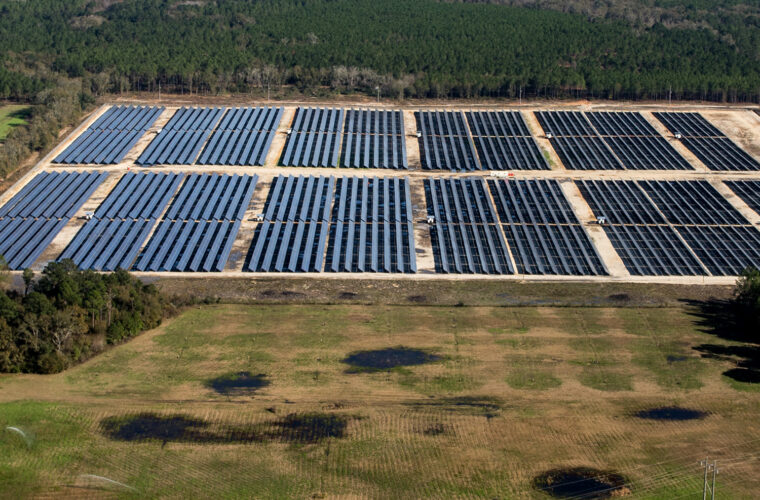
Nestled in the agricultural landscape of Southwest Georgia, the Camilla Solar Energy Project represents a growing synergy between traditional farming and renewable energy development. This project highlights a strategic use of land that provides a new, stable revenue stream for rural landowners while contributing significantly to Georgia’s diversifying energy portfolio, demonstrating how solar power can become an integral part of the state’s economic fabric.
Significance & Context
The Camilla Solar Energy Project is a 100-megawatt (AC) solar facility developed by Origis Energy on private land in Mitchell County. The project’s entire electrical output is purchased by Georgia Power under the utility’s Renewable Energy Development Initiative (REDI), a program approved by the Georgia Public Service Commission. This arrangement is a key component of Georgia Power’s strategy to expand its clean energy resources. The facility generates enough electricity to power approximately 18,000 homes and will displace an estimated 150,000 metric tons of carbon dioxide emissions annually, contributing to the state’s environmental goals.
Development Timeline
The development of the Camilla Solar project followed a structured multi-year process. Initial development work, including land acquisition and interconnection studies, began in 2019. A significant milestone was reached when the project was selected by Georgia Power in a competitive solicitation round. After securing the power purchase agreement, the project successfully navigated the local permitting process with the Mitchell County Board of Commissioners. Construction commenced in 2022, and the project achieved commercial operation in late 2023.
Technology & Innovation
The Camilla Solar Energy Project utilizes modern solar technology optimized for the regional climate. The facility features single-axis tracking systems that allow the photovoltaic panels to follow the sun’s path, increasing energy production by approximately 20-25% compared to fixed-tilt systems. The project incorporates bifacial panel technology in select areas, capturing reflected light on the rear side of the modules to generate additional electricity. Advanced inverters ensure the smooth integration of solar power into the grid managed by Southern Company, providing essential grid stability services.
Challenges & Controversies
A primary challenge for the Camilla Solar project involved addressing concerns about land use conversion in a predominantly agricultural community. Some local stakeholders expressed apprehension about the long-term impact of solar development on the county’s farming character. The developer addressed these concerns through a transparent community engagement process and by designing the project to accommodate agricultural co-location, such as sheep grazing for vegetation management. This approach demonstrated a commitment to preserving the land’s agricultural value while enabling clean energy generation.
Community & Economic Impact
The Camilla Solar Energy Project provides substantial economic benefits to Mitchell County. During the construction phase, the project typically employed 200-300 workers, providing a significant temporary boost to the local economy. For ongoing operations, it supports a permanent team of technicians for maintenance and monitoring. Most importantly, the project provides stable, long-term lease payments to local landowners, creating a drought-resistant revenue source. Based on Georgia’s tax code and local assessment models, the project likely contributes several hundred thousand dollars annually in property tax revenue to Mitchell County, directly benefiting local schools and public services.
Future Outlook
With an expected operational lifespan of 30+ years, the Camilla Solar Energy Project represents a long-term investment in Mitchell County’s economic future. The project’s successful integration provides a replicable model for future renewable development in rural Georgia. The site’s infrastructure is potentially compatible with future technological additions, such as co-located battery energy storage systems (BESS), which could enhance the value and reliability of the generated solar power. The Camilla Solar project solidifies the region’s role in Georgia’s evolving energy landscape, proving that economic development and environmental stewardship can be complementary goals.
Learn more about: Top 10 Solar Farms in USA