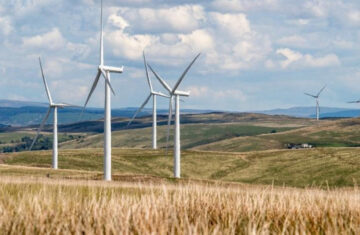
Situated on the high plains of Woodward County, Oklahoma, the OU Spirit Wind Farm represents a pioneering partnership between higher education, public power, and private industry to advance clean energy. As a direct supplier to a major university, this project exemplifies a tailored approach to renewable energy procurement, powering academia with homegrown resources while delivering targeted economic benefits to its rural host community.
Significance & Context
The OU Spirit Wind Farm, developed by ENGIE North America in partnership with Oklahoma Gas & Electric (OG&E), is a unique and purpose-built renewable asset. With a capacity of 102.5 megawatts (MW), the facility generates enough electricity to power the equivalent of over 35,000 homes annually, based on U.S. Energy Information Administration (EIA) calculations. Its primary significance lies in its dedicated 20-year power purchase agreement with the University of Oklahoma (OU), supplying the Norman campus with cost-effective, carbon-free electricity and serving as a flagship component of the university’s sustainability initiative. This direct linkage between a state university and a specific wind farm is a model for institutional clean energy leadership.
Development Timeline
The project’s development was catalyzed by the University of Oklahoma’s commitment to renewable energy in the mid-2010s. Following a competitive selection process, ENGIE was chosen as the developer. The project navigated land acquisition in Woodward County, permitting, and interconnection studies with the Southwest Power Pool (SPP) grid. Construction commenced in 2016, and the OU Spirit Wind Farm was completed and achieved commercial operation in 2017, rapidly fulfilling the university’s ambitious clean energy goal.
Technology & Innovation
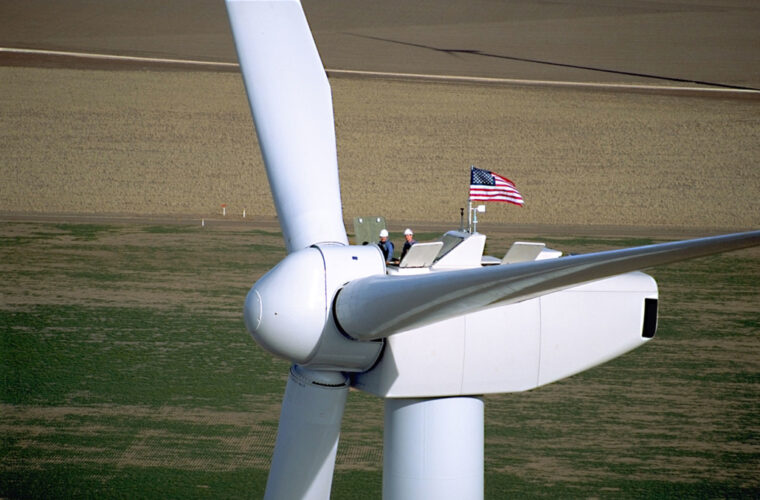
The farm utilizes efficient, durable turbines suited for the plains environment, featuring 33 Siemens Gamesa 3.1-3.2 MW turbines. Beyond the hardware, the key innovation was the integrated partnership and financial structure. The project functions as a “virtual power purchase agreement (VPPA)” for OU, where the university receives the renewable energy credits (RECs) and financial benefits tied to the project’s output, while the physical power flows into the broader OG&E/SPP grid. This structure allowed OU to claim the environmental and economic attributes of the wind farm without the complexity of direct physical delivery, creating a replicable model for other large institutions.
Challenges & Controversies
A significant challenge was designing and executing the novel financial and contractual partnership between a public university, a regulated utility (OG&E), and a private developer (ENGIE). Aligning the goals, regulatory frameworks, and risk profiles of these three distinct entities required intricate negotiation. This hurdle was resolved through collaborative legal and financial engineering, resulting in a multi-party agreement that satisfied OU’s sustainability and budgetary objectives, complied with OG&E’s regulatory obligations as the interconnecting utility, and provided ENGIE with a stable, credit-worthy off-taker. The support of the Oklahoma Corporation Commission as the utility regulator was also essential in approving the arrangement’s compliance with state rules.
Community & Economic Impact
For Woodward County, the wind farm provides a direct economic infusion tied to a prestigious state institution. During its construction, the project typically employed 150-250 workers, providing a substantial boost to local commerce. Its operation generates a reliable stream of property tax revenue for Woodward County and local schools, contributing to public services as documented in Woodward County financial reports. Furthermore, it provides guaranteed annual lease payments to participating landowners, offering ranchers a stable source of supplemental income, a benefit supported by the Oklahoma State University Extension. The project also created a $1 million community fund for local initiatives in Woodward County, directly linking its success to community betterment.
Future Outlook
As a relatively new facility with a secured long-term contract, the OU Spirit Wind Farm has a stable operational and financial future. Its success as a model for institutional procurement has inspired similar projects. Upon the conclusion of its initial power purchase agreement around 2037, the project will have several potential paths, including contract renewal, sale of its output on the open market, or eventual consideration for repowering with next-generation turbine technology to extend its life. Its legacy is firmly established as a catalyst that demonstrated how Oklahoma’s public and private sectors can collaborate to harness the state’s natural resources for education, sustainability, and rural economic development.
At Woodford County you can find also: Minonk Wind Farm