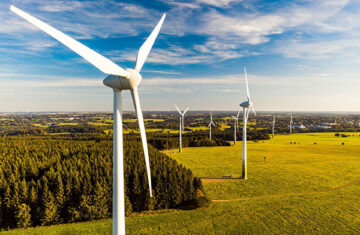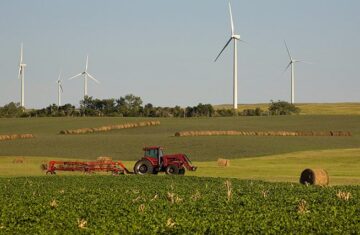
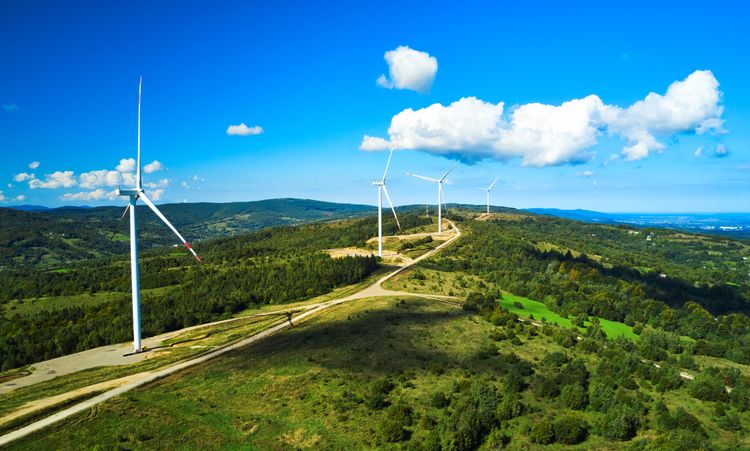
Spanning the fertile farmlands of Woodford County, Illinois, the Minonk Wind Farm stands as a major pillar in the state’s renewable energy economy. By integrating utility-scale power generation with active agricultural production, this project exemplifies the Midwest model of “harvesting the wind,” delivering clean electricity to the regional grid while establishing a transformative and stable source of revenue for its rural host community.
Significance & Context
The Minonk Wind Farm, developed by Invenergy, is a substantial contributor to Illinois’s energy portfolio. With a total installed capacity of approximately 300 megawatts (MW), the facility generates enough electricity to power over 100,000 Illinois homes annually, based on U.S. Energy Information Administration (EIA) conversion metrics. Its output is delivered into the PJM Interconnection grid, supplying cost-competitive, carbon-free power to the broader Mid-Atlantic and Midwest markets. Located in the heart of the state’s agricultural belt, Minonk’s development reinforced Illinois’s position as a top wind producer and demonstrated the seamless compatibility of modern energy infrastructure with traditional farming.
Development Timeline
The project’s development followed the trajectory of Illinois’s significant wind build-out in the early 2010s. Initial development and land acquisition began in the late 2000s. After securing permits from the Woodford County Board and a power purchase agreement, construction commenced in 2011. The Minonk Wind Farm was a significant undertaking, reaching full commercial operation in 2014, a date confirmed by its listing in the U.S. Wind Turbine Database and becoming a defining feature of the local landscape.
Technology & Innovation
The project utilizes a mix of reliable, high-capacity turbine models, featuring both GE and Siemens Gamesa turbines in the 1.6 to 2.3 MW range. A key aspect of its design was optimizing the layout to maximize energy production across thousands of acres of active cropland, ensuring minimal disruption to farming operations, an approach aligned with best practices documented by the National Renewable Energy Laboratory (NREL) on land use.
Challenges & Controversies
A primary challenge was navigating the concerns of a portion of the local community regarding the project’s visual impact, potential effects on property values, and the scale of change for a rural area. This hurdle was resolved through the formal county zoning and permitting procedure. After extensive public hearings, the Woodford County Board voted to approve the project’s special use permits, balancing expressed concerns with the demonstrable long-term economic benefits for the wider county.
Community & Economic Impact
For Woodford County, the wind farm has delivered profound and lasting economic benefits. During its multi-year construction phase, the project typically employed 300-500 workers, according to American Clean Power Association industry models, providing a massive boost to local businesses. Its enduring impact is the generation of tens of millions of dollars in long-term property tax revenue, which has become a cornerstone of the county’s budget, directly funding public schools and services as detailed in Woodford County financial records. Furthermore, it provides guaranteed annual lease payments to participating farmers, a benefit for the agricultural economy supported by University of Illinois Extension.
Future Outlook
As a mature asset, the Minonk Wind Farm is a reliable, long-term generator within the PJM market. Given the age of its turbines, the project is now approaching the period where repowering considerations will begin, a strategy analyzed in NREL reports on wind plant modernization. Replacing its original turbines with modern models could potentially double the site’s energy output, triggering a new wave of local investment and refreshed revenue streams, aligning with Illinois’s forward-looking energy goals under the Climate and Equitable Jobs Act (CEJA) and ensuring Minonk’s continued role in the state’s clean energy future.
At Kern County you can find also: Alta Wind Energy Center