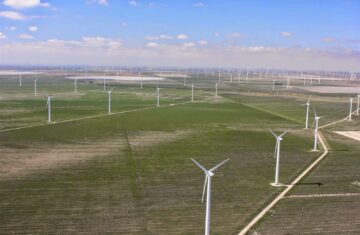
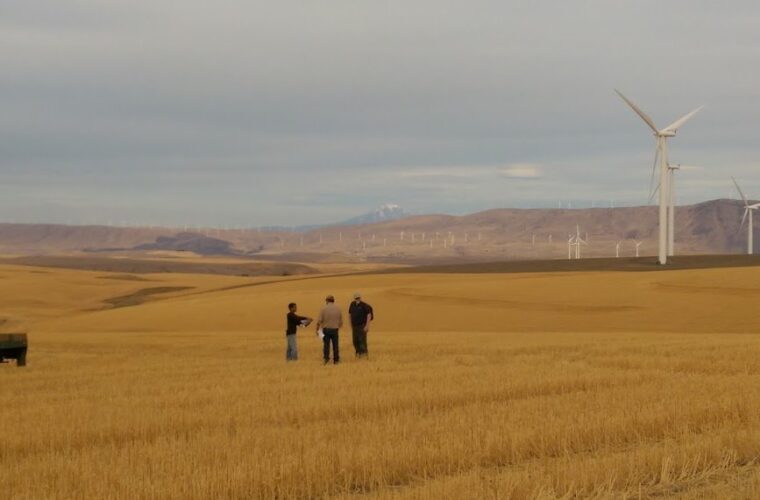
Biglow Canyon Wind Farm stands as a cornerstone of Portland General Electric’s (PGE) transition to a cleaner energy portfolio. As one of the largest wind farms in the state, its development signaled a major commitment by a utility to harness the Columbia River Gorge’s world-class wind resources. The project exemplifies a strategic shift toward diversifying the Pacific Northwest’s power supply, moving beyond its traditional hydroelectric dominance to ensure a reliable and sustainable energy future.
Significance & Context
The Biglow Canyon Wind Farm is a monumental force in Oregon’s renewable landscape. Developed for Portland General Electric, the project’s three-phase construction culminated in a total capacity of 450 megawatts (MW). This makes it one of PGE’s largest generating facilities of any kind, capable of powering approximately 125,000 homes. Its output provides a massive block of carbon-free electricity, directly supporting Oregon’s Renewable Portfolio Standard and displacing an estimated 1.2 million tons of carbon dioxide emissions annually—a significant step toward regional climate goals.
Development Timeline
The Biglow Canyon Wind Farm was developed in a deliberate, phased approach that allowed for the integration of evolving technology. Phase I was completed in 2007, establishing the project’s presence in Sherman County. Phase II followed and was commissioned in 2008, with the final and largest Phase III coming online in 2010. This multi-year timeline enabled PGE to manage the substantial capital investment and complex construction logistics while steadily increasing its wind generation capacity.
Technology & Innovation
The Biglow Canyon Wind Farm showcases a progression of wind turbine technology. The earlier phases utilized Vestas V82 turbines, while the final phase featured larger and more powerful Siemens turbines. This evolution within a single project highlights the rapid advancement of the wind industry during the late 2000s. The use of larger, more efficient turbines in the later phases maximized the energy output from the site, improving the project’s overall economics and efficiency.
Challenges & Controversies
A significant challenge for the Biglow Canyon Wind Farm, particularly given its scale and location, was conducting thorough environmental reviews and mitigating impacts on wildlife. The site is in a region with sensitive avian populations, requiring extensive pre- and post-construction studies. To resolve these concerns and proceed responsibly, the developers worked with state and federal agencies, including the U.S. Fish and Wildlife Service, to implement a comprehensive Habitat Conservation Plan (HCP). This included careful siting of turbines and commitments to ongoing monitoring and mitigation efforts.
Community & Economic Impact
The Biglow Canyon Wind Farm has delivered a profound economic benefit to Sherman County, one of Oregon’s most sparsely populated regions. During its multi-phase construction, the project typically employed hundreds of workers, providing a major, though temporary, boost to the local economy. In its operational phase, it typically employs two dozen or more full-time technicians, creating a significant number of skilled, long-term jobs for the area. The project likely contributes millions of dollars in annual property tax revenue, which is transformative for funding local schools, law enforcement, and public services in the rural county. Landowners who host the turbines also receive steady lease payments, providing a stable source of supplemental income.
Future Outlook
As a flagship asset in PGE’s generation fleet, the Biglow Canyon Wind Farm has a secure, long-term future. Its power is dedicated to serving the utility’s customers, ensuring its place in Oregon’s energy mix for decades. As the initial turbines age, the site is a prime candidate for future repowering projects. As detailed by the National Renewable Energy Laboratory (NREL), replacing older turbines with modern models could dramatically increase the site’s capacity and efficiency, ensuring Biglow Canyon remains a vital source of clean energy for Oregon well into the future.
Find also at USA: Old Trail Wind Farm