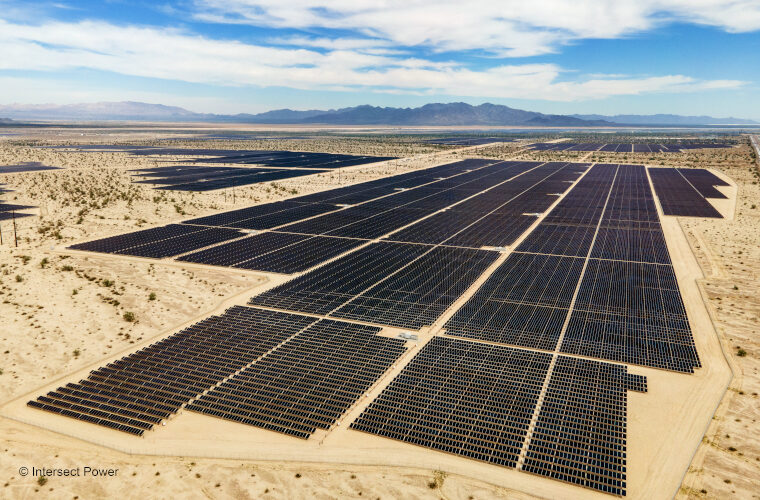
In California’s relentless pursuit of a carbon-free grid, the Oberon Solar Project stands as a testament to the state’s commitment to integrating large-scale renewable energy while addressing complex environmental challenges. Located in Riverside County, this project is strategically positioned to deliver power to major Southern California load centers while pioneering new approaches to desert conservation. Oberon Solar exemplifies the next generation of solar development, where clean energy generation and ecological stewardship are pursued with equal vigor.
Significance & Context
The Oberon Solar Project is a critical component of California’s mandate to achieve 100% clean electricity by 2045 under the California Clean Energy Transition Act. Its power is vital for the California Independent System Operator (CAISO) grid, particularly for meeting peak afternoon demand in the Los Angeles basin. The project’s development is closely aligned with the state’s Desert Renewable Energy Conservation Plan (DRECP), a landmark framework designed to streamline renewable development in sensitive ecosystems while protecting biological resources. This balance is a key focus for the California Energy Commission in its strategic planning.
Development Timeline
Development for the Oberon Solar Project began in the mid-2010s, involving extensive environmental review under the DRECP framework. Key milestones included securing state and federal permits, finalizing a power purchase agreement with a major utility, and navigating the complex CAISO interconnection process. Construction commenced in 2022, and the project achieved commercial operation in 2024, representing a multi-year effort in planning and execution.
Technology & Innovation
The Oberon Solar Project utilizes high-efficiency bifacial solar panels on single-axis tracking systems, capturing direct and reflected light in the high-albedo desert environment. A key innovation is its water-free robotic cleaning system, which preserves scarce water resources in the arid region. The project’s most significant advancement is its comprehensive habitat conservation plan, which includes dedicated wildlife corridors and the use of native, pollinator-friendly vegetation—practices supported by research from the University of California Cooperative Extension.
Challenges & Controversies
A primary challenge for the Oberon Solar Project was mitigating its impact on desert tortoise habitat and other sensitive species. The project faced opposition from conservation groups concerned about habitat fragmentation and species displacement. This challenge was resolved through a federally approved Habitat Conservation Plan developed in coordination with the U.S. Fish and Wildlife Service, which included the permanent protection of over 1,500 acres of higher-quality habitat elsewhere, the creation of on-site conservation areas, and funding for long-term species management.
Community & Economic Impact
For Riverside County, the Oberon Solar Project provides substantial and lasting benefits. During peak construction, the project typically employed over 400 workers, providing a significant boost to the local economy. The permanent operations team creates 15-20 long-term skilled positions. The project likely contributes millions of dollars in annual property tax and fee revenue, directly supporting local schools, public safety, and healthcare services—a fiscal impact documented by the Riverside County Economic Development Agency. Landowners receive stable, long-term lease payments.
Future Outlook
The successful commissioning of the Oberon Solar Project establishes a new benchmark for environmentally responsible solar development in California’s desert regions. Its habitat conservation and water management strategies provide a replicable model for future projects. The site has significant potential for future co-location with battery energy storage, which would allow it to shift solar generation into evening peak hours. As California continues its energy transition, Oberon Solar demonstrates that large-scale renewable development and environmental conservation can be successfully integrated, paving the way for a sustainable energy future.
See also at California: Arica Solar farm