Chesapeake City, the Chesapeake Solar Project represents a powerful model for sustainable urban energy development. By transforming underutilized land into a source of clean power, the project directly addresses local air quality goals while providing a new stream of municipal revenue, setting a precedent for repurposing industrial properties.
Significance & Context
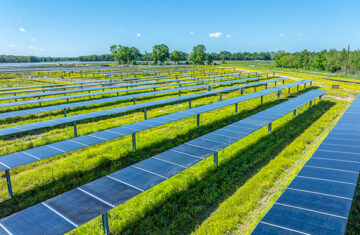
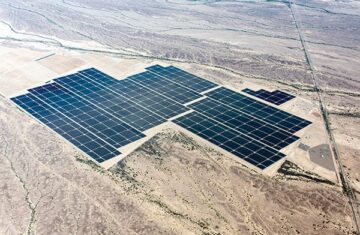
The Chesapeake Solar Project is an 8-megawatt (MW) community solar facility developed by Sun Tribe. The project is uniquely situated on a former landfill, a site otherwise unsuitable for most development. Its output is dedicated to the city’s municipal buildings and low-to-moderate income households through a subscription model, a key initiative under the Chesapeake City Climate Action Plan. This approach will offset municipal electricity costs and provide discounted power to residents, while generating enough electricity to power over 1,500 local homes.
Development Timeline
The project’s development began with a feasibility study commissioned by the city in 2020. Following a competitive bidding process, Sun Tribe was selected as the developer in 2021. The project secured its interconnection agreement with Dominion Energy, a process documented in the utility’s public interconnection queue. After finalizing land lease agreements with the city and securing necessary permits, construction commenced in late 2023. The project is scheduled to achieve commercial operation and begin delivering power to subscribers by mid-2025.
Technology & Innovation
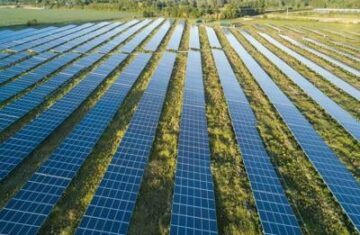
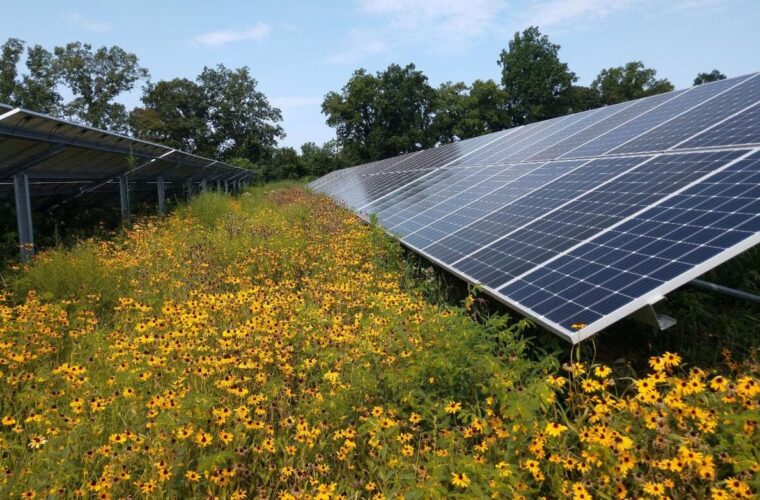
The Chesapeake Solar Project utilizes a ballasted, ground-mounted system that does not require deep penetration into the sealed cap of the former landfill, protecting the integrity of the site. The fixed-tilt arrays are paired with advanced bifacial panels, which capture reflected light from the light-colored cap, increasing efficiency. This specific technology application for landfill solar is a focus of research by the National Renewable Energy Laboratory (NREL), and its implementation here serves as a case study for similar sites across the region.
Challenges & Controversies
The primary challenge for the Chesapeake Solar Project was navigating the complex engineering and regulatory requirements for building on a closed landfill. Concerns included potential settlement, gas management, and protecting the protective cap. This was resolved through a collaborative design process between the developer, the Virginia Department of Environmental Quality (DEQ), and city engineers. The final plan included specialized lightweight racking, increased setbacks from gas collection infrastructure, and enhanced monitoring protocols, ensuring the project met all environmental safety standards.
Community & Economic Impact
The project’s impact is highly localized and multifaceted. During construction, the project typically employs approximately 50 local workers. Once operational, the project will provide direct savings on electricity bills for the city and subscribing households. For the city itself, the land lease payments transform a liability into a likely contribution of hundreds of thousands of dollars in new, long-term revenue, directly benefiting the general fund. Furthermore, the project revitalizes a blighted property, increasing nearby land values and demonstrating a commitment to innovative land use.
Future Outlook
The Chesapeake Solar Project is designed as a long-term community asset with a lifespan of 30+ years. Its success is already being studied by other municipalities in Virginia with similar underutilized properties. The project’s infrastructure has been designed to be “storage-ready,” with plans to potentially add a community battery in the future. As noted in the U.S. Energy Information Administration’s (EIA) reporting on distributed generation, such an addition would enhance local resilience, allowing the project to provide backup power for critical city services during grid outages.
You can find also at USA: Cereal City Solar