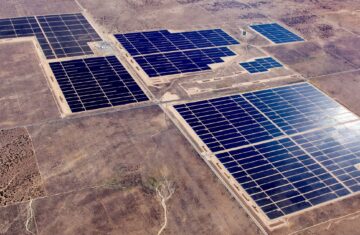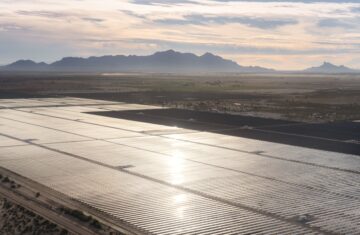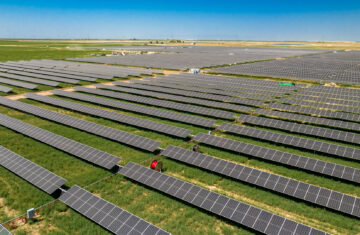
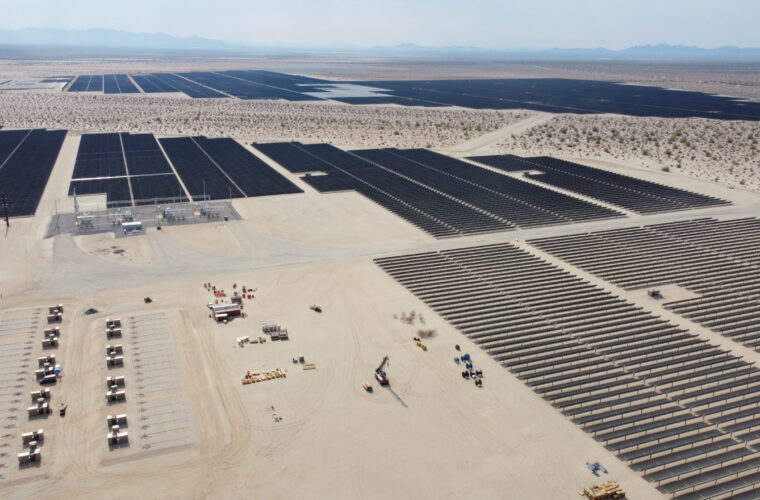
Rising from the sun-drenched landscape of Riverside County, the McCoy Solar Energy Project Hybrid represents a groundbreaking integration of solar generation with battery storage, demonstrating how hybrid renewable energy systems can provide dispatchable clean power that addresses both energy production and grid reliability challenges. This project exemplifies the next evolution in renewable energy development, combining multiple technologies to create a more versatile and valuable clean energy asset.
Significance & Context
Developed by NextEra Energy Resources, the McCoy Solar Energy Project Hybrid combines 250 megawatts (MW) of solar photovoltaic capacity with 200 MW/800 MWh of battery energy storage. According to data from the California Energy Commission, the facility generates enough electricity to power approximately 90,000 homes while providing four hours of storage capacity that can dispatch power during peak evening hours. Its location in Riverside County, within the Colorado Desert, positions it strategically to serve Southern California’s population centers while providing crucial grid stability services as California retires fossil fuel plants.
Development Timeline
The project’s development reflects the accelerating integration of storage with solar generation. Development activities began in 2016, with the hybrid project receiving approval from the Riverside County Board of Supervisors in 2018 after comprehensive environmental review. Construction commenced in 2020, with the solar component achieving commercial operation in 2022 and the battery storage system becoming fully operational in 2023, as documented in California Independent System Operator (CAISO) interconnection records. This phased implementation allowed for optimized integration of the two technologies.
Technology & Innovation
The McCoy Hybrid project utilizes single-axis tracking systems with bifacial photovoltaic modules, while its innovation lies in the fully integrated battery energy storage system using advanced lithium-ion technology. According to technical reports from the National Renewable Energy Laboratory (NREL), this configuration allows the facility to store excess solar generation for dispatch during peak demand periods, effectively providing capacity value comparable to traditional power plants. The project features grid-forming inverters that provide essential reliability services including black start capability, voltage support, and frequency regulation, representing a significant advancement in renewable integration technology.
Challenges & Controversies
The project faced significant challenges related to technology integration and environmental concerns. Technical hurdles included optimizing the coordination between solar generation and battery storage systems and ensuring compliance with CAISO’s interconnection requirements for hybrid facilities. Environmental groups including the Desert Protection Society raised concerns about additional habitat disturbance from the storage component. The resolution involved implementing an enhanced Habitat Conservation Plan that expanded upon the original solar project’s mitigation measures, including additional land dedication for conservation and funding for desert tortoise protection programs. The project also addressed fire safety concerns through advanced battery containment systems and comprehensive emergency response planning.
Community & Economic Impact
For Riverside County, the hybrid project has delivered enhanced economic benefits compared to solar-only development. During construction, the project typically employed 400-500 workers, with additional specialized positions for battery system installation. For ongoing operations, it maintains 20-25 permanent positions, including technicians with specialized storage expertise. Based on Riverside County’s tax assessment models for hybrid facilities, the project likely contributes approximately $2-2.5 million annually in property tax revenue to local governments. Additionally, it provides lease payments to multiple landowners and has stimulated local economic activity through increased demand for technical services and maintenance.
Future Outlook
With an expected operational lifespan of 30+ years for solar and 15-20 years for storage (with potential technology refresh), the McCoy Solar Energy Project Hybrid represents a long-term strategic asset for California’s grid. The project’s success in integrating storage with solar generation provides a model for future hybrid developments, particularly as California continues retiring fossil fuel capacity. As noted in CAISO’s 2023-2024 Transmission Planning Process, hybrid projects will play a crucial role in meeting evening peak demand and providing grid resilience. The project’s operational experience continues to inform technical standards and best practices for renewable hybrid facilities, demonstrating how integrated solar-storage systems can provide reliable, dispatchable clean power while creating economic benefits for host communities.