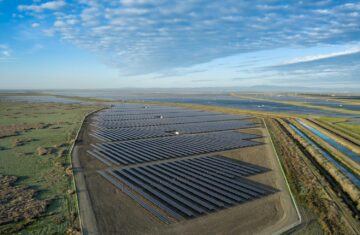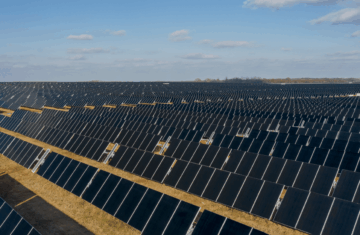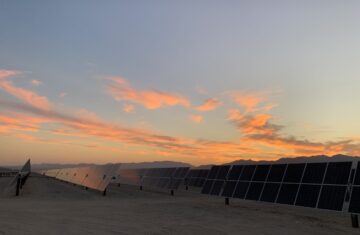
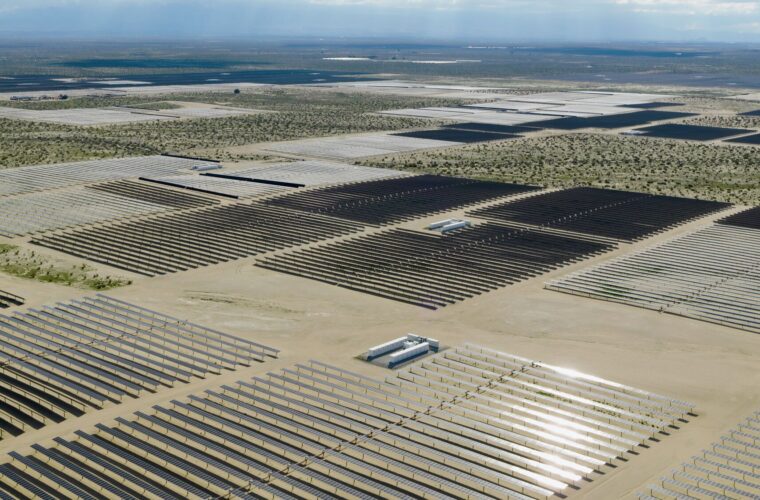
Baldy Mesa Solar & Storage project is a critical piece of California’s strategy to ensure grid reliability in the face of climate stress and the retirement of fossil fuel plants. This large-scale hybrid facility is engineered not just to generate clean power, but to store and dispatch it precisely when it is needed most, marking a significant evolution in the state’s renewable energy infrastructure.
Significance & Context
The Baldy Mesa Solar & Storage project is a major 300-megawatt (MW) solar array coupled with a 300 MW / 1,200 megawatt-hour battery energy storage system. Developed by EDF Renewables, the facility represents an investment of over $600 million. Its entire output is contracted with Southern California Edison (SCE) under a long-term power purchase agreement, a key component of the utility’s procurement to enhance reliability, as mandated by the California Public Utilities Commission (CPUC). The project will generate enough electricity to power approximately 225,000 homes during peak sunlight and its four-hour duration batteries can provide critical backup power during evening peaks or grid emergencies.
Development Timeline
The project’s development began with land acquisition and initial studies on private land in 2018. It successfully navigated the complex interconnection process with the California Independent System Operator (CAISO), with its status documented in the public CAISO Generator Interconnection Queue. After securing its PPA and completing extensive environmental reviews, the project broke ground in 2023. It is currently in the construction phase and is scheduled to achieve commercial operation in 2026.
Technology & Innovation
The core innovation of Baldy Mesa is its fully integrated solar-plus-storage design, using lithium-ion battery technology. The system is engineered to charge directly from the solar array during the day and dispatch that stored energy during the critical hours of 4-9 PM, when California’s grid is most stressed and solar generation declines. This capability to provide firm, dispatchable power is a technological leap, effectively allowing the project to operate like a peaker plant but with zero emissions. The project will also utilize single-axis solar trackers to maximize energy capture.
Challenges & Controversies
A significant challenge for the Baldy Mesa project was navigating its environmental review in a region with sensitive desert habitat. The site is in proximity to areas with wildlife concerns, including the threatened desert tortoise. To secure permits from the California Energy Commission (CEC) and the U.S. Bureau of Land Management, the developers committed to an extensive mitigation plan. This included funding for regional conservation efforts, creating designated wildlife corridors, and implementing strict construction protocols to minimize impact on the fragile desert ecosystem, turning a potential roadblock into a model for responsible development.
Community & Economic Impact
The project delivers a substantial economic boost to San Bernardino County. During peak construction, Baldy Mesa Solar & Storage typically employs over 400 workers, providing a significant influx of business for local services. Over its operational lifetime, the project is projected to generate tens of millions of dollars in new tax revenue, which will likely contribute critically to county services, including schools and public safety. For the private landowners hosting the facility, the long-term lease payments provide a stable source of income.
Future Outlook
Once operational, Baldy Mesa will be a cornerstone of California’s clean, reliable grid for decades. Its massive storage capacity will be instrumental in integrating more renewables and preventing outages. The project’s success is likely to accelerate the development of similar large-scale hybrid facilities across the West. As demand for grid services grows, a trend tracked by the U.S. Energy Information Administration (EIA), the operational value and importance of the Baldy Mesa Solar & Storage facility are only expected to increase.
You can find also at USA: Chesapeake Solar Project