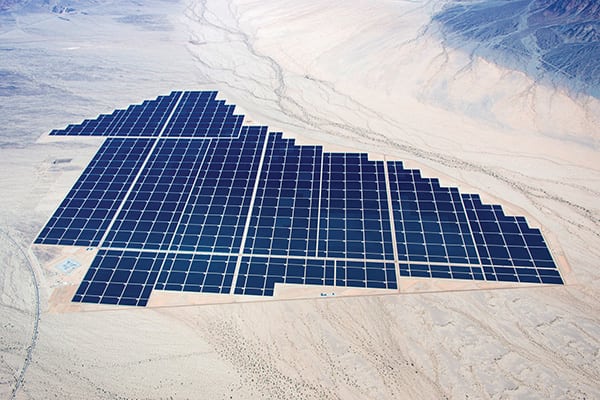
Rising from the sun-scorched landscape of Southern California’s Colorado Desert, the Desert Sunlight 250 solar farm represents a strategic expansion of one of America’s most iconic renewable energy zones, demonstrating how regions with extreme environmental conditions can be transformed into productive clean power assets. This project builds upon the success of its larger predecessor while incorporating lessons learned from a decade of utility-scale solar operation in sensitive desert ecosystems.
Significance & Context
Developed by First Solar and now operated by NextEra Energy Resources, the 250-megawatt (MW) Desert Sunlight 250 facility expands the existing Desert Sunlight Solar Farm complex to a combined 800 MW, making it one of the largest photovoltaic power stations in the United States. According to generation data from the California Energy Commission, the expanded facility produces enough electricity to power approximately 180,000 homes, significantly contributing to California’s renewable portfolio standard requirements. Its location in Riverside County, within the federally designated Solar Energy Zones, positions it to maximize energy production while following established guidelines for desert conservation.
Development Timeline
The expansion project leveraged existing infrastructure and regulatory frameworks to accelerate development. Planning began in 2018, with construction commencing in 2021 following approval from the U.S. Bureau of Land Management which manages the federal lands. The project achieved commercial operation in 2023, as documented in California Independent System Operator (CAISO) interconnection records. This accelerated timeline benefited from the existing site’s established environmental mitigation measures and interconnection capacity, demonstrating how strategic expansion can optimize existing renewable energy investments.
Technology & Innovation
Desert Sunlight 250 utilizes next-generation Series 6 thin-film cadmium telluride (CdTe) photovoltaic modules, representing significant advances over the technology used in the original installation. According to performance data from the National Renewable Energy Laboratory (NREL), these panels offer improved efficiency and better performance in high-temperature desert conditions. The expansion incorporates advanced robotic cleaning systems that reduce water usage by 90% compared to traditional methods and features improved inverter technology that provides enhanced grid stability services, including voltage regulation and frequency response capabilities.
Challenges & Controversies
The expansion faced challenges regarding additional habitat disturbance and concerns about cumulative impacts on desert wildlife. Environmental groups including the Desert Protective Council raised issues about further fragmentation of wildlife corridors and impacts on endangered species. The resolution involved implementing an enhanced Habitat Conservation Plan that built upon the original project’s successful mitigation measures, including additional land dedication to the Desert Wildlife Conservation Fund and funding for advanced wildlife monitoring technology. The project also addressed water conservation concerns through completely water-free cleaning systems and increased use of drought-resistant native vegetation for dust control.
Community & Economic Impact
For Riverside County, the expansion has delivered additional economic benefits while building upon existing community relationships. During construction, the project typically employed 300-400 workers, with priority given to local residents from communities like Desert Center and Blythe. For ongoing operations, it maintains 12-15 additional permanent positions. Based on Riverside County’s tax assessment models for utility-scale solar, the expansion likely contributes an additional $1.2-1.5 million annually in property tax revenue to local governments. The project continues to provide lease payments to the Bureau of Land Management, with revenues supporting local conservation initiatives and community services throughout the region.
Future Outlook
With an expected operational lifespan of 30+ years, the Desert Sunlight 250 expansion represents a long-term commitment to both clean energy and desert conservation. The project’s performance data continues to inform best practices for solar development in sensitive ecosystems. As technology advances, the entire complex may eventually be repowered with more efficient panels, potentially significantly increasing output without additional land disturbance. The expansion’s success demonstrates how carefully planned renewable energy growth can balance climate goals with environmental protection, providing a model for future projects in the American Southwest and similar arid regions worldwide.