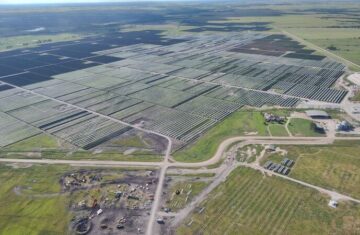
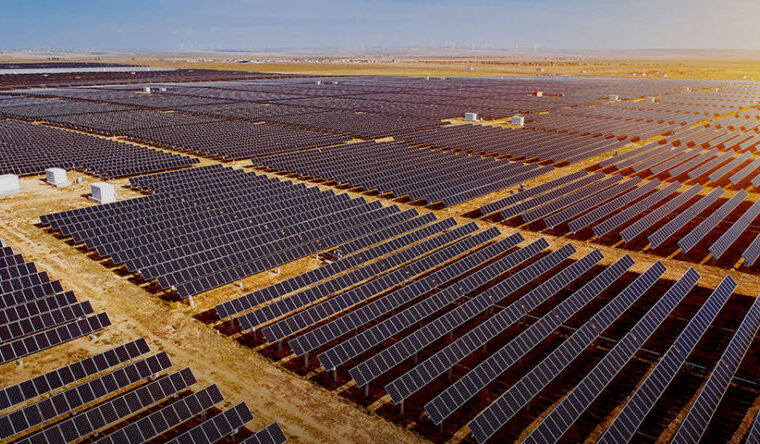
In the heart of Indiana’s agricultural landscape, the Mammoth North Solar project represents a transformative approach to land use and energy production, establishing itself as one of the largest solar facilities in the Midwest. This massive development signals a significant shift in the state’s energy economy, demonstrating that utility-scale renewables can coexist with and even enhance rural communities. By combining clean energy generation with agricultural preservation, Mammoth North Solar provides a sustainable model for economic development that supports farmers, local governments, and the regional grid.
Significance & Context
The Mammoth North Solar project is a cornerstone of Indiana’s evolving energy portfolio, adding substantial capacity to the Midcontinent Independent System Operator (MISO) grid at a time of increasing demand and generation diversity. Its development reflects growing corporate and utility commitment to renewable energy in a state traditionally dominated by coal. The project helps stabilize energy costs for businesses and municipalities while contributing to improved regional air quality, supporting objectives outlined in the Indiana Office of Energy Development strategic plan.
Development Timeline
Development for Mammoth North Solar began in the late 2010s, with extensive land acquisition and community engagement spanning several years. Key milestones included securing voluntary agreements with numerous local landowners, obtaining approval from the Indiana Utility Regulatory Commission, and finalizing power purchase agreements with multiple off-takers. Major construction commenced in 2022, proceeding in phases, with the project reaching full commercial operation in 2025.
Technology & Innovation
Mammoth North Solar utilizes single-axis tracking systems with durable, high-efficiency solar panels engineered for the Midwest climate. The project incorporates advanced inverters with grid-support functionality to enhance local reliability. A defining innovation is its comprehensive agrivoltaic design, which integrates sheep grazing and pollinator habitats across the site, maintaining agricultural production and supporting soil health—practices validated by research from Purdue University Extension.
Challenges & Controversies
The project faced significant local opposition regarding land use conversion in a region with deep agricultural roots. Concerns about the project’s scale, visual impact, and effect on rural character prompted extensive public debate and multiple county council hearings. Developers addressed these concerns through a multi-faceted approach: establishing binding decommissioning agreements, creating agricultural preservation funds, implementing extensive visual screening, and demonstrating the project’s substantial economic benefits through independent studies.
Community & Economic Impact
For the host counties, Mammoth North Solar delivers unprecedented economic benefits. During peak construction, the project typically employed over 500 workers, providing a major boost to local businesses and services. The permanent operations create 25-30 long-term skilled positions. The project likely contributes over $2 million annually in property tax revenue—representing a substantial increase for local budgets—directly funding schools, emergency services, and road improvements, as documented by the Indiana Department of Local Government Finance. Participating landowners receive stable, drought-resistant income for 30+ years.
Future Outlook
The successful completion of Mammoth North Solar establishes a new benchmark for large-scale renewable development in Indiana and the broader Midwest. Its agrivoltaic components will provide valuable long-term data on dual-use solar farming practices. The project’s scale and interconnection make it a prime candidate for future battery storage integration, potentially serving as a regional resilience hub. Mammoth North Solar positions Indiana as a leader in the clean energy transition while providing a sustainable economic foundation for rural communities.
Find also at Indiana: Honeysuckle Solar Farm