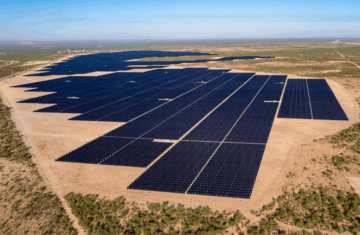
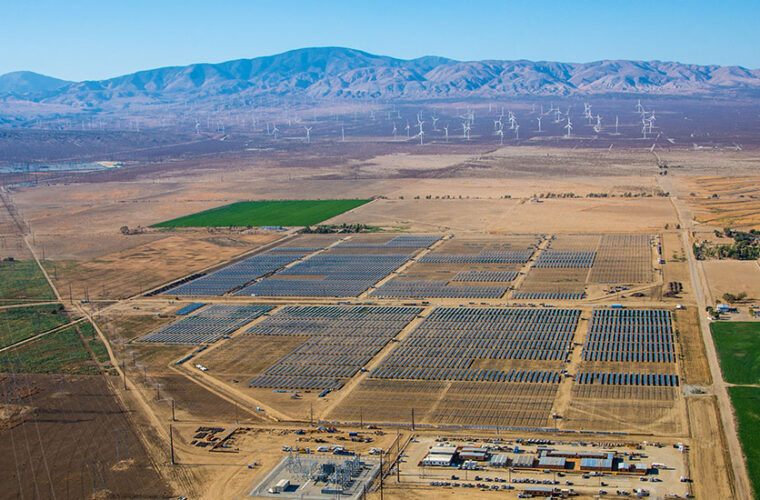
The Solar Star 2 project represents the strategic expansion of one of the world’s largest solar farms, demonstrating how sequential development can optimize existing infrastructure while incorporating technological advances learned from earlier phases. This expansion solidifies the facility’s position as a cornerstone of California’s renewable energy infrastructure while showcasing the evolution of utility-scale solar technology and environmental mitigation strategies.
Significance & Context
Developed by SunPower (now Maxeon Solar Technologies) and operated by Berkshire Hathaway Energy, the Solar Star 2 expansion added 200 megawatts (MW) to the existing 579 MW Solar Star 1, creating a combined 779 MW complex that remains one of the largest solar farms in the world. According to generation data from the California Energy Commission, the expanded facility produces enough electricity to power approximately 255,000 homes, making it a critical component of Southern California’s clean energy supply. Its location in Kern County, which has emerged as a renewable energy hub, positions it strategically to serve major population centers while leveraging the region’s exceptional solar resources.
Development Timeline
The expansion project leveraged lessons learned from the original development to streamline implementation. Planning began in 2015, with construction commencing in 2017 following approval from the Kern County Planning and Natural Resources Department. The project achieved commercial operation in 2019, as documented in Southern California Edison interconnection records. This accelerated timeline benefited from using existing environmental mitigation frameworks and interconnection infrastructure established for Solar Star 1, demonstrating how sequential development can optimize both timelines and costs while maintaining environmental protections.
Technology & Innovation
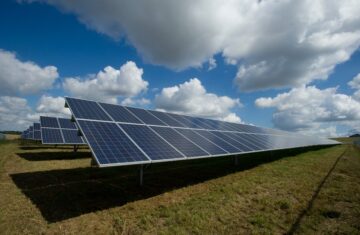
Solar Star 2 utilized next-generation Maxeon solar panel technology with single-axis tracking systems, representing significant advances over the technology used in the original installation. According to performance data from the National Renewable Energy Laboratory (NREL), these panels offered improved efficiency and better performance in high-temperature conditions. The expansion incorporated advanced robotic cleaning systems that reduced water usage by 90% compared to traditional methods and featured improved inverter technology that provided enhanced grid stability services, including voltage regulation and frequency response capabilities crucial for maintaining grid reliability.
Challenges & Controversies
The expansion faced challenges regarding additional habitat disturbance and concerns about cumulative impacts on local wildlife. Environmental groups including the Natural Resources Defense Council (NRDC) raised issues about further fragmentation of wildlife corridors and impacts on endangered species such as the kit fox and blunt-nosed leopard lizard. The resolution involved implementing an enhanced Habitat Conservation Plan that built upon the original project’s successful mitigation measures, including additional land dedication to the Kern County Wildlife Conservation Fund and funding for advanced wildlife monitoring technology. The project also addressed water conservation concerns through completely water-free cleaning systems and increased use of drought-resistant native vegetation for dust control.
Community & Economic Impact
For Kern County, the expansion delivered additional economic benefits while building upon existing community relationships. During construction, the project typically employed 300-400 workers, with priority given to local residents. For ongoing operations, the combined complex maintains 25-30 permanent positions. Based on Kern County’s tax assessment models for utility-scale solar, the expansion likely contributes an additional $1.5-2 million annually in property tax revenue to local governments and school districts. The project continues to provide lease payments to local landowners, creating stable income sources that complement agricultural revenues and provide financial resilience for farming operations in the region.
Future Outlook
With an expected operational lifespan of 30+ years, the Solar Star 2 expansion represents a long-term commitment to both clean energy and environmental stewardship. The project’s performance data continues to inform best practices for large-scale solar development, particularly regarding wildlife coexistence and water conservation. As technology advances, the entire complex may eventually be repowered with more efficient panels, potentially significantly increasing output without additional land disturbance. The expansion’s success demonstrates how carefully planned renewable energy growth can balance climate goals with environmental protection, providing a model for future projects in California and similar regions worldwide. The facility remains a vital asset for meeting California’s renewable energy targets while maintaining grid reliability through increasingly sophisticated grid-support capabilities.