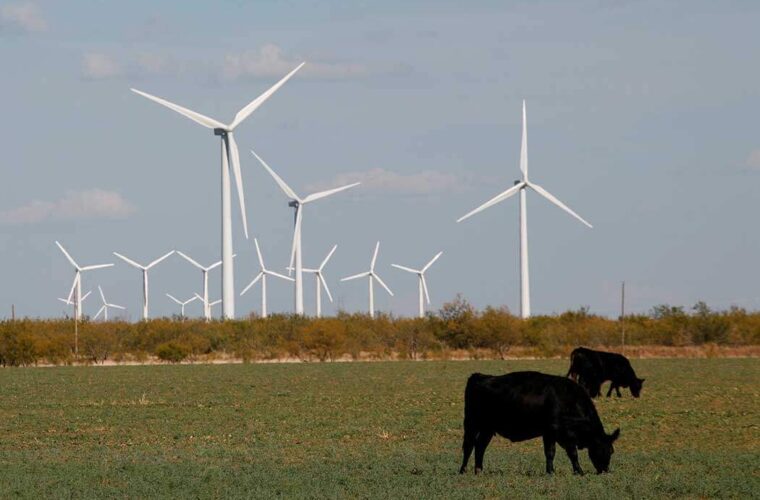
Spanning the West Texas counties of Sterling and Coke, the Capricorn Ridge Wind Farm stands as a monumental achievement in renewable energy scaling. As one of the largest wind power facilities in the United States upon its completion, it demonstrated the massive potential for wind energy to contribute to the national grid at a utility scale, solidifying Texas’s leadership in the industry.
Significance & Context
The Capricorn Ridge Wind Farm is a massive 662-megawatt (MW) facility developed by NextEra Energy Resources. The project’s power is sold to multiple off-takers, including a significant portion to Austin Energy under a long-term power purchase agreement, helping the municipal utility meet its ambitious renewable energy goals. With a total investment exceeding $1 billion, the facility generates enough electricity to power approximately 220,000 homes, representing a major infusion of clean energy into the ERCOT market.
Development Timeline
Development for Capricorn Ridge began in the early 2000s, with the project being built in two major phases. The first 320 MW phase achieved commercial operation in 2007, followed by a 342 MW expansion that was completed in 2008. This rapid, phased construction showcased the ability to scale up renewable energy infrastructure significantly within a short timeframe, capitalizing on improving technology and market conditions.
Technology & Innovation
For its time, the project was a technological showcase, utilizing a large fleet of Siemens 2.3-MW turbines. A key innovation was the sheer logistical scale of the construction effort, which involved coordinating the simultaneous installation of hundreds of turbines across a vast geographic area. The project also required significant upgrades to the local transmission infrastructure to handle its immense electrical output, contributing to grid modernization in West Texas.
Challenges & Controversies
A significant challenge was the project’s scale and its visual impact on the rural landscape, which drew opposition from some local residents and landowners not participating in the project. This culminated in a high-profile lawsuit. NextEra Energy worked to address concerns through community engagement and by implementing a more comprehensive community benefits program. The resolution also involved working closely with county officials in both Sterling and Coke Counties to ensure local regulations were met and that the project provided substantial economic benefits to the community.
Community & Economic Impact
The project has delivered transformative economic benefits to the region. During its multi-phase construction, Capricorn Ridge Wind Farm typically employed over 500 workers at its peak. It continues to support a substantial local workforce for operations and maintenance. As one of the largest taxpayers in both counties, the project likely contributes tens of millions of dollars in property tax revenue over its lifetime, providing crucial funding for schools, roads, and emergency services. The landowner lease payments provide a stable, long-term income source for numerous ranching families.
Future Outlook
As a foundational asset in the ERCOT grid, Capricorn Ridge is now a prime candidate for repowering. Having been operational for over 15 years, replacing its original turbines with modern, more powerful models could dramatically increase the facility’s capacity and efficiency. As highlighted in analyses by the National Renewable Energy Laboratory (NREL), repowering such legacy projects is a key strategy for maximizing the value of existing sites. This would ensure that Capricorn Ridge continues to be a cornerstone of Texas’s energy supply for decades to come.
There is also at Sterling County you can find: Goat Wind farm