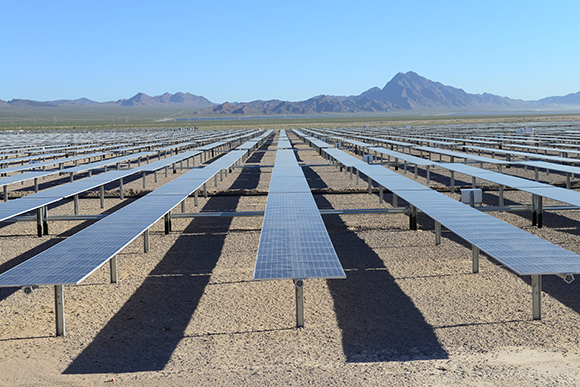
Boulder City, Nevada, the Boulder Solar Power project represents a strategic addition to Nevada’s renewable energy infrastructure, demonstrating how solar development can be optimized near urban centers while respecting the delicate balance of desert ecosystems. This project exemplifies the careful planning required for energy projects in regions where environmental conservation meets growing energy demands.
Significance & Context
Developed by First Solar and owned by NV Energy, the 100-megawatt (MW) Boulder Solar Power facility contributes significantly to Nevada’s renewable energy goals while operating within the state’s framework for responsible desert development. According to generation data from the U.S. Energy Information Administration (EIA), the facility produces enough electricity to power approximately 30,000 homes, supporting NV Energy’s compliance with Nevada’s renewable portfolio standard. Its location in Clark County, adjacent to the Hoover Dam transmission infrastructure, positions it strategically to serve the Las Vegas metropolitan area while minimizing the need for new transmission lines.
Development Timeline
The project’s development followed Nevada’s established regulatory process with additional consideration for its proximity to both urban and natural areas. Development activities began in 2017, with the project receiving approval from the Clark County Commission in 2019 after comprehensive environmental review. Construction commenced in 2020, achieving commercial operation in 2022, as documented in NV Energy resource planning filings. This timeline included extended consultation with local communities, conservation groups, and the Bureau of Land Management to address the unique considerations of its location near both city limits and protected desert areas.
Technology & Innovation
Boulder Solar Power utilizes advanced thin-film cadmium telluride (CdTe) photovoltaic modules on single-axis tracking systems, chosen for their high-temperature performance and lower water requirements. According to performance data from the National Renewable Energy Laboratory (NREL), this technology demonstrates superior efficiency in desert conditions compared to conventional silicon panels. The project incorporates a water-free cleaning system using automated robotic brushes and air pressure technology, reducing water consumption by approximately 90% compared to traditional solar facilities. Advanced inverters with grid-support functionality provide voltage regulation and frequency response services, enhancing local grid reliability.
Challenges & Controversies
The project faced significant challenges related to its location near both urban areas and sensitive desert habitat. Local residents expressed concerns about visual impacts and glare, while conservation groups including the Southern Nevada Conservancy raised issues about impacts on desert tortoise habitat and migration corridors. The resolution involved implementing an enhanced Visual Impact Mitigation Plan that included strategic landscaping, glare-reduction technology, and careful orientation of panels. For environmental concerns, the project developed a comprehensive Habitat Conservation Plan with the U.S. Fish and Wildlife Service, including desert tortoise translocation, habitat restoration, and funding for regional conservation initiatives.
Community & Economic Impact
For Clark County and Boulder City, the project has delivered substantial economic benefits while addressing local concerns. During construction, the project typically employed 200-250 workers, with strong local hiring preferences for county residents. For ongoing operations, it maintains 8-10 permanent positions. Based on Clark County’s tax assessment models for utility-scale solar, the project likely contributes approximately $600,000-$800,000 annually in property tax revenue to local governments. Additionally, it provides lease payments to the city of Boulder City, supporting municipal services and contributing to the community’s status as debt-free while maintaining its commitment to environmental stewardship.
Future Outlook
With an expected operational lifespan of 30+ years, the Boulder Solar Power project represents a long-term investment in southern Nevada’s clean energy future. The project’s success in balancing urban proximity with environmental protection provides a model for future renewable development in similar transition zones. As technology advances, the site may incorporate energy storage to enhance its grid value or be repowered with more efficient panels. The project’s approach to community engagement and environmental mitigation continues to inform solar development policies in the region, demonstrating that renewable energy projects can successfully navigate the complex interface between urban needs and desert conservation while providing lasting economic benefits to host communities.
See also at Clark: Playa Solar 2