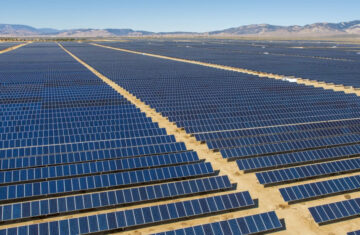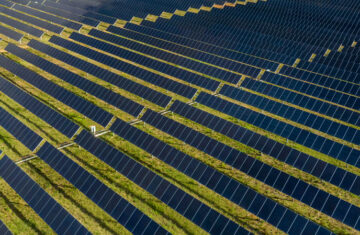

Agave Solar Farm represents a model of sustainable development that directly addresses the region’s critical water constraints. This utility-scale project demonstrates how solar energy can be deployed in an arid environment with minimal ecological impact while providing substantial economic benefits. By prioritizing water conservation and habitat protection, Agave Solar sets a new standard for responsible renewable energy development in the sensitive Sonoran Desert ecosystem.
Significance & Context
The Agave Solar Farm is strategically significant for Arizona’s energy portfolio, interconnected with the grid managed by Arizona Public Service (APS). Its development aligns with the state’s need for drought-resilient power generation, particularly as water scarcity becomes an increasing concern for traditional thermal power plants. The project supports Arizona’s renewable energy standards while providing a clean electricity source for growing urban and industrial demand—a priority identified by the Arizona Corporation Commission in its resource planning reviews.
Development Timeline
Development for Agave Solar began in the early 2020s, with particular attention to environmental review and water conservation planning. Key milestones included securing land leases, navigating state and county permitting processes with a focus on habitat protection, and finalizing power purchase agreements. Construction commenced in 2023, utilizing water-free construction techniques where possible, and the project achieved commercial operation in 2025.
Technology & Innovation
The Agave Solar Farm utilizes robotic, water-free cleaning systems to maintain panel efficiency—a crucial innovation in Arizona’s water-stressed environment. The facility features single-axis tracking systems with bifacial panels that capture reflected light from the desert floor. The project’s most notable innovation is its comprehensive native vegetation and habitat conservation plan, which preserves desert flora and creates wildlife corridors, exceeding requirements set by the Arizona Department of Environmental Quality.
Challenges & Controversies
A primary challenge for the Agave Solar project was minimizing disturbance to desert tortoise habitat and other protected species. The project underwent extensive biological surveys and implemented a translocation program for affected wildlife. This challenge was resolved through early consultation with the Arizona Game and Fish Department and the implementation of a habitat conservation plan that included the permanent protection of adjacent undisturbed desert land.
Community & Economic Impact
For the local county, Agave Solar delivers meaningful economic benefits while conserving resources. During construction, the project typically employed over 200 workers, with a focus on local hiring where possible. The permanent operations team creates 15-20 long-term skilled positions. The project likely contributes approximately $1.5 million annually in property tax revenue, supporting local services—a fiscal impact analyzed by the Arizona Tax Research Association. Landowners receive stable lease payments from otherwise marginal desert land.
Future Outlook
The successful commissioning of Agave Solar establishes a benchmark for environmentally responsible solar development in arid regions. Its water-free operation and habitat conservation approach provide a replicable model for future projects across the Southwest. The site’s infrastructure is designed to accommodate future battery storage integration, which would enhance its ability to provide power during evening peak periods. Agave Solar demonstrates that Arizona’s clean energy future can be built in harmony with its fragile desert ecosystems, creating a sustainable path for both economic development and environmental preservation.
There is also at USA: Sherco Solar I