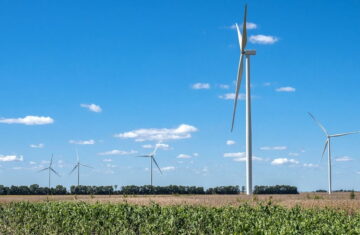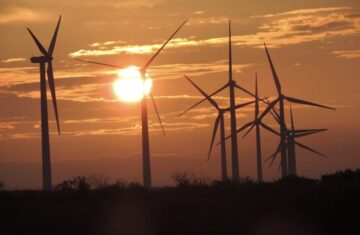
Prairie Star Wind Farm represents a significant collaboration between corporate sustainability goals and rural economic development. This project highlights how major commercial power purchase agreements can drive new renewable energy investment, bringing substantial capital and long-term revenue to the heart of the Midwest’s wind country.
Significance & Context
The Prairie Star Wind Farm is a 200-megawatt (MW) facility developed by Invenergy in Murray County. The project’s entire electrical output is contracted to Cargill through a long-term virtual power purchase agreement (VPPA), supporting the global agribusiness company’s commitment to renewable energy. This commercial and industrial (C&I) offtake agreement, highlighted in Cargill’s climate commitment reporting, provided the financial certainty needed for the project’s development. The facility generates enough electricity to power approximately 75,000 Minnesota homes.
Development Timeline
Development for Prairie Star Wind Farm began with land acquisition and wind resource assessment in 2016. The project successfully secured its interconnection agreement with the Midcontinent Independent System Operator (MISO), with its status documented in the public MISO Generation Interconnection Queue. After finalizing its VPPA with Cargill and securing all necessary county permits, construction commenced in early 2019. The project achieved commercial operation and began delivering power in late 2020.
Technology & Innovation
The project utilizes 2.5-MW and 3.0-MW turbines from Vestas, selected for their efficiency and reliability in Minnesota’s wind regime. A key feature of the project’s operational strategy is its integration with Cargill’s sustainability accounting, where the renewable energy credits (RECs) generated are retired to substantiate the company’s emissions reduction claims. This corporate energy procurement model has become an increasingly important driver for new wind development in markets across the United States.
Challenges & Controversies
A primary challenge for the Prairie Star Wind Farm was navigating local concerns about the project’s scale and its visual impact on the rural landscape. Some residents expressed apprehension about the transformation of the area’s character. The developers addressed this through an extensive public engagement campaign, including town hall meetings and direct discussions with landowners. The resolution involved agreeing to enhanced setback requirements from non-participating properties and establishing a clear decommissioning plan filed with the Murray County Board of Commissioners.
Community & Economic Impact
The project provides a substantial economic boost to Murray County. During the peak construction phase, Prairie Star Wind Farm typically employed over 250 workers, providing a significant influx of business for local services. Over its 30-year operational life, the project is projected to generate millions of dollars in new property tax revenue. This revenue will likely contribute substantially to the county’s budget, providing enhanced funding for local schools, road maintenance, and emergency services. For the landowners hosting the turbines, the long-term lease payments offer a stable and reliable source of income, diversifying the agricultural economy.
Future Outlook
Now fully operational, the Prairie Star Wind Farm is a long-term asset that will help power Cargill’s operations with clean energy for decades. Its success as a C&I-focused project underscores a viable and growing pathway for renewable development. The project’s infrastructure is designed for long-term operation, but its established site and grid connection also make it a potential candidate for future repowering with more advanced turbines. As analyzed by the U.S. Energy Information Administration (EIA), such life-extension strategies will ensure that projects like Prairie Star Wind Farm continue to be competitive power sources, solidifying Minnesota’s role in the national clean energy economy.
Discover also at Minnesota: Fenton Wind Farm