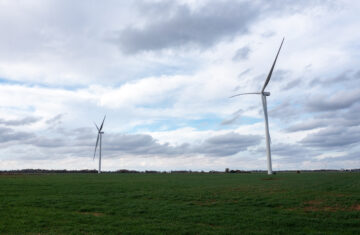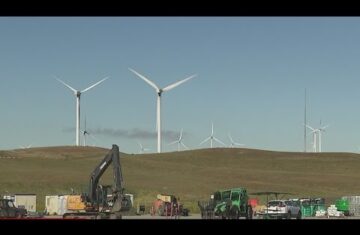
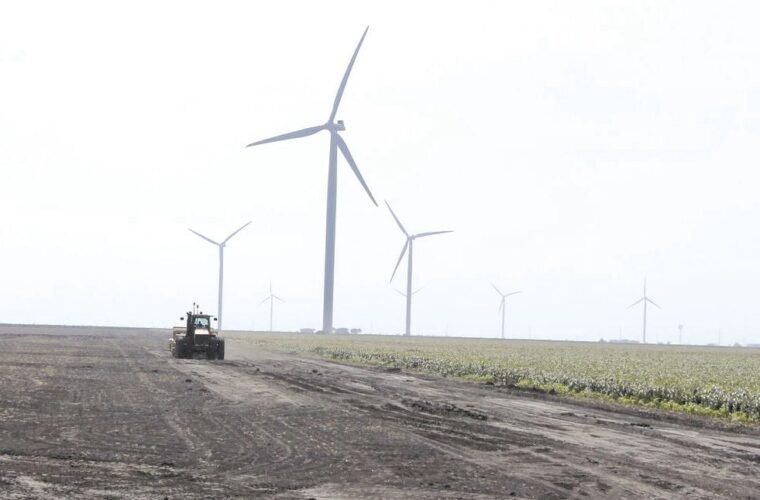
Located on the coastal plains of San Patricio County, Texas, the Papalote Creek Wind Farm represents a strategic expansion of wind energy into a new geographic region of the state. By harnessing the strong winds near the Gulf Coast, this project diversifies Texas’s renewable energy portfolio beyond its traditional West Texas hubs and demonstrates the potential for wind power to integrate with other major energy infrastructure, including nearby natural gas generation and industrial centers.
Significance & Context
The Papalote Creek Wind Farm, developed by EDF Renewables, is a major coastal wind facility. With an installed capacity of 377 megawatts (MW), the project generates enough electricity to power approximately 125,000 Texas homes annually, based on U.S. Energy Information Administration (EIA) calculations. This output is delivered into the Electric Reliability Council of Texas (ERCOT) grid, a contribution analyzed in the University of Texas at Austin Energy Institute’s research on the state’s wind portfolio.
Development Timeline
The project’s development reflects a newer wave of wind investment in Texas. Initial development began in the early 2010s. After permitting and securing a landmark power purchase agreement, construction commenced in the mid-2010s. The Papalote Creek Wind Farm achieved commercial operation in two phases, with the final phase completed in 2017, a date confirmed by its listing in the U.S. Wind Turbine Database.
Technology & Innovation
The project utilizes large, modern turbines, featuring 179 Siemens Gamesa wind turbines. A key aspect was engineering for the coastal environment, considering factors like humidity and hurricane resilience, informed by general standards from the National Renewable Energy Laboratory (NREL). Its interconnection into the South Texas grid required careful planning with ERCOT.
Challenges & Controversies
A notable challenge was securing a viable power purchase agreement (PPA) of unprecedented scale in a competitive market. This hurdle was resolved through a pioneering agreement with Microsoft. In 2015, Microsoft signed a 20-year PPA for the entire output of the project’s second phase to power its San Antonio data center, a landmark deal covered by Microsoft’s sustainability blog. This corporate procurement provided the financial certainty needed to build the project.
Community & Economic Impact
For San Patricio County, the wind farm provides significant long-term revenue. During its construction, the project typically employed over 400 workers at peak, according to American Clean Power Association industry models. Operationally, it generates millions in annual property tax revenue for the county and schools, as detailed in San Patricio County financial records. Additionally, it provides long-term lease payments to participating landowners, a benefit for the agricultural economy supported by Texas A&M AgriLife Extension.
Future Outlook
As a relatively new facility, the Papalote Creek Wind Farm is positioned for decades of reliable operation. Its success has validated the Coastal Bend as a viable wind region. The site’s coastal location and strong interconnection could make it a future candidate for hybridization with solar or storage, a strategy researched in NREL analysis of hybrid power plants, aligning with ERCOT’s evolving market needs as outlined in ERCOT’s Grid Planning reports.
At Fisher County you can find also: Pyron Wind Farm