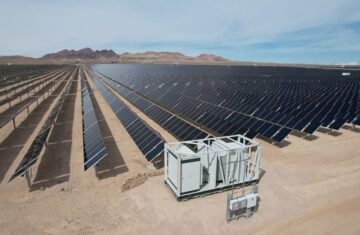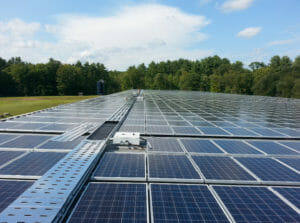
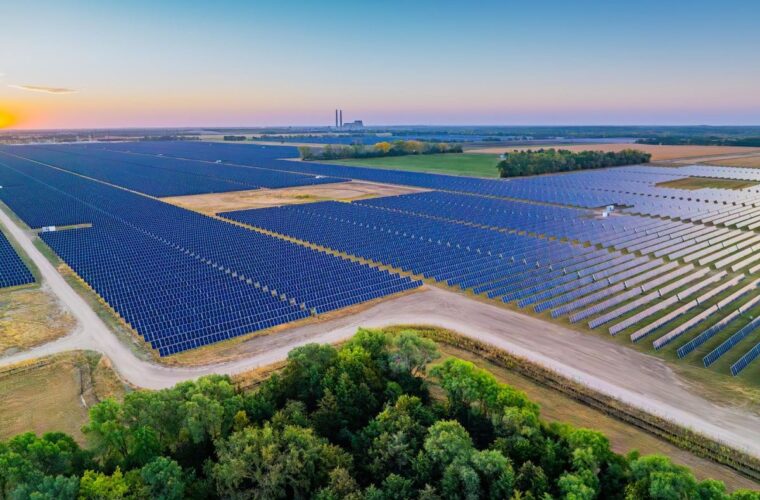
Located adjacent to the existing Sherco coal-fired power plant in Minnesota, Sherco Solar I represents a powerful symbol of the state’s energy transition. This project demonstrates a strategic shift by building new clean energy infrastructure alongside retiring fossil fuel plants, leveraging existing grid connections while creating new economic opportunities for communities historically dependent on coal power.
Significance & Context
Sherco Solar I is a 250-megawatt (MW) facility being developed by Xcel Energy on land surrounding its Sherburne County Generating Station. As the first phase of a planned 460 MW solar development, it is a cornerstone of Xcel’s commitment to reduce carbon emissions 80% by 2030, as outlined in its Carbon Reduction Plan. The project will generate enough electricity to power approximately 60,000 Minnesota homes and is strategically positioned to utilize the existing plant’s robust transmission infrastructure, maximizing cost-efficiency and grid reliability.
Development Timeline
The project was formally proposed by Xcel Energy in 2021 as part of its integrated resource plan, which was approved by the Minnesota Public Utilities Commission (PUC). Following regulatory approval and the completion of environmental reviews, construction began in early 2024. The project is currently in the construction phase and is on track to achieve commercial operation by the end of 2025, coinciding with the planned retirement of one of the three Sherco coal units.
Technology & Innovation
Sherco Solar I will utilize single-axis tracking systems to maximize energy production. A key innovation is its strategic co-location with the existing power plant. This allows the solar facility to connect directly to the grid using the coal plant’s existing switchyard and high-voltage transmission lines, avoiding the need for costly new transmission infrastructure and reducing interconnection delays—a significant challenge for many renewable projects. This model is being closely watched by other utilities as a practical approach to the clean energy transition.
Challenges & Controversies
A primary challenge for the project was navigating the complex regulatory and community dynamics of a “just transition” for the local workforce and economy. There were concerns about the timeline of the coal plant’s retirement and the nature of the new jobs created. Xcel Energy addressed this through a multi-faceted strategy, including commitments to retraining programs for displaced workers and a project labor agreement that typically employs union workers for construction. These measures were developed in collaboration with the Minnesota Department of Employment and Economic Development (DEED) and local unions to build broad-based support.
Community & Economic Impact
The project provides a crucial economic bridge for Sherburne County. During peak construction, Sherco Solar I typically employs over 300 workers. While the operational workforce will be smaller than the coal plant’s, it provides new, long-term skilled jobs. The project likely contributes significant new property tax revenue, helping to offset the eventual loss from the coal plant’s decommissioning. For the local community, this planned transition aims to provide economic stability while aligning with the state’s clean energy goals.
Future Outlook
Sherco Solar I is the first step in a larger transformation of the Sherco site. Its success is critical to demonstrating the viability of repurposing fossil fuel infrastructure for renewable generation. Future phases are already planned, and the site is also a candidate for advanced nuclear or green hydrogen production. As analyzed by the U.S. Energy Information Administration (EIA), this multi-technology approach positions the Sherco site to remain a cornerstone of Minnesota’s energy supply for decades, proving that energy communities can successfully evolve in a decarbonizing economy.
There is also at USA: Cavalier Solar farm