In the historic coastal plain of southeastern Virginia, the Cavalier Solar Farm represents a significant step in the state’s strategic energy transition, spanning both Isle of Wight and Surry Counties. This dual-county project demonstrates the scalability of solar development in a region balancing agricultural heritage with economic modernization. By harnessing the area’s strong solar resource, Cavalier Solar contributes directly to Virginia’s clean energy goals while establishing a new model for cross-jurisdictional renewable energy development that benefits multiple rural communities.
Significance & Context
The Cavalier Solar Farm is a strategically important asset within Virginia’s power grid, interconnected with Dominion Energy‘s system and supporting the state’s mandate for 100% carbon-free electricity by 2045 under the Virginia Clean Economy Act (VCEA). Its location in southeastern Virginia is significant for delivering power to the growing Hampton Roads region while utilizing previously underutilized agricultural and forested land. The project supports the renewable portfolio standards required of Dominion Energy and provides a clean energy option for the region’s significant industrial and military customers.
Development Timeline
Development for Cavalier Solar began in the early 2020s, following the passage of the VCEA. Key milestones included securing land leases across two counties, navigating separate but coordinated county permitting processes, and finalizing power purchase agreements. Construction commenced in 2023, requiring careful planning for the region’s coastal plain hydrology, and the project achieved commercial operation in 2025.
Technology & Innovation
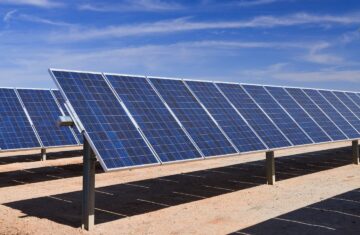
The Cavalier Solar Farm utilizes high-efficiency, corrosion-resistant solar panels mounted on single-axis tracking systems engineered for the humid coastal climate. The project incorporates advanced inverters with grid-support functionality to enhance local reliability. A notable innovation is its comprehensive stormwater management system, designed to protect the sensitive watersheds of the James River basin while meeting stringent requirements set by the Virginia Department of Environmental Quality (DEQ).
Challenges & Controversies
A significant challenge for the Cavalier Solar project was harmonizing regulatory requirements across two county jurisdictions with different zoning ordinances and permit processes. This required developing a unified project design that met the most stringent standards of both counties while maintaining project economics. The challenge was resolved through the creation of a joint county working group and the implementation of a consolidated environmental management plan that satisfied both local governments and state regulators.
Community & Economic Impact
For Isle of Wight and Surry Counties, Cavalier Solar delivers shared economic benefits. During the construction phase, the project typically employed over 300 workers collectively across both counties, providing a significant boost to local businesses. The permanent operations create 20-25 long-term skilled positions distributed between the two counties. The project likely contributes substantial property tax revenue to both jurisdictions, providing crucial funding for local schools and public services—a fiscal impact recognized by the Virginia Association of Counties. Multiple landowners receive stable lease payments.
Future Outlook
The successful commissioning of Cavalier Solar establishes a viable template for multi-jurisdictional renewable energy development in Virginia. Its cooperative approach to county coordination provides a model for future cross-boundary projects. The site’s design allows for potential future expansion or co-location with battery storage, which would enhance its ability to provide power during peak demand periods. Cavalier Solar demonstrates that Virginia’s clean energy transition can create collaborative economic opportunities that benefit multiple communities while advancing the state’s climate goals.
There is also at USA: Franklin Solar Hybrid