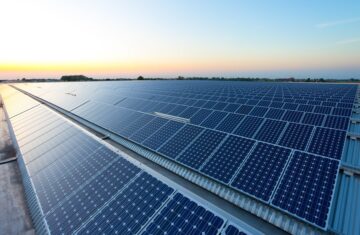
Southern Indiana, the Hardy Hills Solar Energy project represents a significant private-sector investment in the state’s clean energy transition. This large-scale facility highlights how corporate sustainability goals are becoming a major driver for new renewable energy development, bringing substantial investment and long-term revenue to rural communities.
Significance & Context
The Hardy Hills Solar Energy project is a 200-megawatt (MW) facility being developed by RWE Clean Energy. The project’s entire electrical output is contracted through a long-term power purchase agreement with General Motors, supporting the automaker’s commitment to power all its U.S. facilities with 100% renewable energy by 2025. This commercial and industrial (C&I) offtake agreement, highlighted in GM’s sustainability reporting, is a key driver for new solar capacity in the Midwest. The facility will generate enough electricity to power approximately 40,000 Indiana homes annually.
Development Timeline
Development for Hardy Hills Solar began with land acquisition and feasibility studies in 2020. The project successfully secured its interconnection agreement with the Midcontinent Independent System Operator (MISO), with its status documented in the public MISO Generation Interconnection Queue. After finalizing its PPA with GM and securing all necessary local permits, major construction commenced in early 2023. The project is currently in the final stages of construction and is scheduled to achieve commercial operation in the second quarter of 2025.
Technology & Innovation
The Hardy Hills Solar project utilizes single-axis tracking technology to maximize energy production throughout the day. A key innovative feature is its commitment to agrivoltaics. The project design incorporates pollinator-friendly habitats and will allow for continued sheep grazing beneath and around the solar arrays. This dual-use approach, supported by research from the Purdue University Extension, aims to maintain agricultural productivity, support local ecosystems, and reduce vegetation management costs, creating a synergistic relationship between energy and agriculture.
Challenges & Controversies
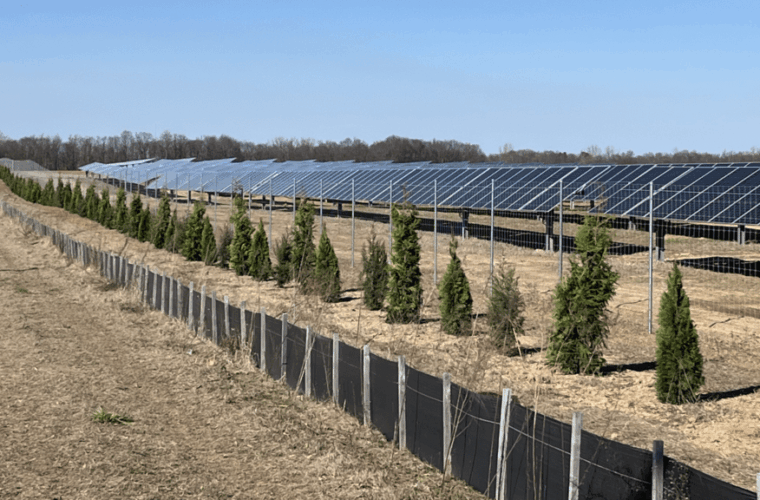
A primary challenge for the Hardy Hills Solar project was navigating local zoning regulations and addressing concerns from some residents about the change in land use from traditional agriculture to solar generation. To secure the necessary county-level permits, the developers engaged in a proactive public outreach campaign, which included town hall meetings and direct discussions with neighboring landowners. The resolution involved agreeing to enhanced setback requirements, a robust visual screening plan with vegetation buffers, and a legally binding decommissioning agreement filed with the County Planning Commission to ensure the land can be returned to its original state.
Community & Economic Impact
The project provides a tangible economic boost to its host county. During the peak construction phase, Hardy Hills Solar typically employed over 300 workers, providing a significant, though temporary, boost to local services. Over its 30-year operational life, the project is projected to generate millions of dollars in new property tax revenue. This revenue will likely contribute substantially to the county’s budget, providing enhanced funding for local schools, road maintenance, and emergency services. For the landowners hosting the arrays, the long-term lease payments offer a stable and reliable source of income, diversifying the rural economy.
Future Outlook
Once operational, the Hardy Hills Solar Energy project will be a long-term asset, providing clean power for GM’s operations and contributing to Indiana’s energy mix for decades. Its success as a C&I-focused project underscores a viable pathway for renewable development in the state. The project’s infrastructure is designed to be “storage-ready,” with potential for the future co-location of a battery energy storage system. As noted in the U.S. Energy Information Administration’s (EIA) state profile for Indiana, adding storage could allow Hardy Hills to supply power during peak demand periods, further increasing its value to the grid and solidifying its role in the region’s energy economy.
At Indiana also: Cavalry Solar Hybrid