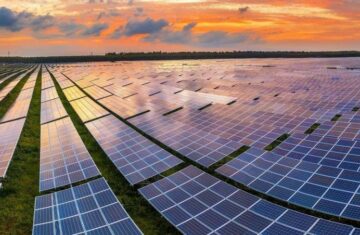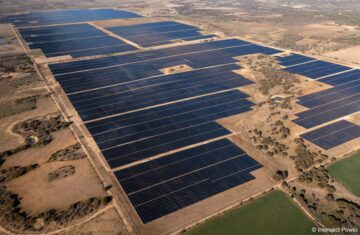

Walnut Bend Solar Station PV represents a strategic evolution in land use, demonstrating how renewable energy generation can complement the state’s farming economy. This utility-scale project highlights Arkansas’s emerging role in the Southeast’s clean energy transition while providing new economic stability for rural communities. By integrating solar infrastructure with agricultural preservation, Walnut Bend Solar creates a model for diversified land management that supports both energy production and farming traditions.
Significance & Context
The Walnut Bend Solar Station PV is a significant addition to Arkansas’s power grid, interconnected with the Midcontinent Independent System Operator (MISO) system and supplying power to utilities like Entergy Arkansas. Its development supports the state’s economic diversification strategy, providing clean electricity for commercial and industrial users with sustainability goals—a growing priority identified by the Arkansas Economic Development Commission. The project also contributes to grid reliability during peak demand periods, reducing dependence on out-of-state power imports.
Development Timeline
Development for Walnut Bend Solar began in the early 2020s, as solar technology costs declined and utility procurement increased. Key milestones included securing land leases from multiple local landowners, navigating county zoning approvals, and finalizing power purchase agreements. Construction commenced in 2023, with site work carefully planned around agricultural drainage patterns, and the project achieved commercial operation in 2025.
Technology & Innovation
The Walnut Bend Solar Station utilizes high-efficiency, monocrystalline solar panels mounted on single-axis tracking systems optimized for Arkansas’s climate. The project incorporates advanced inverters with voltage regulation capabilities to support local grid stability. A notable innovation is its agrivoltaic design, which maintains agricultural productivity through sheep grazing and pollinator habitats beneath the arrays—a practice validated by research from the University of Arkansas System Division of Agriculture.
Challenges & Controversies
A primary challenge for the Walnut Bend Solar project was addressing drainage compatibility concerns in the Mississippi Delta region, where field drainage is critical for agricultural operations. Local farmers were concerned about how solar infrastructure might impact water flow across adjacent farmland. This was resolved through collaborative engineering with local drainage districts, implementing a subsurface drainage system that maintained existing water patterns and even improved runoff management for neighboring properties.
Community & Economic Impact
For the host county, Walnut Bend Solar delivers substantial economic benefits while preserving agricultural land use. During the construction phase, the project typically employed over 150 workers, providing a significant boost to local services. The permanent operations create several long-term skilled positions. The project likely contributes a major increase in property tax revenue, providing crucial funding for local schools and public services—a fiscal impact recognized by the Arkansas Association of Counties. Landowners maintain agricultural income while adding stable solar lease revenue.
Future Outlook
The successful commissioning of Walnut Bend Solar Station establishes a viable template for agrivoltaic development in Arkansas’s agricultural regions. Its approach to combining energy generation with farming provides a replicable model for future projects seeking to maximize land use efficiency. As battery storage costs decline, the site presents a compelling opportunity for future energy storage integration. Walnut Bend Solar demonstrates that Arkansas’s clean energy future can be built in harmony with its agricultural identity, creating diversified income streams that strengthen rural communities against economic uncertainty.
There is also at Arkansas: Crossett Solar farm