Maple Flats Solar Farm represents a significant milestone in the diversification of the American South’s energy portfolio. This large-scale project is not just about generating clean electricity; it’s a signal of economic transition, bringing substantial investment, new revenue streams, and a commitment to sustainable development to a region eager for growth.
Significance & Context
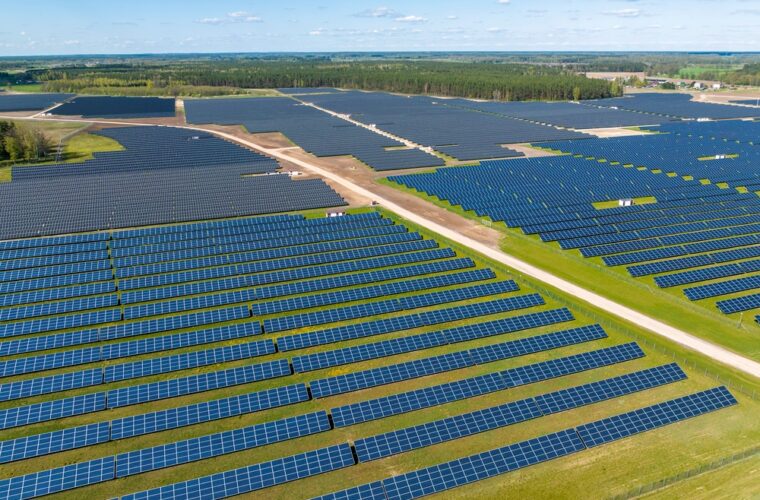
The Maple Flats Solar Farm is a 150-megawatt (MW) facility, positioning it as one of the largest solar generation sites in the state. Developed by Silicon Ranch Corporation, a major independent power producer, the project represents a capital investment of approximately $200 million. Its output, enough to power an estimated 24,000 Mississippi homes, will be delivered to the Tennessee Valley Authority (TVA) grid under a long-term power purchase agreement. This partnership, highlighted in a TVA news release, is a key part of the utility’s strategy to integrate more carbon-free energy while ensuring reliability and low costs for the region.
Development Timeline
The development of Maple Flats followed a deliberate and phased approach. Initial land leasing and feasibility studies began in 2019, with the project officially announced in 2021 following the successful execution of its power contract. The construction phase, managed by McCarthy Building Companies, a firm with deep experience in renewable energy, broke ground in early 2023. After over a year of site work and panel installation, the project achieved commercial operation and began delivering power to the TVA grid in the second quarter of 2024.
Technology & Innovation
The Maple Flats project utilizes a fixed-tilt mounting system for its photovoltaic panels, a robust and cost-effective solution for the location. A key innovative feature is the project’s commitment to agrivoltaics. In partnership with local agricultural experts, the site will integrate managed sheep grazing beneath and around the solar arrays. This approach, supported by research from the National Renewable Energy Laboratory (NREL) on solar co-location, controls vegetation without using traditional mowers, reduces the site’s carbon footprint, and provides a supplemental income for a local farmer, truly blending energy production with agriculture.
Challenges & Controversies
A significant challenge during the development of Maple Flats was addressing concerns from some local residents about the change in land use from traditional farming or timber to industrial-scale solar. Specific worries included visual impact and the long-term effect on soil quality. The developer addressed this through a sustained community engagement campaign, including public open houses and one-on-one meetings with neighboring landowners. The commitment to the agrivoltaics program was a central part of the resolution, demonstrating that the land could remain productive. Furthermore, the company provided visual simulations and binding commitments for decommissioning and land restoration, as filed with the Mississippi Public Service Commission, to build trust and ensure long-term accountability.
Community & Economic Impact
The project delivers a direct and lasting economic benefit to its host county. During the peak of construction, Maple Flats typically employed over 250 workers, many of whom were sourced from the local labor force. Over the project’s 35-year operational life, it is projected to generate over $25 million in new property tax revenue, according to estimates based on Mississippi Department of Revenue models. This revenue will provide critical funding for local schools, public safety, and road maintenance. For the private landowners hosting the arrays, the long-term lease payments offer a stable and drought-proof source of income, strengthening the agricultural economy.
Future Outlook
Now operational, the Maple Flats Solar Farm is set to be a cornerstone of clean energy generation in Mississippi for decades. Its success paves the way for further solar development in the TVA service territory. The project’s design also allows for future expansion or the potential co-location of battery storage, a technology the U.S. Energy Information Administration (EIA) notes is increasingly being paired with solar to provide dispatchable power. By establishing a proven model of community integration and agricultural coexistence, Maple Flats sets a strong precedent for the future of sustainable energy in the region.
Discover also at Mississippi: Pearl River Solar Park