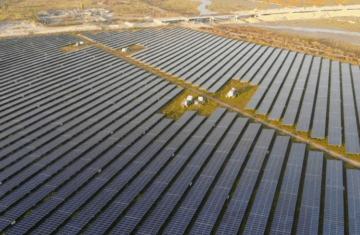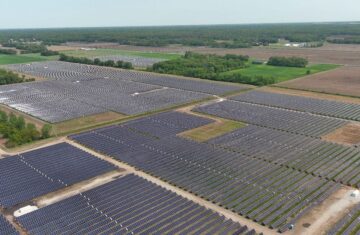
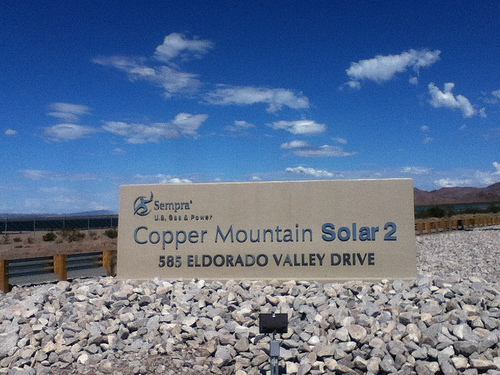
Rising from the desert landscape near Boulder City, Nevada, the Copper Mountain Solar 2 facility represents a critical phase in the evolution of one of America’s largest solar complexes, demonstrating how sequential project development can optimize costs, improve efficiency, and expand renewable energy capacity while building upon established environmental mitigation frameworks. This project solidified Nevada’s position as a national leader in utility-scale solar development while showcasing the economic and technical advantages of phased project implementation.
Significance & Context
Developed by Sempra Renewables, the 150-megawatt (MW) Copper Mountain Solar 2 expansion brought the complex’s total capacity to 458 MW upon its completion, making it the largest solar power facility in the United States at that time. According to generation data from the U.S. Energy Information Administration (EIA), the expanded facility produced enough electricity to power approximately 92,000 homes, significantly contributing to Nevada’s renewable portfolio standard and supplying clean energy to NV Energy‘s grid. Its location in Clark County, strategically situated near the Hoover Dam’s transmission infrastructure, allowed it to efficiently deliver renewable energy to major Southwest population centers.
Development Timeline
The project’s development built upon the success of Copper Mountain Solar 1 to accelerate deployment. Development activities began in 2012, with construction commencing in 2013 following power purchase agreements with Pacific Gas & Electric. The project achieved commercial operation in 2015, as documented in NV Energy renewable energy reports. This accelerated timeline benefited from using the existing environmental impact statement and mitigation framework established for the first phase, demonstrating how sequential development can reduce permitting timelines while maintaining environmental protections.
Technology & Innovation
Copper Mountain Solar 2 utilized improved single-axis tracking systems with crystalline silicon photovoltaic modules, featuring enhanced efficiency and durability over the previous phase. According to technical reports from the National Renewable Energy Laboratory (NREL), the project incorporated advanced inverters with better grid-support functions that provided improved voltage regulation and frequency response capabilities. The facility implemented more sophisticated water management systems that reduced water usage for panel cleaning by 50% compared to the first phase, employing optimized scheduling and water-efficient technologies adapted for desert conditions.
Challenges & Controversies
The expansion faced challenges related to scaling construction and maintaining environmental protections. The increased activity raised concerns about cumulative impacts on desert habitat and wildlife corridors. Environmental groups monitored the expansion for compliance with established mitigation measures. These challenges were resolved through enhanced coordination with the U.S. Bureau of Land Management and implementation of additional monitoring programs. The project also addressed community concerns about visual impacts through improved landscaping and screening measures, while maintaining its commitment to the habitat conservation plans established during the first phase.
Community & Economic Impact
For Clark County and Boulder City, the expansion delivered additional economic benefits while building upon existing community relationships. During construction, the project typically employed 300-350 workers, with continued emphasis on local hiring from the Las Vegas metropolitan area. For ongoing operations, the expanded complex maintained 15-20 permanent positions. Based on Clark County’s tax assessment models for utility-scale solar, the expansion likely contributed approximately $1-1.3 million annually in additional property tax revenue to local governments. The project continued to provide lease payments to the city of Boulder City, supporting municipal services and contributing to the community’s status as debt-free.
Future Outlook
The success of Copper Mountain Solar 2 (there is also Copper Mountain Solar 3) paved the way for the subsequent Copper Mountain Solar 3 expansion, which would eventually make the complex the largest in the nation at 802 MW. The project’s demonstration of phased development advantages informed numerous subsequent solar projects nationwide. With an expected operational lifespan of 30+ years, the facility continues to provide valuable performance data on solar technology degradation and maintenance requirements in desert environments. The project’s approach to sequential development and environmental stewardship established best practices that continue to influence utility-scale solar development in the southwestern United States, contributing to Nevada’s leadership in renewable energy generation.