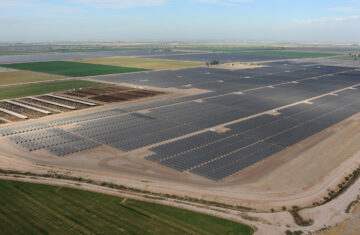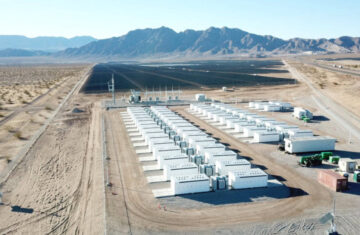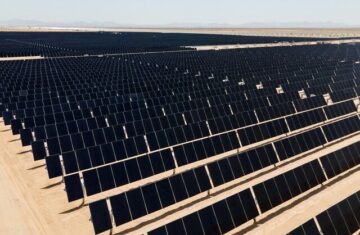
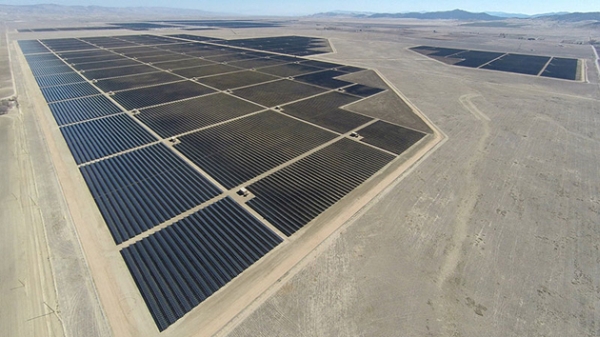
Spanning nine square miles of California’s Carrizo Plain, the Topaz Solar Farm in San Luis Obispo County emerged as a landmark achievement in utility-scale renewable energy development. When it began operations in 2014, it stood as one of the world’s largest photovoltaic power stations, demonstrating the viability of gigawatt-scale solar projects to significantly contribute to state renewable energy mandates and national climate goals while establishing new benchmarks for environmental mitigation in large-scale energy development.
Significance & Context
Developed by First Solar and now owned by Berkshire Hathaway Energy, the 550-megawatt (MW) Topaz Solar Farm represents a critical component of California’s clean energy transition. According to generation data from the California Energy Commission, the facility produces enough electricity to power approximately 180,000 homes annually, displacing an estimated 377,000 tons of carbon dioxide emissions each year—equivalent to removing 73,000 cars from the road. The project’s development on mostly marginal agricultural land demonstrated how renewable energy could provide economic alternatives for farming communities while contributing to climate goals.
Development Timeline
The project’s development timeline reflects the rapid scaling of solar energy in the early 2010s. Project planning began in 2008, with construction commencing in 2011 after securing a power purchase agreement with PG&E and critical financing through a $1.9 billion loan guarantee from the U.S. Department of Energy’s Loan Programs Office. The project was built in phases, with the first 300 MW achieving commercial operation in 2013 and the full 550 MW capacity coming online by November 2014, as documented in First Solar’s operational reports.
Technology & Innovation
Topaz Solar Farm utilized advanced thin-film cadmium telluride (CdTe) photovoltaic modules, a technology that offered cost and performance advantages at utility scale. The facility features approximately 9 million panels mounted on fixed-tilt systems, optimized for the site’s latitude and solar conditions. According to performance studies from the National Renewable Energy Laboratory (NREL), the technology demonstrated particularly strong performance in hot climates and diffuse light conditions. The project’s electrical collection system and substation design established new standards for efficiently managing power from distributed generation sources across large geographical areas.
Challenges & Controversies
The project faced significant environmental opposition during its development phase, particularly regarding impacts on the endangered San Joaquin kit fox and potential disruption of agricultural operations. Environmental groups, including the Sierra Club, raised concerns about habitat fragmentation and construction impacts. The resolution involved implementing one of the most comprehensive mitigation plans for a solar project at that time, developed in coordination with the U.S. Fish and Wildlife Service and the California Department of Fish and Wildlife. This included establishing a 12,000-acre conservation easement, creating wildlife corridors, and implementing a kit fox monitoring and relocation program that became a model for subsequent solar developments.
Community & Economic Impact
For San Luis Obispo County, the Topaz Solar Farm has provided substantial economic benefits. During its three-year construction period, the project typically employed over 400 workers at peak, providing a significant boost to the local economy. For ongoing operations, it maintains approximately 15 permanent staff positions. Based on county tax records and San Luis Obispo County’s economic impact reports, the project likely contributes approximately $1.5-2 million annually in property tax revenue to local governments. Additionally, it provides stable lease payments to local landowners, creating a reliable income source that complements the region’s agricultural economy while preserving most of the land for future agricultural use.
Future Outlook
With an expected operational lifespan of 30+ years, Topaz Solar Farm represents a long-term energy asset for California’s grid. The project’s success helped demonstrate the bankability of utility-scale solar and paved the way for subsequent gigawatt-scale projects. As the technology continues to advance, the site may eventually be repowered with more efficient panels, potentially increasing its output without expanding its footprint. The project’s extensive environmental monitoring and mitigation programs, documented in annual reports to wildlife agencies, continue to provide valuable data for balancing renewable energy development with habitat conservation in California’s sensitive ecosystems.