
Mount Signal Solar Farm V represents the latest phase in one of North America’s most significant solar developments, demonstrating how sequential project execution can optimize technology, reduce costs, and enhance environmental mitigation in sensitive desert ecosystems. This project exemplifies the evolution of utility-scale solar development in regions where extreme environmental conditions meet exceptional solar resources.
Significance & Context
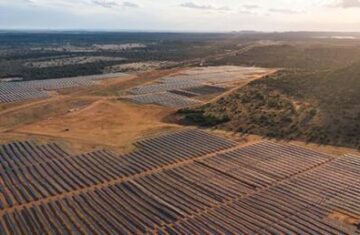
Developed by 8minute Solar Energy, the 150-megawatt (MW) Mount Signal Solar Farm V expands the Mount Signal complex to over 800 MW of combined capacity, making it one of the largest solar clusters in the United States. According to generation data from the California Energy Commission, the facility produces enough electricity to power approximately 54,000 homes, significantly contributing to San Diego Gas & Electric‘s renewable portfolio standard compliance. Its location in Imperial County, which boasts the highest solar irradiance levels in North America, positions it to maximize energy production while operating within California’s Desert Renewable Energy Conservation Plan (DRECP) framework.
Development Timeline
The project’s development built upon extensive experience from previous Mount Signal phases. Development activities began in 2019, with the project receiving approval from the Imperial County Planning and Development Services in 2021. Construction commenced in 2022, achieving commercial operation in 2024, as documented in California Independent System Operator (CAISO) interconnection records. This accelerated timeline benefited from established environmental mitigation frameworks and community relationships developed during earlier phases, demonstrating how sequential development can streamline implementation while maintaining rigorous standards.
Technology & Innovation
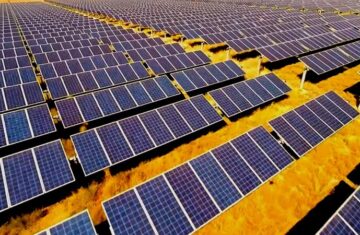
Mount Signal Solar V utilizes single-axis tracking systems with advanced bifacial photovoltaic modules, representing the latest evolution in desert solar technology. According to performance data from the National Renewable Energy Laboratory (NREL), this configuration increases energy yield by 12-18% compared to earlier technology used in previous phases. The project incorporates completely water-free operations using automated robotic cleaning systems that employ air pressure and rotating brushes instead of water—a critical innovation in this drought-prone region. Advanced inverters with grid-forming capabilities provide essential reliability services, including black start capability and enhanced frequency response for grid stability.
Challenges & Controversies
The project faced significant challenges related to cumulative impacts and concerns about additional development in sensitive desert habitat. Environmental groups including the Comite Civico del Valle raised concerns about further habitat fragmentation and impacts on wildlife corridors. The resolution involved implementing an enhanced Habitat Conservation Plan that expanded upon previous mitigation measures, including additional land dedication to conservation, establishment of enhanced wildlife corridors, and funding for advanced environmental monitoring technology. The project also addressed community concerns about water usage through completely dry operations and implemented measures to minimize dust generation during construction and operation.
Community & Economic Impact
For Imperial County, which faces persistent economic challenges, the project has delivered substantial benefits while addressing environmental concerns. During construction, the project typically employed 250-300 workers, with targeted local hiring programs for county residents. For ongoing operations, it maintains 10-12 permanent positions. Based on Imperial County’s tax assessment models for utility-scale solar, the project likely contributes approximately $1.0-1.3 million annually in property tax revenue to local governments and school districts. Additionally, it provides stable lease payments to local landowners, creating a drought-resistant income source that complements agricultural revenues and provides financial stability in a region where water availability increasingly affects farming viability.
Future Outlook
With an expected operational lifespan of 35+ years, the Mount Signal Solar Farm V represents a long-term commitment to both clean energy and desert conservation. The project’s completely water-free approach and enhanced environmental mitigation strategies set new benchmarks for solar development in arid regions. As climate change intensifies drought conditions in the Southwest, the project’s conservation innovations become increasingly valuable. The facility’s performance data continues to inform best practices for solar development in sensitive ecosystems, while its operational experience contributes to improving the environmental compatibility and economic viability of renewable energy projects throughout the desert Southwest, demonstrating that California’s climate goals can be achieved while respecting environmental constraints.
You can find also at Imperial: Mount Signal Solar Farm II