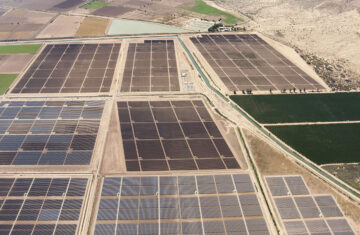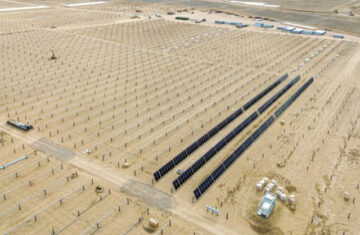
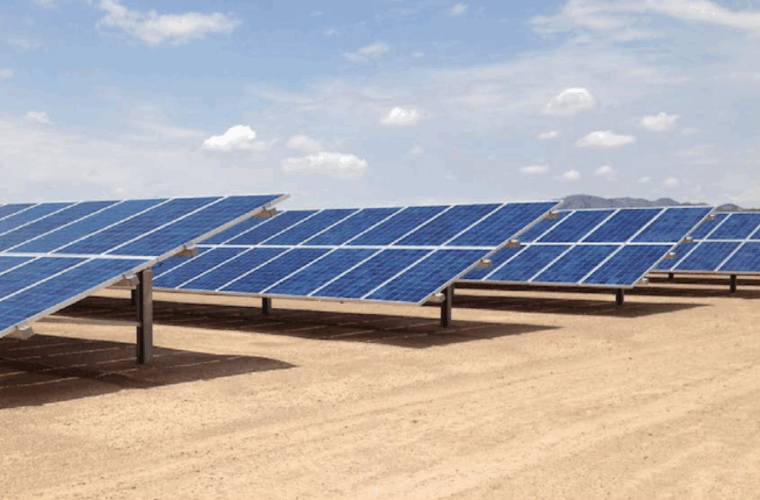
Rising from the Sonoran Desert northwest of Phoenix, the Mesquite Solar farm in Maricopa County represents one of Arizona’s most ambitious renewable energy undertakings and a strategic investment in the state’s clean energy transition. This multi-phase project exemplifies how major utilities are leveraging large-scale solar to diversify their energy portfolios, reduce carbon emissions, and meet growing electricity demand in the arid Southwest while navigating the complex balance between development and desert conservation.
Significance & Context
Developed by Sempra Renewables, the Mesquite Solar complex is designed as a multi-phase project with a planned total capacity of 750 megawatts (MW), making it one of the largest solar installations in the United States. According to project data from the U.S. Energy Information Administration, the currently operational phases generate enough electricity to power approximately 260,000 Arizona homes. The project serves as a cornerstone of utility Arizona Public Service’s (APS) clean energy strategy, helping the utility meet state renewable energy requirements and reduce its carbon footprint through long-term power purchase agreements.
Development Timeline
The project has been developed in multiple phases over the past decade, demonstrating the scalability of modern solar projects. Phase 1 (150 MW) began construction in 2011 and achieved commercial operation in 2013. Subsequent phases have been added incrementally, with the latest phase (Mesquite Solar 3, 100 MW) completed in 2017, as documented in APS’s renewable energy portfolio reports. This phased approach allowed for continuous optimization of technology and construction techniques while providing steady clean energy additions to the grid.
Technology & Innovation
Mesquite Solar utilizes crystalline silicon photovoltaic modules mounted on single-axis tracking systems, which follow the sun’s path to maximize energy capture. The project incorporates advanced inverter technology and grid integration systems to ensure stable power delivery to the APS grid. According to technical specifications from the National Renewable Energy Laboratory (NREL), the tracking technology increases energy production by approximately 20-25% compared to fixed-tilt systems, making it particularly effective in Arizona’s high solar resource environment. The project’s design also emphasizes water conservation, using robotic cleaning systems that minimize water usage for panel maintenance.
Challenges & Controversies
The project faced significant environmental challenges, particularly regarding its impact on desert wildlife and habitat. Conservation groups, including the Arizona Sonora Desert Museum, raised concerns about impacts on protected species such as the desert tortoise and migratory bird pathways. The resolution involved implementing a comprehensive Habitat Conservation Plan developed in coordination with the U.S. Fish and Wildlife Service and the Arizona Game and Fish Department. This included establishing thousands of acres of protected habitat, creating wildlife corridors, and implementing ongoing monitoring programs. Additionally, the project addressed cultural resource concerns through consultation with local Native American tribes and archaeological surveys.
Community & Economic Impact
For Maricopa County and the state of Arizona, the Mesquite Solar project has delivered substantial economic benefits. During construction phases, the project typically employed 300-500 workers per phase, providing significant temporary employment opportunities. For ongoing operations, it maintains approximately 15-20 permanent positions. Based on Maricopa County’s tax assessment models for utility-scale solar, the project likely contributes approximately $2-3 million annually in property tax revenue to local governments. Additionally, it provides stable lease payments to private landowners, creating a reliable income source while preserving the majority of the land for agricultural and open space uses.
Future Outlook
With its phased development approach, Mesquite Solar remains well-positioned for future expansion. The project’s existing infrastructure and interconnection capacity provide a platform for additional solar generation and potential energy storage integration. As noted in Arizona’s Energy Modernization Plan, projects like Mesquite Solar will play a crucial role in meeting the state’s growing energy demands while reducing carbon emissions. The project’s successful navigation of environmental challenges has established valuable precedents for future large-scale solar development in the sensitive desert ecosystems of the Southwest, balancing renewable energy goals with environmental stewardship.