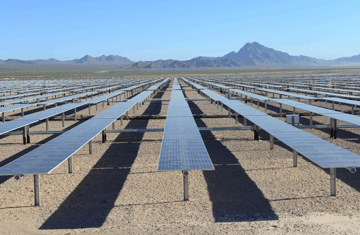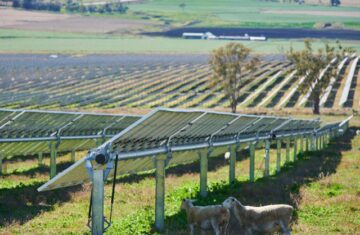

Rising from the arid landscape of Kern County, the Catalina Solar Project stands as a testament to California’s rapid scaling of utility-scale renewable energy in the last decade. As one of the largest photovoltaic facilities in the United States when it was completed, this massive solar farm highlighted both the immense potential and the complex challenges of converting vast tracts of land into clean power generators, significantly contributing to the state’s renewable portfolio and setting new benchmarks for project development speed.
Significance & Context
Developed by EDF Renewables, the 143-megawatt (MW) Catalina Solar facility became a crucial component of Southern California’s energy mix. Located in a region with exceptional solar resources, the project generates enough electricity to power approximately 35,000 homes annually, according to production data from the California Energy Commission. Its development on previously disturbed agricultural land demonstrated a strategic approach to minimizing environmental impact while maximizing renewable generation capacity to help meet the state’s climate goals.
Development Timeline
The project’s development and construction timeline was notably rapid, reflecting the growing efficiency in utility-scale solar deployment. Project development began in 2011, with construction commencing in 2012. The facility achieved commercial operation in two phases, with the first 60 MW coming online in late 2013 and the full facility operational by 2014, as documented in EDF Renewables’ project timeline. This accelerated timeline was made possible through streamlined permitting processes in Kern County, which had established itself as a renewable energy hub.
Technology & Innovation
Catalina Solar utilized crystalline silicon photovoltaic technology on a single-axis tracking system, representing the industry standard shift toward tracking technology for large-scale installations. The project’s innovation was primarily in its scale and execution—featuring over 800,000 panels across 1,100 acres. According to technology specifications from the National Renewable Energy Laboratory (NREL), the single-axis tracking system increases energy production by approximately 25% compared to fixed-tilt systems, making it particularly effective in California’s high solar resource regions.
Challenges & Controversies
The project faced significant environmental challenges during development, particularly regarding wildlife impacts. Environmental reviews identified potential effects on several protected species, including the Mohave ground squirrel and desert tortoise. The resolution involved implementing a comprehensive Habitat Conservation Plan developed in coordination with the U.S. Fish and Wildlife Service and the California Department of Fish and Wildlife. This plan included creating thousands of acres of protected habitat elsewhere and establishing on-site monitoring and mitigation measures, setting a precedent for how large-scale solar projects could address environmental concerns in sensitive ecosystems.
Community & Economic Impact
For Kern County, the Catalina Solar project delivered meaningful economic benefits. During its construction peak, it typically employed over 300 workers, providing a significant boost to the local economy. For ongoing operations, it maintains a team of 8-12 full-time technicians. Based on Kern County’s tax revenue models for utility-scale solar, the project likely contributes approximately $400,000-$500,000 annually in property tax revenue to the county. Additionally, it provides stable lease payments to local landowners, creating a drought-resistant income source that complements the region’s agricultural economy.
Future Outlook
With an expected operational lifespan of 30+ years, Catalina Solar represents a long-term energy asset for California. As the state’s grid continues to evolve, the project’s location in the renewable-rich Tehachapi region positions it well for potential future integration with energy storage systems. The project’s successful navigation of environmental challenges has provided a valuable template for subsequent solar developments in the region. As noted in the California Solar & Storage Association’s market report, projects like Catalina Solar demonstrate the ongoing potential for strategic solar development that balances clean energy generation with environmental stewardship.