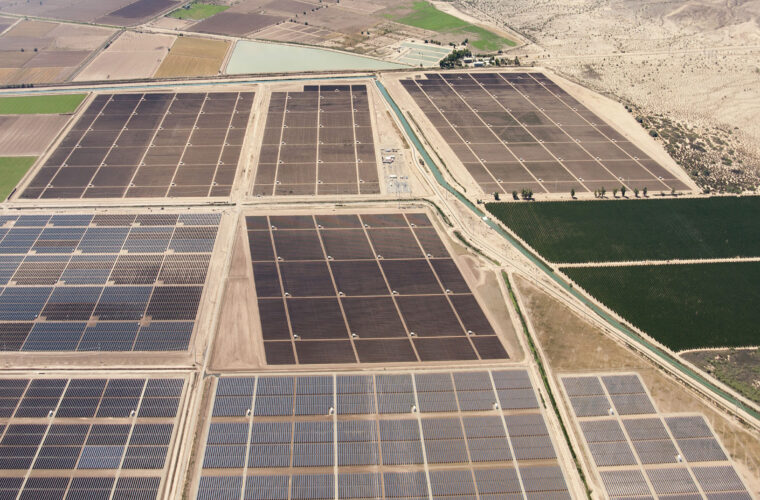
Situated in the resource-rich Imperial Valley, the Imperial Solar Energy Center South represents a strategic expansion of California’s renewable energy infrastructure in a region rapidly becoming a national leader in solar generation. This project exemplifies how arid lands with limited agricultural potential can be transformed into productive energy assets, contributing significantly to California’s climate goals while bringing economic opportunities to a region facing water scarcity and economic challenges.
Significance & Context
Developed as part of a larger solar energy complex by NextEra Energy Resources, the Imperial Solar Energy Center South is a 150-megawatt (MW) facility that forms a crucial component of California’s clean energy portfolio. According to generation data from the California Energy Commission, the project produces enough electricity to power approximately 45,000 homes annually, displacing an estimated 175,000 tons of carbon dioxide emissions each year. Its location in Imperial County, which boasts some of the highest solar irradiance levels in the United States, maximizes generation efficiency while supporting grid reliability for Southern California’s population centers through its interconnection to the San Diego Gas & Electric grid.
Development Timeline
The project’s development progressed rapidly following California’s ambitious renewable energy mandates. Development activities commenced in 2019, with construction beginning in 2021. The project reached commercial operation in 2023, as documented in California Public Utilities Commission filings. This accelerated timeline benefited from Imperial County’s established solar development protocols and experience with utility-scale renewable projects, though it still required comprehensive environmental review and community consultation processes typical of major energy infrastructure projects.
Technology & Innovation
Imperial Solar Energy Center South utilizes single-axis tracking systems with high-efficiency monocrystalline silicon panels, optimized for desert conditions. The project incorporates advanced water-free cleaning systems that use automated brushes and air pressure to maintain panel efficiency without water consumption—a critical innovation in this drought-prone region. According to technical reports from the National Renewable Energy Laboratory (NREL), this technology reduces water usage by 95% compared to traditional panel cleaning methods. The facility also features a specialized electrical system designed to withstand the desert’s extreme temperature fluctuations and occasional dust storms.
Challenges & Controversies
The project faced significant environmental challenges, particularly regarding impacts on desert biological resources and cultural sites. Local environmental groups, including the Comite Civico del Valle, raised concerns about habitat fragmentation and impacts on migratory patterns. The resolution involved implementing an enhanced Habitat Conservation Plan developed in coordination with the U.S. Bureau of Land Management and the California Department of Conservation, which included creating wildlife corridors and funding regional conservation initiatives. The project also addressed community concerns about visual impacts through strategic landscaping and setback requirements, establishing a new standard for desert solar development.
Community & Economic Impact
For Imperial County, which has consistently faced high unemployment rates, the project has delivered substantial economic benefits. During construction, the project typically employed 250-350 workers, with targeted local hiring programs for county residents. For ongoing operations, it maintains 6-10 permanent positions. Based on Imperial County’s tax assessment models for utility-scale solar, the project likely contributes approximately $900,000-$1.2 million annually in property tax revenue to local governments and school districts. Additionally, it provides stable lease payments to local landowners, creating a reliable income source that complements rather than replaces agricultural activities on adjacent lands.
Future Outlook
With an expected operational lifespan of 30+ years, the Imperial Solar Energy Center South represents a long-term commitment to both clean energy and community benefits. The project’s water-conserving technologies establish important benchmarks for sustainable desert development, particularly valuable as climate change intensifies drought conditions. As noted in the Imperial Valley Economic Development Corporation reports, the project’s success has paved the way for additional renewable investments in the region. The facility’s design allows for potential future integration with energy storage systems, positioning it to play an increasingly valuable role in grid reliability as California continues its transition to renewable energy.